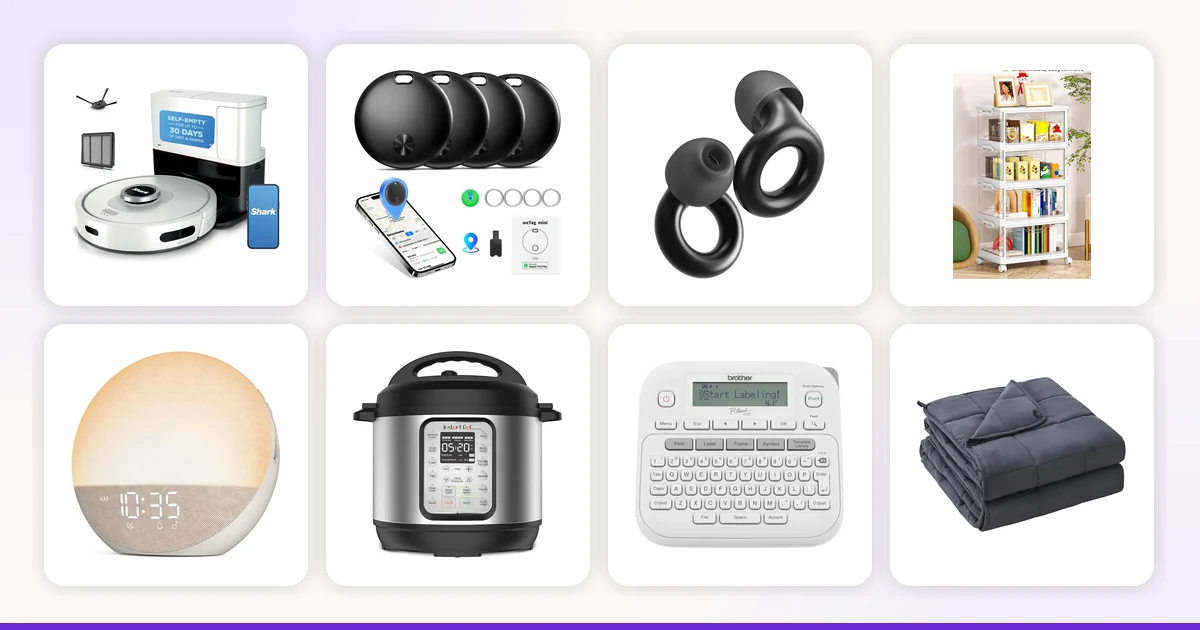
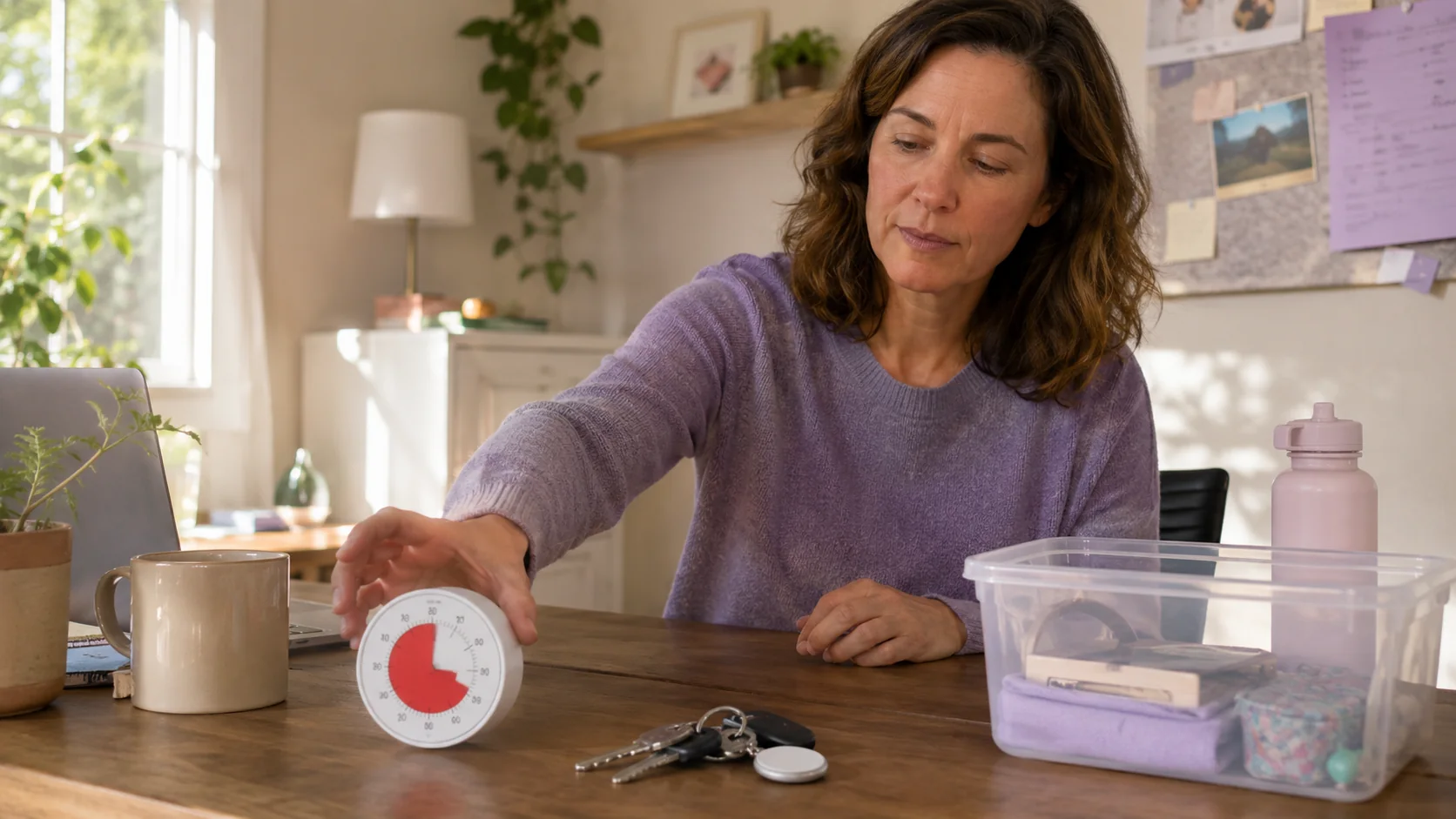
Two Januaries ago we did an inventory of the previous Christmas. Not on purpose — we were looking for a phone charger and ended up on our knees in front of the bottom drawer of the dresser, which is where good intentions go.
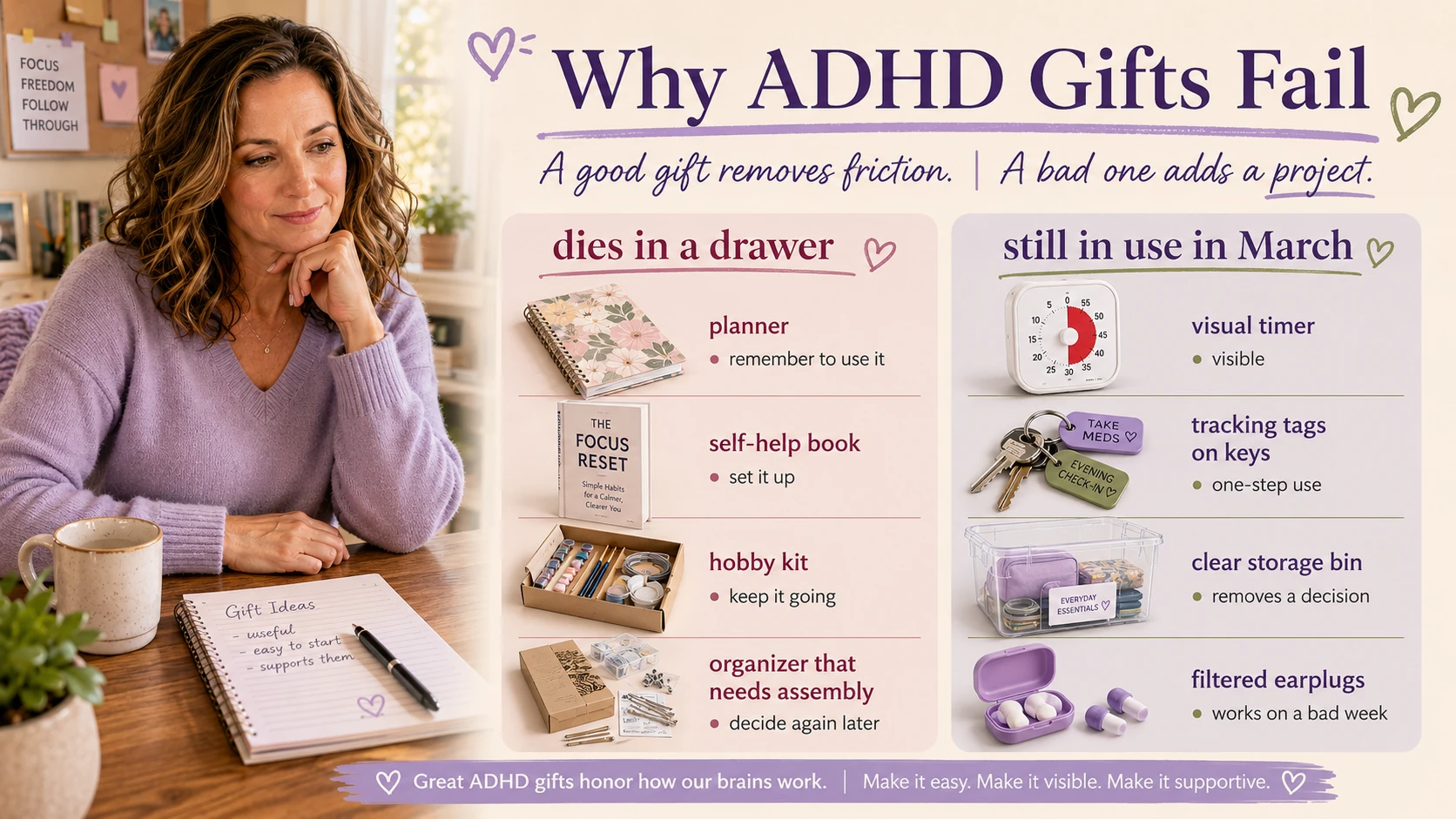
Inside: a leather-bound planner, still shrink-wrapped. A book about building better habits, bookmarked at page nine. A subscription box for a hobby we did one time. A beautiful desk organiser that needed to be assembled and therefore never was. Somebody had spent real money on every single one of those, and every single one of them had been chosen by a person who loved us and had no idea what the problem actually was.
In the same house, still in daily use from that same Christmas: a four-pack of tracking tags and a plastic timer.
That is the whole difference, and it is not about price. The gifts that survive an ADHD household are the ones that remove a specific daily failure. The gifts that die in the drawer are the ones that ask you to become a more disciplined person first.
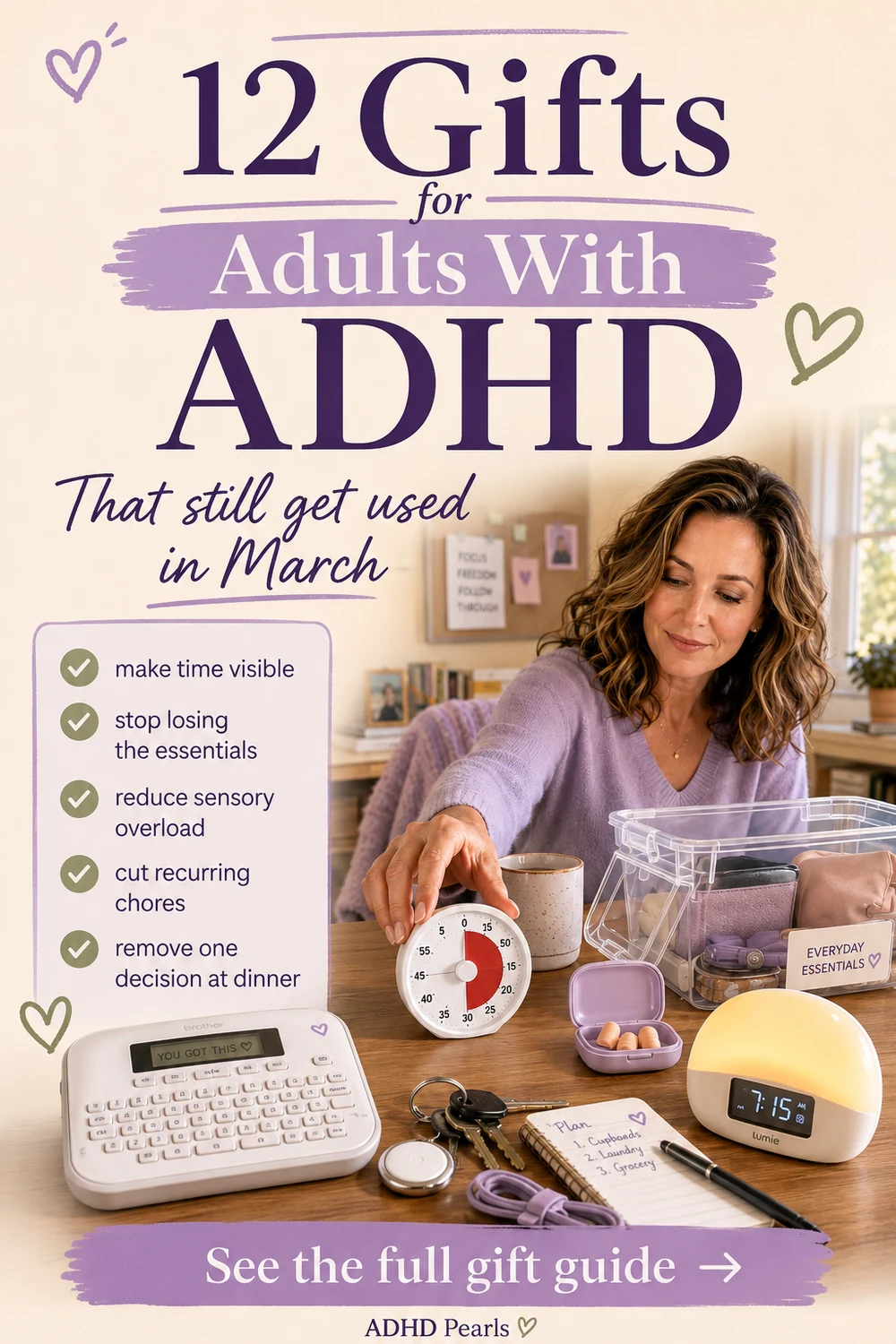
So this is the list, written from inside the problem rather than about it. Twelve things that are still in use in March. Or, if you are the one with ADHD: send this to whoever keeps asking what you want.
Quick answer
What is the best gift for an adult with ADHD?
One that removes a specific daily failure instead of asking for a new habit. Gifts die in the drawer when they need setup, upkeep or discipline first — planners, hobby kits, anything requiring assembly. Gifts survive when they work on a bad week: a visual timer, a four-pack of tracking tags, clear storage, filtered earplugs.
Key takeaways
📌A gift works if it does its job on a bad week, with no setup, upkeep or new habit required.
📌Planners and self-help books arrive carrying an opinion about how organised the recipient should be.
📌Buy the multi-pack, not the single — deciding which item deserves it is the tax you are trying to remove.
📌The best gift is often not an object: admin already handled, or an experience already booked and dated.
📌Anything that needs assembly should be assembled before you give it. That is the actual gift.
There is a pattern to the failures, and once you see it you cannot unsee it.
A gift fails when using it requires the exact thing ADHD makes expensive: remembering to, setting it up, keeping it going, or deciding anything at the moment you have no deciding left. A planner needs a daily habit. A hobby kit needs a session to be planned. An organiser needs a system to maintain the system.
A gift works when it does the job whether or not you are having a good week. It sits in the open. It has one button, or none. It removes a decision rather than adding a project.
A good ADHD gift does the remembering for you. A bad one asks you to be someone who remembers.
A good ADHD gift does not ask for a new habit first. It removes a failure point that already happens.
The second, quieter thing: a lot of well-meant gifts carry a message. A planner says you should be more organised. A self-help book says you are a problem I have identified. Even when nobody means it that way, that is what lands — and for a brain already carrying two decades of being told to just try harder, it lands hard. If you want the long version of why that stings so much, we wrote about it in rejection sensitive dysphoria.
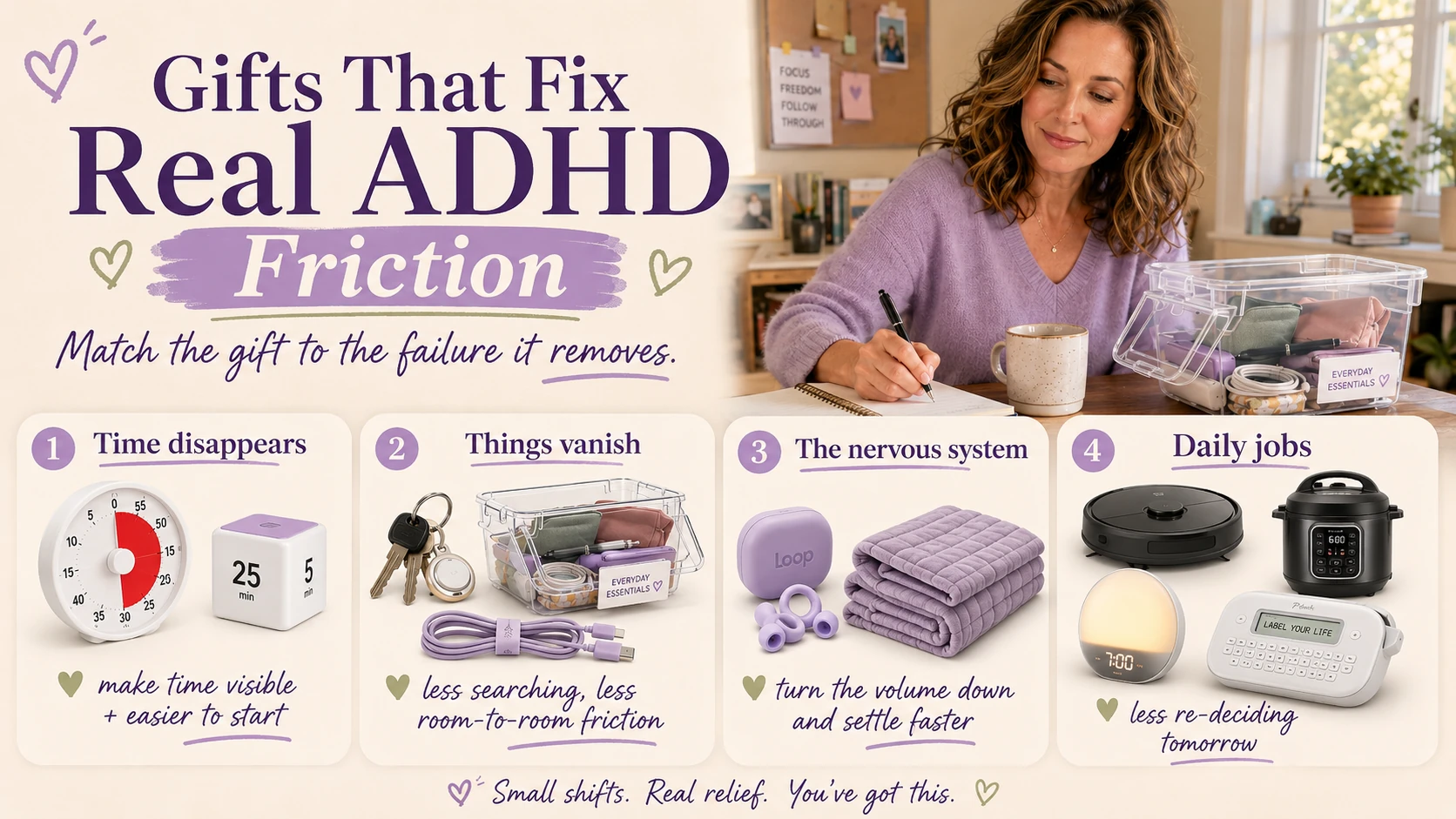
Match the gift to the failure it removes: time, lost objects, sensory overload, or the jobs that come back tomorrow.
None of the twelve below is a self-improvement project. Every one of them is a thing that quietly does a job.
For the Time That Disappears
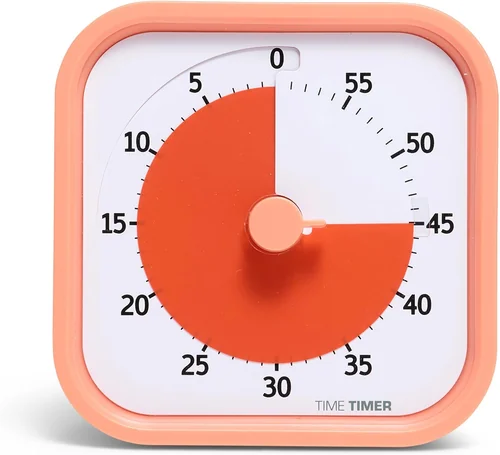
1. A visual countdown timer
The failure it removes: twenty minutes and two hours feel roughly the same from the inside.
This is the single object we would replace first if it broke. Time blindness is not a metaphor — the sense of duration that most people run in the background genuinely does not report in. A disc that visibly shrinks supplies that information from outside your head. No numbers, no reading. You glance at it and you know.
The reason a phone timer is weaker is not convenience, it is location: the timer lives inside the device that eats the time.The visual timer we use →Affiliate link — as an Amazon Associate we may earn from qualifying purchases.
Honest limitation: it is a chunky plastic disc and it will not win any design awards on a nice desk. Buy it for function, not for looks.
A visual timer puts time outside the phone - which matters, because the phone is the thing that eats the time.
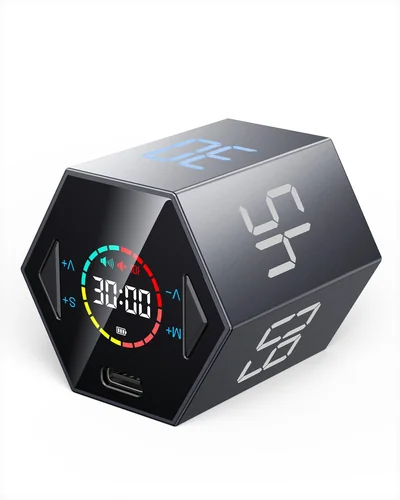
2. A flip-to-start cube timer
The failure it removes: starting requires a decision, and the decision is the expensive part.
The difference between this and a phone timer is roughly six steps. You turn the cube onto the 15 face and it has already started. No unlocking, no app, no choosing a number, no accidental fourteen minutes of email on the way.
We reach for this on the days when the task is not hard, it just will not begin — the specific stuckness covered in task paralysis.The flip cube timer →Affiliate link — as an Amazon Associate we may earn from qualifying purchases.
Honest limitation: the fixed faces are the point, but if your work never fits 5, 15, 25, 30, 45 or 60 you will find it rigid.
For the Things That Vanish
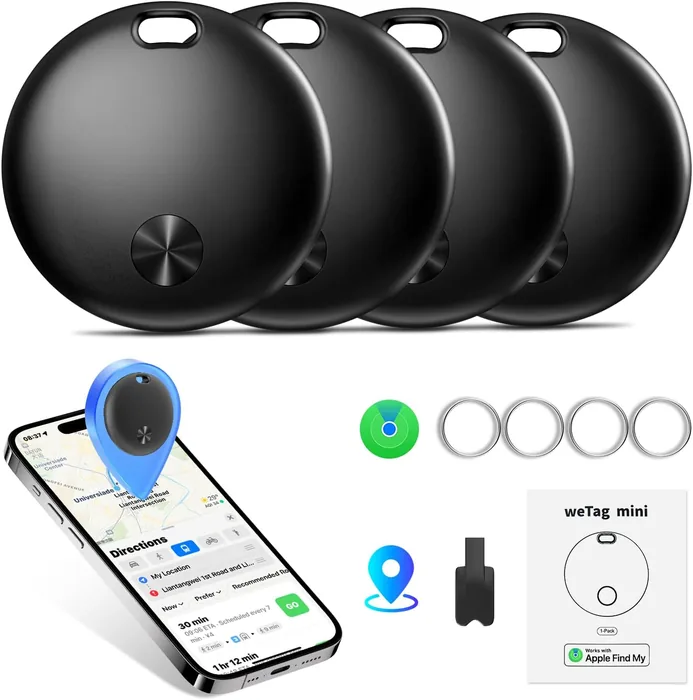
3. Bluetooth tracking tags, in a four-pack
The failure it removes: the twenty minutes before leaving the house that are spent looking for keys.
Get the multi-pack, not the single. This matters more than it sounds: one tag makes you choose which item deserves it, and choosing is the tax we are trying to avoid. Four tags means keys, wallet, the bag you actually use, and the remote, with no deliberation.
What surprised us was not finding things faster. It was how much quieter the mornings got — the low background hum of where is it, where is it just stopped.The four-pack we use →Affiliate link — as an Amazon Associate we may earn from qualifying purchases.
Honest limitation: most of the good ones ride on Apple’s Find My network, which makes them excellent with an iPhone and close to useless on Android. Check which phone the recipient actually carries before you buy — a tag on the wrong ecosystem is a dead tag. For an Android household, look for one that uses Google’s Find Hub network instead.
The win is not finding the keys faster. It is that the morning hum of where is it never starts.
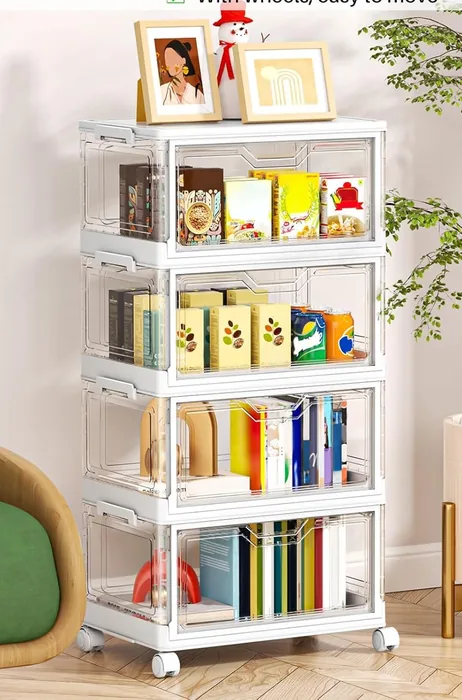
4. Clear, front-opening storage bins
The failure it removes: anything inside an opaque box has left the universe.
This is the one that sounds boring and is not. Object permanence is why beautiful matching lidded baskets are a trap for an ADHD home: they look calm and they function as a memory hole. You put the thing away and the thing ceases to exist.
Clear sides fix the seeing. Front-opening fixes the second, sneakier problem — if you have to unstack three bins to reach the bottom one, you will not, so the bottom bin becomes an archive.Clear front-opening bins →Affiliate link — as an Amazon Associate we may earn from qualifying purchases.
Honest limitation: visible storage is visually busier than the closed-basket look. If the recipient is someone whose calm depends on clean sight lines, this is a bad gift for them.
If the thing disappears into an opaque box, for an ADHD brain it may as well have left the house.
5. Three of something boring, instead of one nice one
The failure it removes: the object is always in the wrong room.
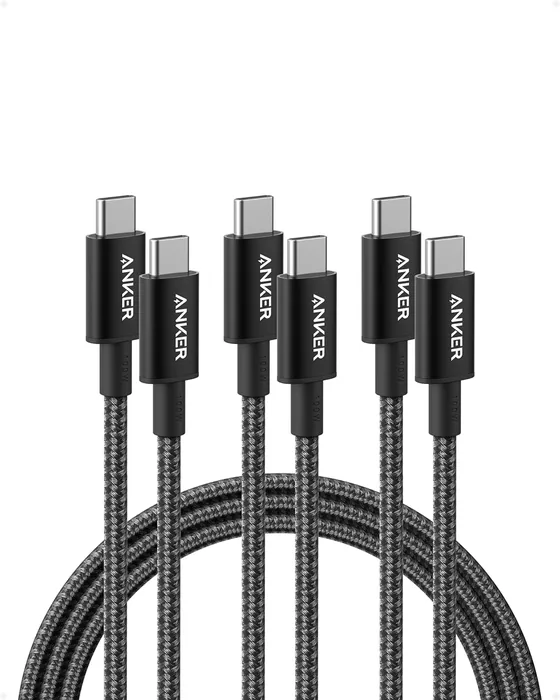
Here is the surprising one, and it is a principle more than a product. Buy the same cheap thing three times and put one in each place it is needed. Charging cables. Scissors. Reading glasses. Nail clippers. Hairbrushes. Pens.
The instinct is that this is wasteful, or a bit sad. It is neither. It is the cheapest possible workaround for a brain that will not carry an object back to its home, and the return is immediate: the task stops requiring a journey. We resisted this for years because it felt like giving up. It is not giving up. It is designing around the brain you have instead of the one you keep meaning to become.
A multi-pack of charging cables is the easiest place to start, because everyone already knows exactly which two rooms are missing one.A three-pack of identical cables →Affiliate link — as an Amazon Associate we may earn from qualifying purchases.
Honest limitation: it does not photograph well, and if you need a gift to look generous when it is unwrapped, this one does not. Pair it with something else.
For the Nervous System
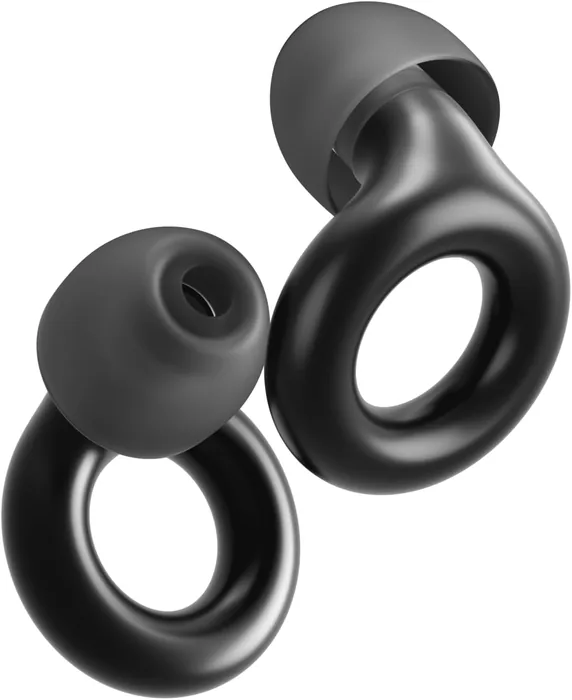
6. Filtered earplugs, the conversation kind
The failure it removes: the room has no volume knob.
Most guides just say “Loop earplugs” and stop, which is unhelpful, because the models do very different jobs. The sleep-and-silence ones cut around 24 dB. The socialising ones cut roughly 16–20 dB and are built to keep speech clear while pulling down the background roar.
For a gift, the socialising pair is almost always the right call. The problem is not usually noise in an empty room — it is the restaurant, the family dinner, the shop in December, where you can hear everything and understand nothing and are slowly going under while smiling. Take the edge off the room and you can stay in it an hour longer. Our full protocol for that particular slide is in sensory overload first aid.The filtered earplugs →Affiliate link — as an Amazon Associate we may earn from qualifying purchases.
Honest limitation: they are visible in the ear, and some people mind that at a family event. They also need the right ear-tip size to work at all, so include the multi-tip version.
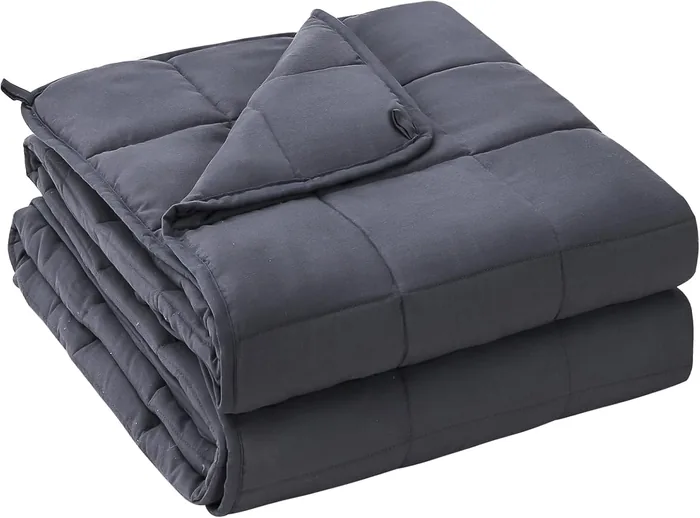
7. A weighted blanket
The failure it removes: a body that will not power down at the end of the day.
Worth being precise about why this works, because it is usually sold as a sleep gadget and that undersells it. The useful moment is not bedtime. It is the twenty minutes on the sofa after a day that went badly, when the thinking is still going at speed and nothing you decide to do about it helps. Steady, even pressure does something that a decision cannot.
Rule of thumb on weight: roughly ten per cent of body weight. Heavier is not better and a too-heavy blanket just gets abandoned.A cooling weighted blanket →Affiliate link — as an Amazon Associate we may earn from qualifying purchases.
Honest limitation: they are hot. If the recipient runs warm or is somewhere in perimenopause, buy the cooling-fabric version or skip this entirely — a hot blanket in a hot year is a gift that gets used once.
The useful moment is not bedtime. It is the twenty minutes after a day that went too loud for too long.
For the Jobs That Come Back Every Single Day
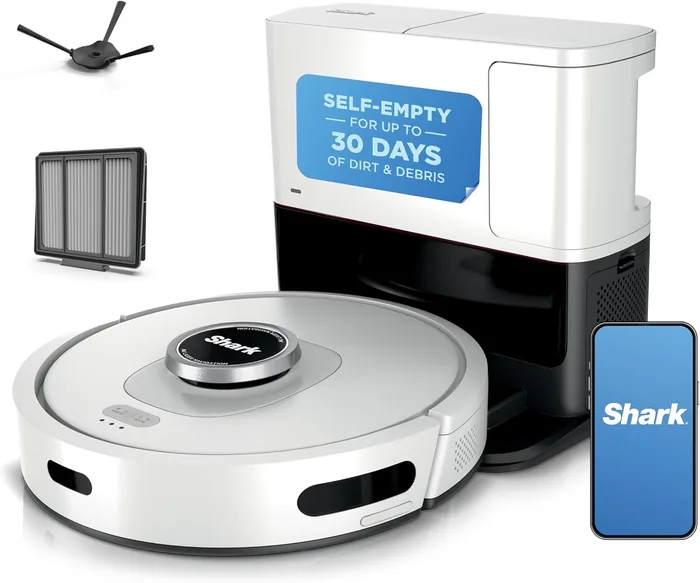
8. A robot vacuum
The failure it removes: a decision that arrives again tomorrow, and the day after, forever.
This is the one we would argue for hardest, and it is the least obvious as a gift. Most people think of it as an appliance. For an ADHD household it is closer to a subscription to not having an argument with yourself.
The mechanism is worth naming. One-off tasks are survivable. What grinds an ADHD brain down is the recurring decision — the small job that resets every single day and that you must re-decide, re-schedule and re-start each time, while the floor visibly gets worse and the shame quietly compounds. Delete the whole recurring loop and you do not just get a clean floor, you get back the low-grade daily failure that came with it. That is the piece a gift guide never mentions.
It also breaks the doom-pile cycle at the root, because a floor that is about to be vacuumed by a machine has to be picked up first, which turns out to be a surprisingly effective forcing function.The robot vacuum →Affiliate link — as an Amazon Associate we may earn from qualifying purchases.
Honest limitation: it is the expensive one on this list, and it is a genuinely good candidate for several people going in together. It also cannot handle cable spaghetti or a floor that is already covered, so it works best alongside the tidying, not instead of it.
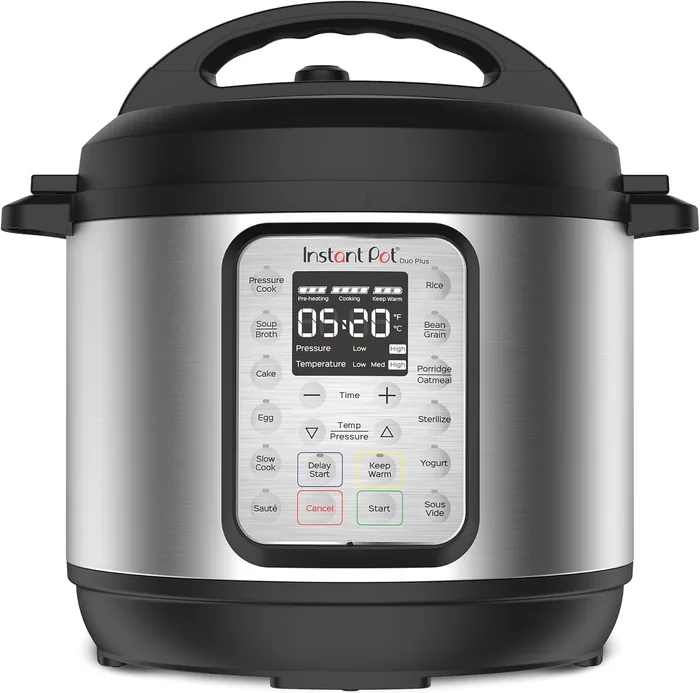
9. One appliance that makes dinner a single decision
The failure it removes: six o’clock, hungry, no plan, nothing sounds possible.
Air fryer or multicooker — the specific machine matters far less than the property they share. They collapse cooking into one action with one thing to watch, and they are forgiving about timing, which is the actual requirement. Almost every recipe an ADHD brain abandons is abandoned at step four of six, when three things need attention at once.
The gift is not the appliance. It is that dinner becomes a decision you make once instead of a sequence you have to hold. More on that in low-energy meals.The one-decision dinner machine →Affiliate link — as an Amazon Associate we may earn from qualifying purchases.
Honest limitation: it takes counter space, and if the kitchen is already full this becomes a thing that lives in a cupboard, and a thing that lives in a cupboard does not exist. See gift number four.
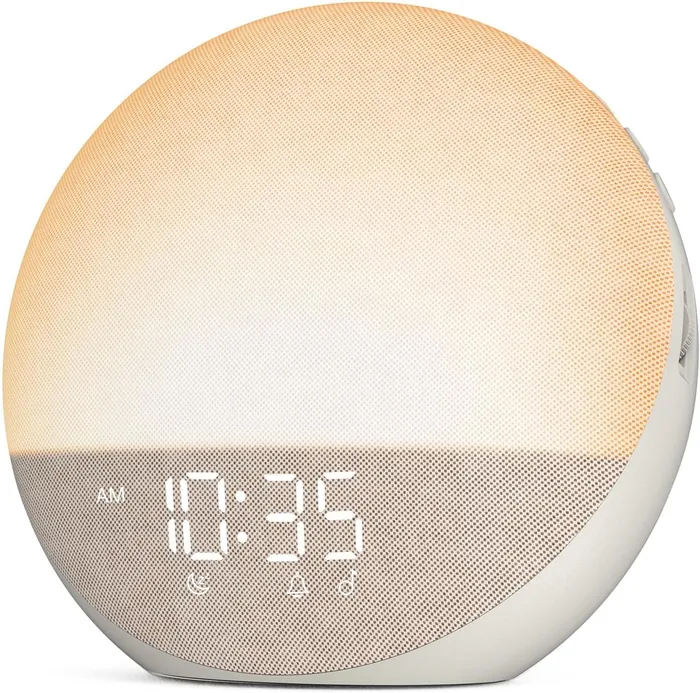
10. A sunrise alarm clock
The failure it removes: the first forty-five minutes of the day, gone.
Light that comes up gradually before the alarm gives the body a running start, which matters a lot if waking up is the part of your day that reliably goes wrong. The second, underrated benefit: it puts a clock in the bedroom that is not your phone, which quietly ends the scrolling that starts before you are upright.
Buy the simple one. The cheap models with physical buttons do the job.The sunrise alarm clock →Affiliate link — as an Amazon Associate we may earn from qualifying purchases.
Honest limitation, and this one matters: some of the premium smart models put their best features behind an annual subscription. For an ADHD recipient that is not a neutral detail — it is a recurring charge on a card that is very unlikely to get cancelled at the right moment. We have audited our own subscriptions and it was not a proud afternoon. Buy the version that just works when you plug it in.
The Two Nobody Thinks Of
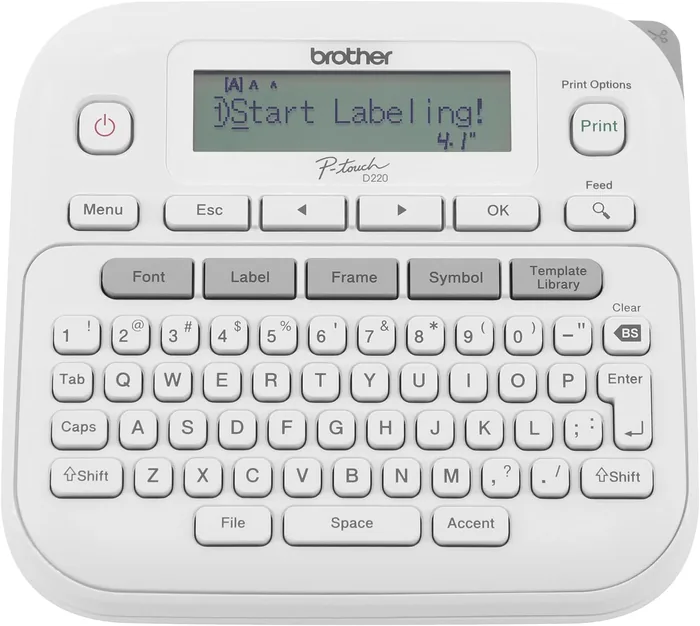
11. A label maker
The failure it removes: the good system that quietly died in week three.
This sounds like the most boring object on the list and it is the one with the strangest effect. The problem with any organising system in an ADHD house is not building it — building it is fun, it is novel, there is dopamine in it. The problem is that four weeks later nobody, including you, remembers what the third shelf was for, so things start going in the nearest gap and the system dissolves.
A printed label is an external memory that does not require you. It also, unexpectedly, ends a whole category of household negotiation, because the shelf now says what it is and the shelf is not having an opinion at you.
There is a novelty trap here — the first evening you will label things that did not need labelling. Let it happen. It is a cheap way to buy a system that survives.The label maker →Affiliate link — as an Amazon Associate we may earn from qualifying purchases.
Honest limitation: the tape cartridges are the ongoing cost and they are not cheap. Buy a spare cartridge with it, or the machine will stall on the day the first one runs out and go in a drawer.
12. Something booked, paid for, and already in the calendar
The failure it removes: the gift that requires the recipient to organise the gift.
The last one is not an object and it is the best one on the list.
A voucher is not this. A voucher is a task with a deadline, wrapped in a nice envelope — and it will be found, unused and expired, in the same drawer as the shrink-wrapped planner. Every adult with ADHD has done this and felt awful about it.
What we mean is the whole thing, handled: the date chosen, the booking made, the confirmation forwarded, the babysitting sorted if that applies. Written on a card as a specific date and time, not as a possibility. The gift is the absence of admin.
The first time somebody did this for us, the reaction was not delight about the thing itself. It was something closer to relief, and it was slightly embarrassing how strong it was. Nothing to arrange. Nothing to remember. Nothing to feel guilty about in eleven months.
Honest limitation: it needs you to know their calendar, and it removes their choice. Get the date wrong and you have created exactly the admin you were trying to prevent, so check with someone who knows their diary.
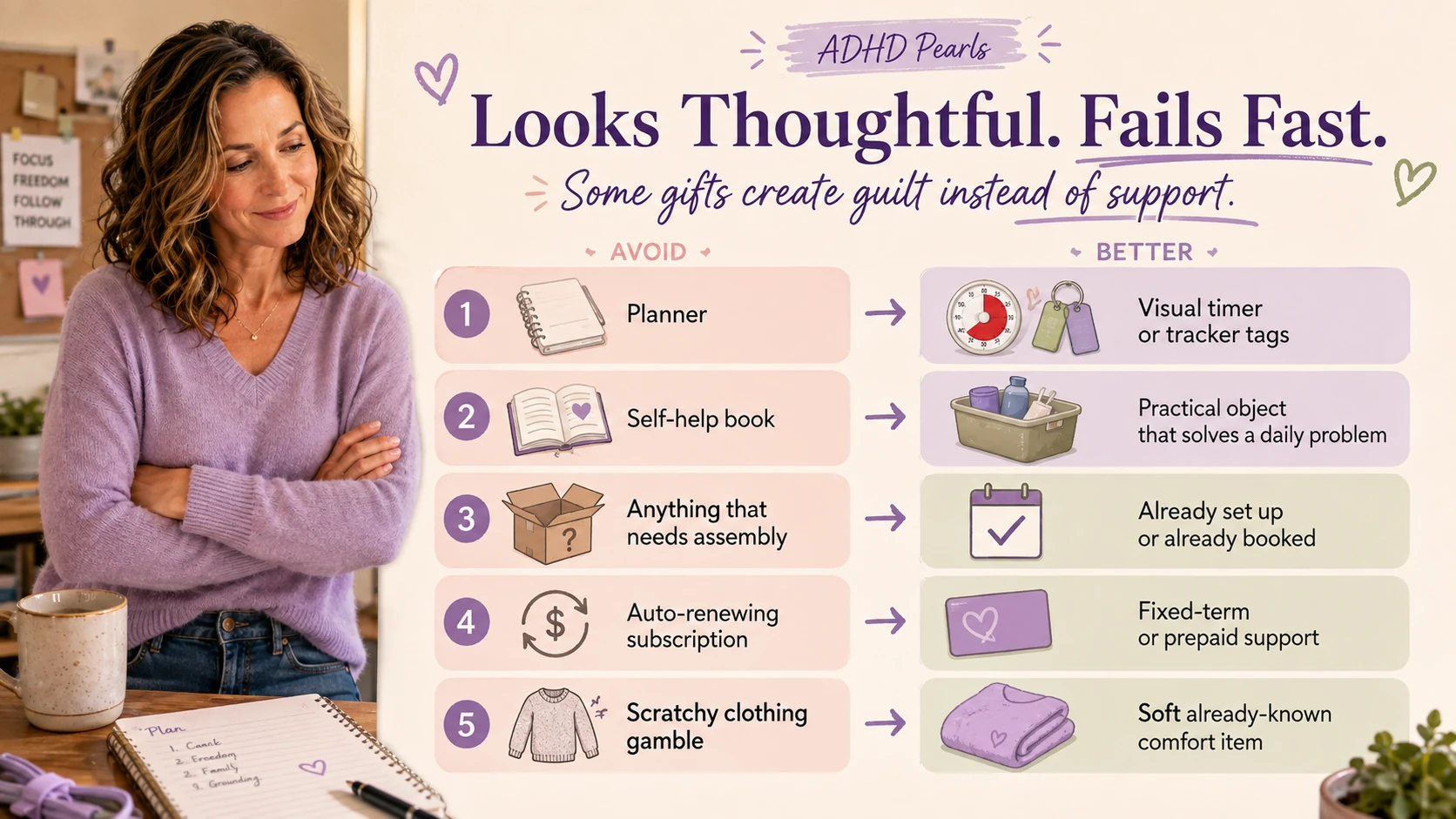
Five Gifts That Look Perfect and Aren’t
Every one of these is bought with love, and every one of them has a decent chance of hurting.
Some gifts are bought with love and still land as a project. The better version removes work, guilt or re-deciding.
1. A planner. The most common ADHD gift and one of the least used. A paper planner requires a daily habit to be useful, and the daily habit is the disability. It also arrives carrying an opinion about how organised you should be. If you want the full argument, we made it in why a planner won’t fix your ADHD routines.
2. A book about becoming better. A book about ADHD, chosen by the person themselves, can be excellent. A productivity or habit book, given unprompted, reads as a diagnosis with a bow on it — and it will sit at page nine, generating guilt every time it is seen.
3. Anything that requires assembly. The gap between “lovely idea” and “flat box behind the sofa in March” is one afternoon of executive function that nobody has in January. If it must be assembled, assemble it before you give it. That is the gift.
4. A subscription that auto-renews. Meal kits, boxes, apps. The first month is genuinely great. Month seven is a charge nobody noticed for a service nobody uses, and cancelling it is precisely the kind of small admin task that sits undone for a year. If you give one, prepay a fixed term with no card on file.
5. Clothes with a texture gamble. Wool, stiff seams, tags, anything scratchy at the neck. It will be thanked for warmly and never worn, and the guilt is worse than the waste. Sensory clothing sensitivity is real and it is not fussiness. Soft, tagless, already-known-good is fine. Adventurous is not.
If You Are the One With ADHD, Here Is How to Ask
Most of us are terrible at this. Asked what we want, we say “oh, nothing, honestly” — partly because deciding under pressure is hard, partly because naming a want out loud feels greedy, and partly because the honest answer sounds strange. It is difficult to say I would like four tracking tags and someone to book a dentist appointment without feeling like you have failed at Christmas.
Two things that make it easier.
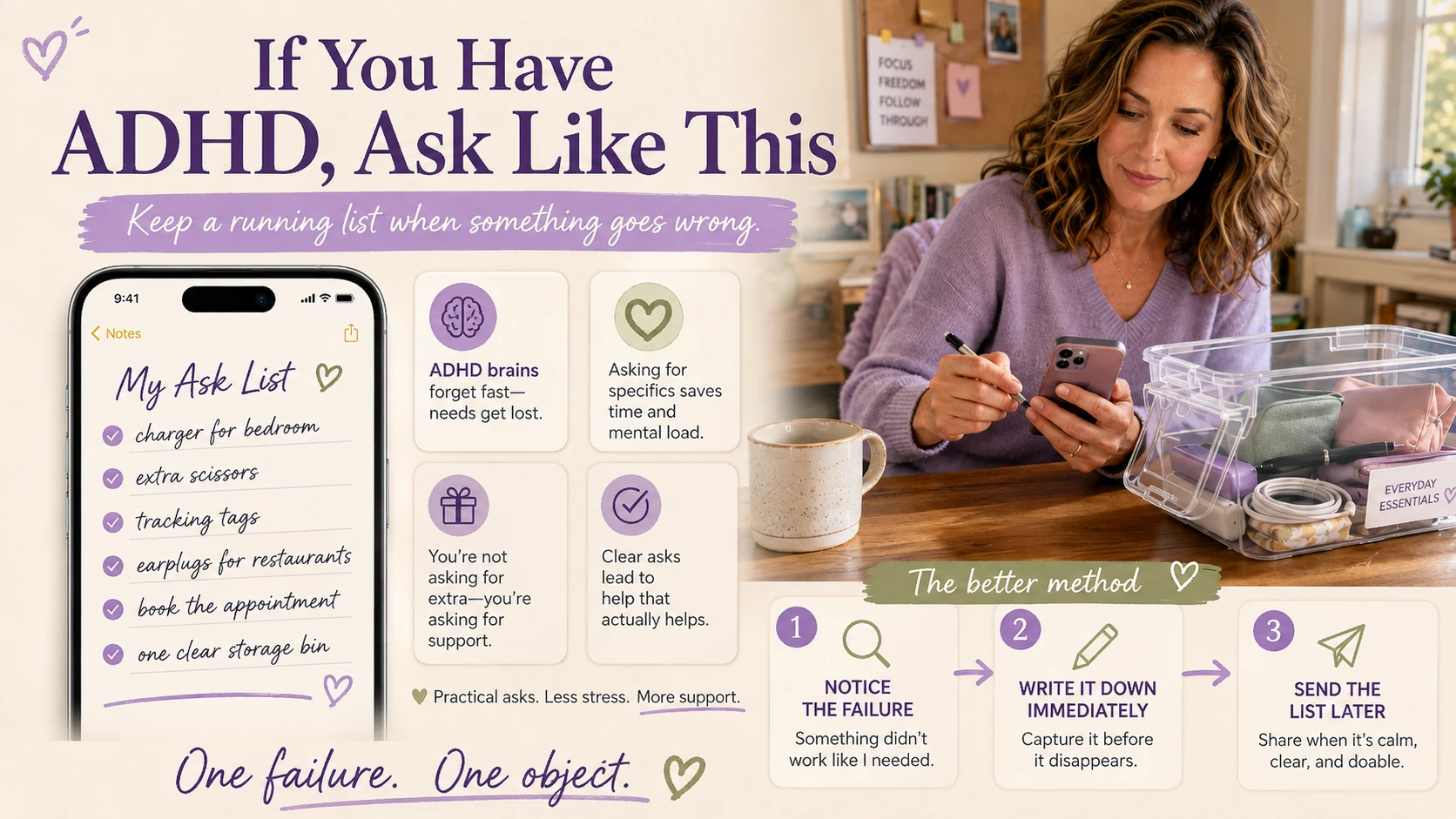
Do not invent wants under pressure. Capture the object that would have helped at the moment something went wrong.
Keep a running list on your phone all year. Not a wishlist to be curated — a note you add to at the exact moment something goes wrong. The evening you cannot find the scissors, write “scissors, three of them.” In November you will have a real list and you will not have to invent wants on the spot in a phone call.
Then just send the list. People asking what you want are not being polite. They genuinely do not know, they are worried about getting it wrong, and a specific answer is a relief to them. Sending a link is not rude. It is the most useful thing you can do for someone who wants to get this right.
One Tiny Move
Do not go and buy twelve things. That is a project, and projects are what we are trying to avoid here.
Instead: think of one thing that went wrong in the last week because an object was missing, dead, or in the wrong room. The charger. The scissors. The keys. That is the gift — for someone else, or written on your own list for whoever asks next.
One failure, one object. That is the whole method, and it is the reason the four-pack of tags is still in use two years later while the planner is still shrink-wrapped in the drawer.
FAQ: Gifts for Adults With ADHD
What is the best gift for an adult with ADHD? The one that removes a specific daily failure rather than asking for a new habit. If you want a single safe answer, a multi-pack of Bluetooth tracking tags — it solves a problem almost every adult with ADHD has, it needs no setup routine, and it works whether or not this is a good week.
Are fidget toys a good gift for adults with ADHD? Sometimes, but they are the most stereotyped choice on the shelf and that is worth knowing before you buy. Some adults genuinely use them for focus; others find receiving one slightly reductive, as though their whole diagnosis is a spinner. If you are not certain the person already fidgets deliberately, choose something else.
Why are planners a bad ADHD gift? Because a planner only works if it is used daily, and sustaining a daily voluntary habit is the specific thing ADHD makes hard. It also carries an implicit message about how organised the recipient should be. A planner chosen by the person themselves is a different matter entirely.
What should I buy for someone with ADHD who says they don’t want anything? Take it as a decision problem, not a preference. Choose something that removes admin: a booked and paid experience with the date already fixed, a household job handled, or duplicates of a boring thing they always lose. Removing work is felt more strongly than receiving an object.
Are weighted blankets actually good for ADHD? Many adults find steady pressure helps them settle, and the most useful moment is often the wind-down after a hard day rather than sleep itself. Aim for around ten per cent of body weight, and choose a cooling fabric if the person runs warm. It is a comfort item, not a treatment.
What is a good cheap gift for someone with ADHD? Multiples of one small thing they constantly lose — charging cables, scissors, reading glasses, nail clippers — placed in different rooms. It costs very little and removes a daily irritation, which is a better return than almost anything at three times the price.
Which Loop earplugs should I buy as a gift? For social situations, the conversation-focused model rather than the maximum-silence one: it cuts roughly 16–20 dB and keeps speech clear, so the person can stay in the room and still take part. The sleep-focused version cuts more, around 24 dB, but is not what you want for a family dinner.
Is it rude to give someone an ADHD-specific gift? Not if it solves a problem rather than commenting on a flaw. A tracking tag is practical; a book about being less disorganised is a critique. The test is simple — would this still be a thoughtful gift if nobody said the word ADHD out loud?
What can I give an adult with ADHD that isn’t an object at all? Do a piece of their admin. Book the appointment they have been putting off, sort the thing that needs a phone call, or take one recurring household job off them for a month. Say precisely what you have done and when. It is free, and it lands harder than most things you can buy.
Save this for the next time someone asks what an actually useful ADHD gift looks like.
Pin this for the person who wants to help but keeps choosing gifts that add another project.
This article describes what has worked in our own homes and what the ADHD community consistently reports. It is not medical advice, and no object on this list treats ADHD. If you are struggling, a clinician who understands adult ADHD is the person to talk to.
Found this helpful? Share it with someone who gets stuck too.
One tap makes ADHD Pearls a preferred source in your Google account, so our articles surface higher when you search. No signup, and it brings you straight back to this page.
For the woman who sets up the perfect system on Sunday and abandons it by Tuesday.
One short letter, every week. Real talk about ADHD, task paralysis, and the tiny wins that actually move the needle for a brain like yours. No shame. No hustle culture.