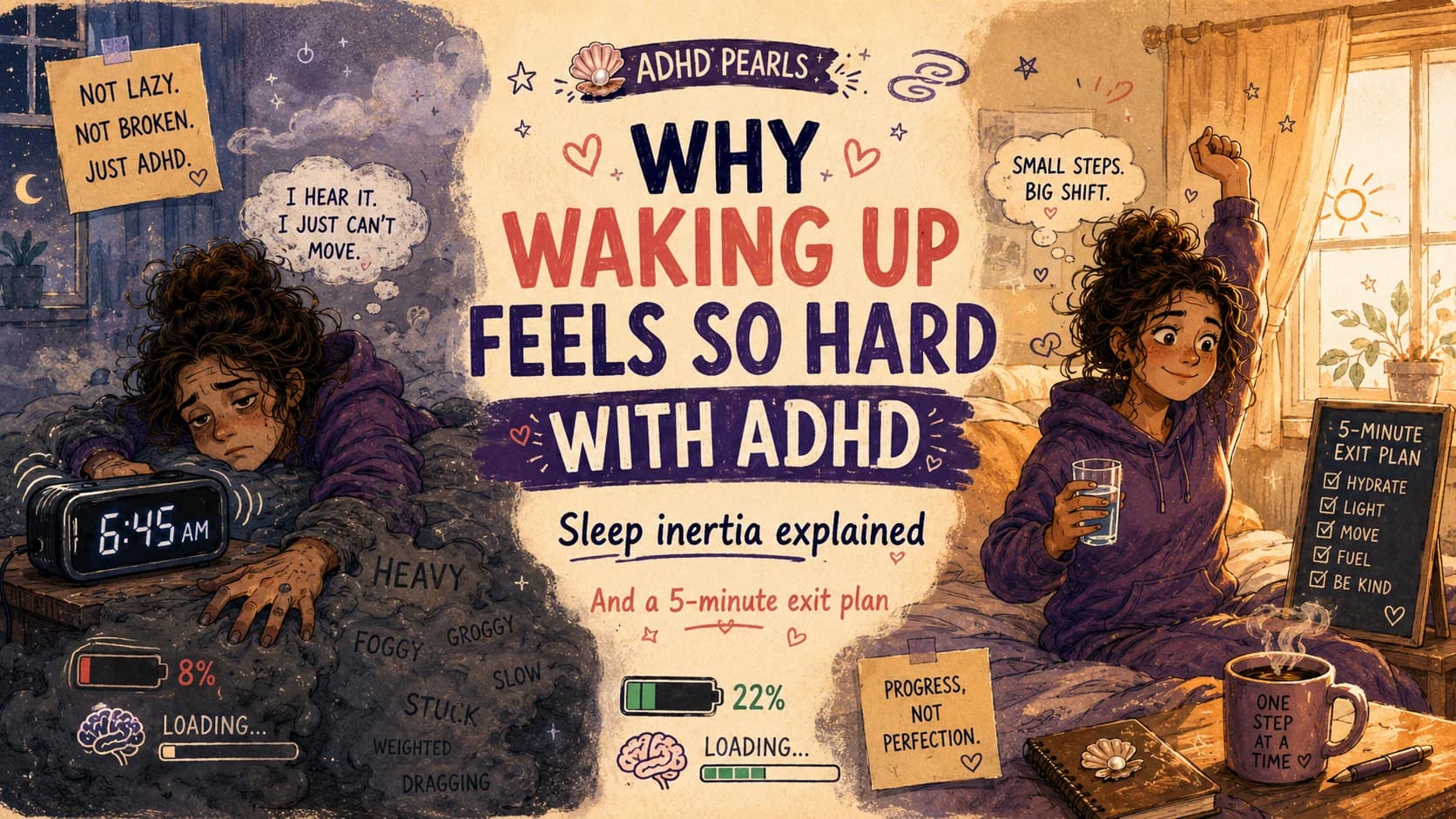
My alarm goes off and my body files a formal complaint.
It's not that I want to stay in bed, exactly. It's that the gap between "awake enough to hear the alarm" and "able to operate my own arms" feels like it's about four hours wide, and I have to cross it through what can only be described as wet concrete.
For years I thought this meant I was lazy, or dramatic, or both. Turns out the concrete feeling has a name, a mechanism, and - thank god - a workaround that doesn't rely on me suddenly becoming a different person at 6:45 AM.
This article is personal and educational. It is not medical advice. Trouble waking and constant tiredness can be linked to sleep disorders, depression, thyroid issues, anemia, and perimenopause. If this is seriously affecting your life, please talk to a qualified clinician.
Quick answer
Why is waking up so hard with ADHD?
Mostly sleep inertia - the groggy transition out of sleep - which tends to hit ADHD brains harder and last longer. A later body clock, frequent late nights, and difficulty switching mental states stack on top of it. The fix isn't willpower: it's shrinking the first move, adding light and movement fast, and not lying there negotiating while the grogginess wins.
Key takeaways
😴The "concrete" feeling is sleep inertia - a real, named transition state, not laziness.
🧠It tends to hit ADHD brains harder and linger longer, especially after late nights.
🔋Light, movement, and water physically speed up waking - more than willpower does.
📌Shrink the first move to something tiny and pre-decided, so a foggy brain can do it.
🌀Snoozing often deepens grogginess; getting vertical breaks it faster.
Sleep Inertia: The Real Name for the Concrete Feeling
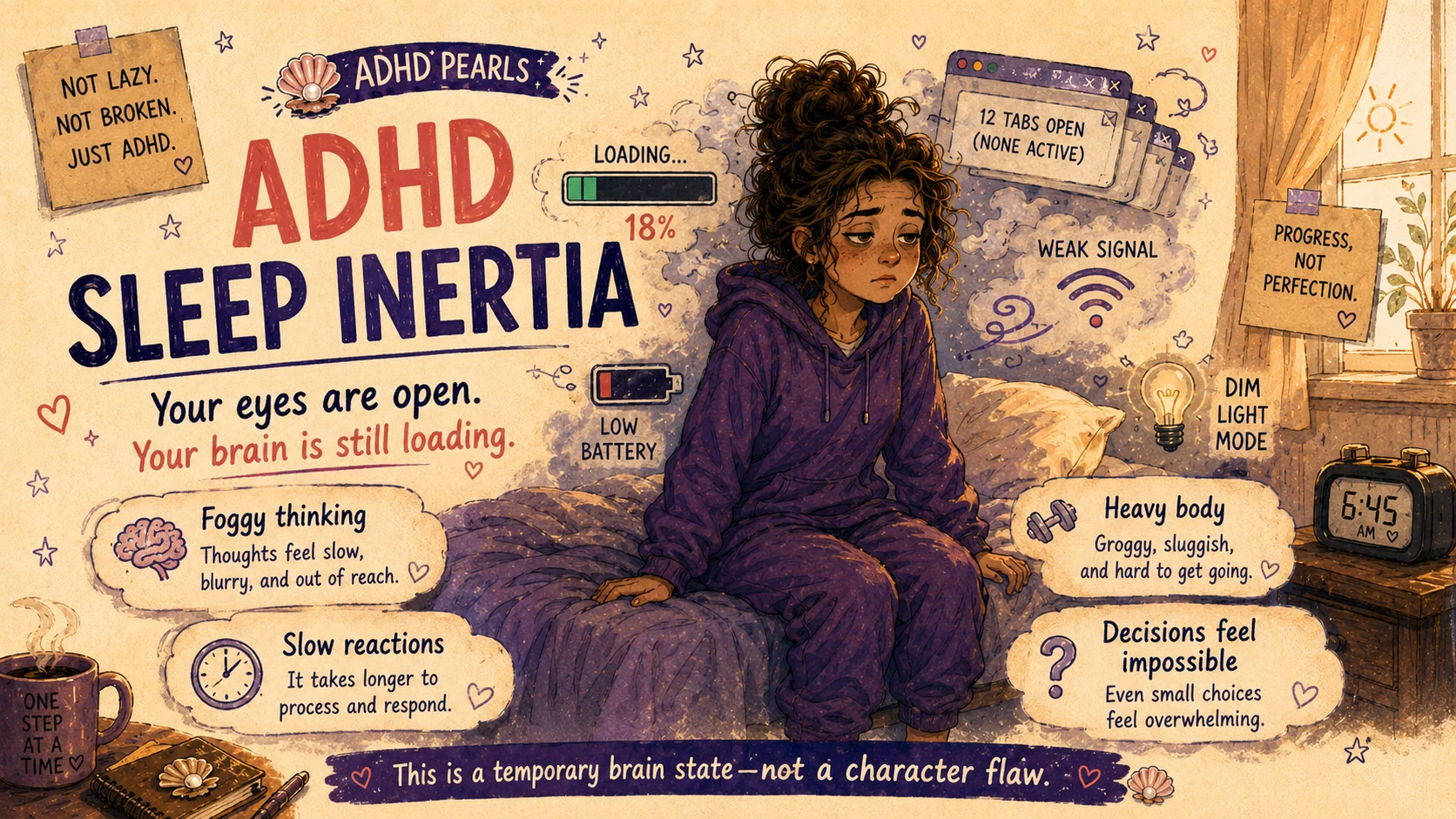
Sleep inertia is the groggy, slowed-down state right after waking, when your brain genuinely hasn't finished booting up. Your thinking is foggy, your reaction time is shot, and your judgment is, frankly, not to be trusted.
Everyone experiences it. It's why nobody should make big decisions or send important texts in the first ten minutes of being awake. But the intensity and length vary a lot from person to person - and a lot of ADHD people report it landing harder and lasting longer. Where neurotypical grogginess often clears in 15 to 30 minutes, with ADHD it can stretch to two hours or more.
You're not bad at mornings. You're trying to make decisions inside a brain that hasn't switched on yet.
That reframe matters, because if the problem is a temporary brain state, the solution isn't character - it's helping the state lift faster.
Sleep inertia can leave your eyes open while thinking, movement and decision-making are still coming online.
From ADHD Pearls
ADHD Morning + Night Cards
36 printable micro-step cards for hard ADHD mornings and hard ADHD nights — one clear next step, no full routine required.
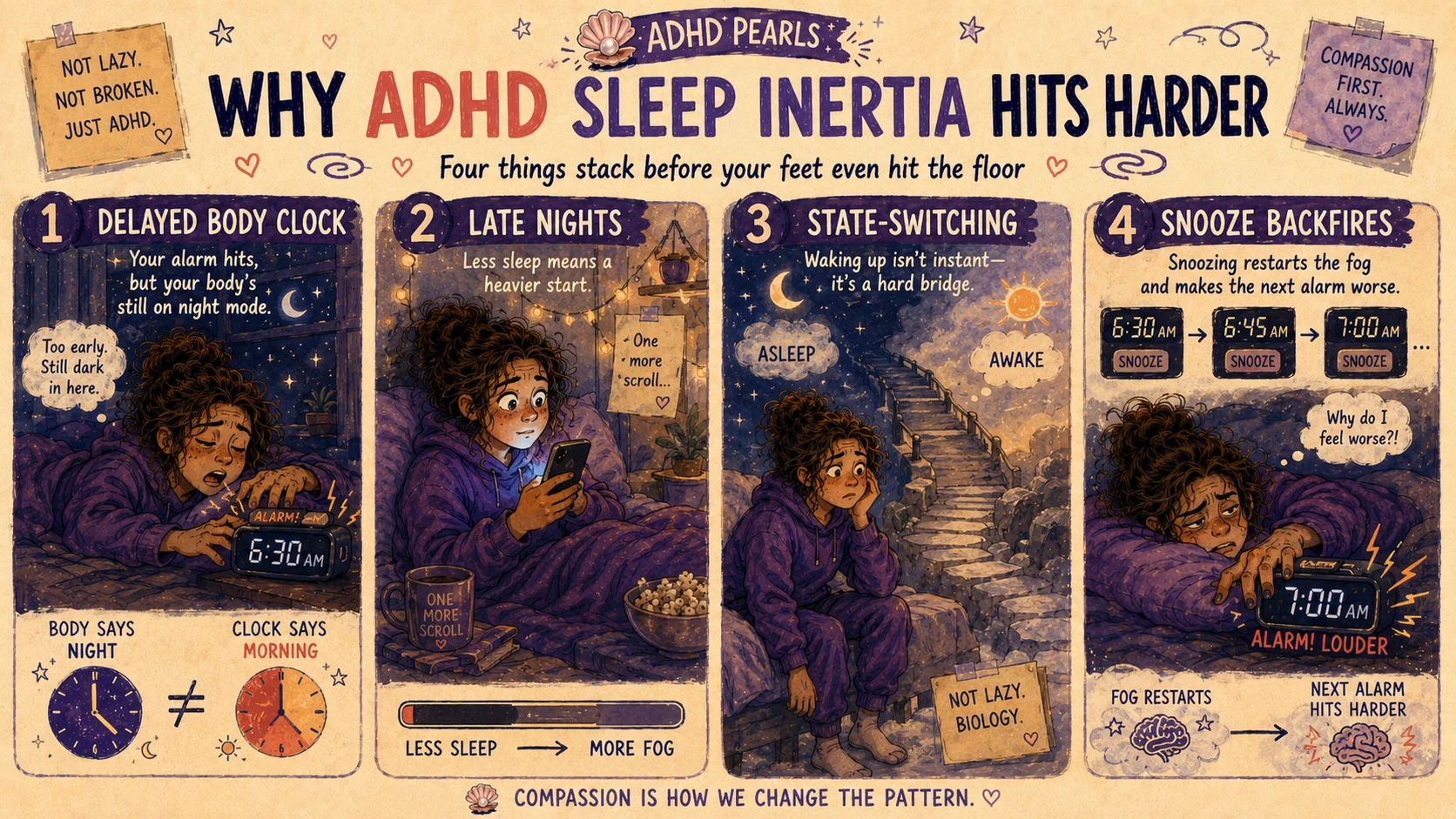
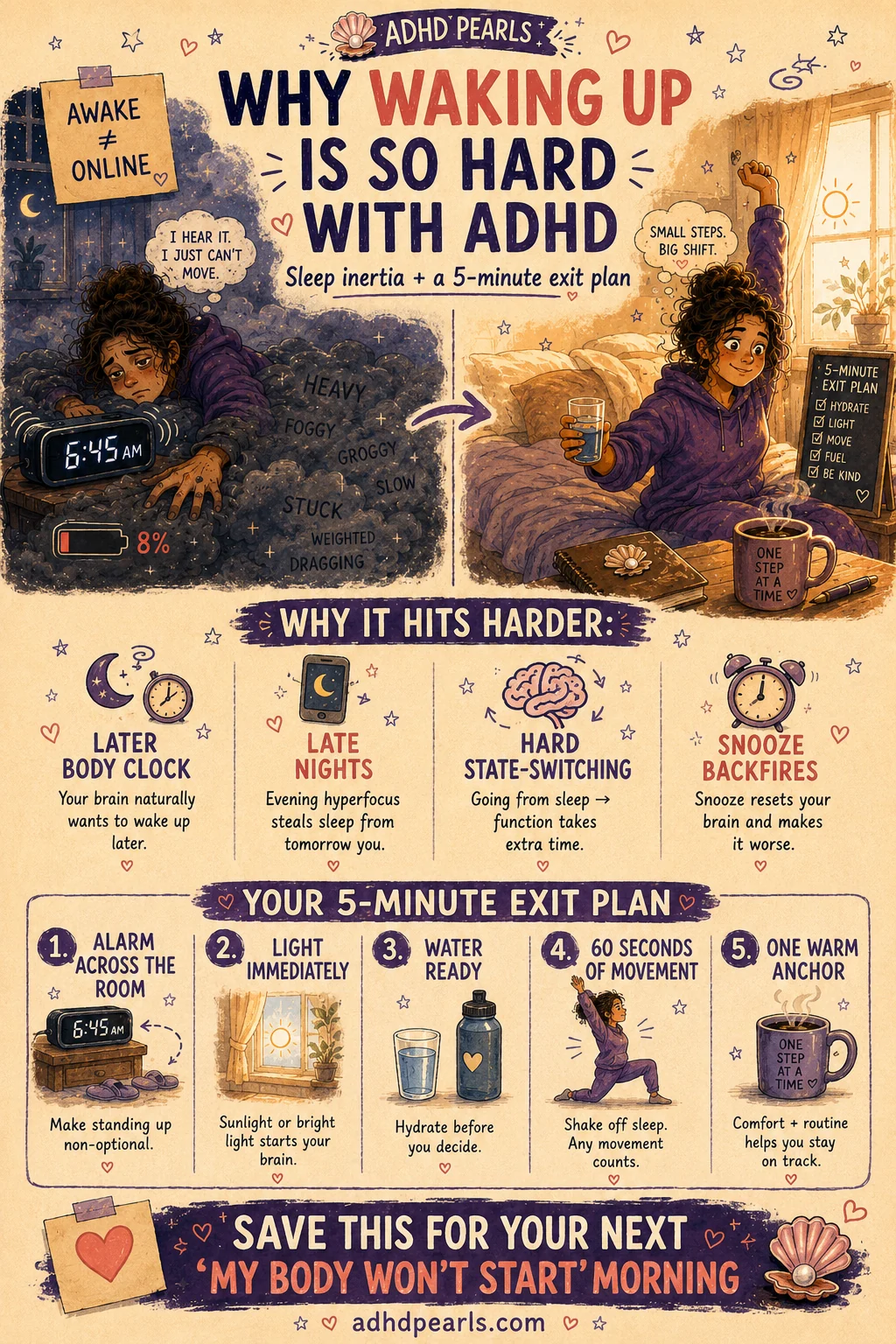
State-switching is hard. ADHD brains struggle with transitions in general, and asleep-to-awake is one of the biggest transitions there is.
Snooze backfires. Drifting back into a short sleep cycle and getting yanked out again can deepen the fog rather than easing it.
None of this is a moral failing. It's timing and wiring - which means it responds to mechanics, not to being harder on yourself.
A later body clock, late nights, difficult state-switching and repeated snoozing can stack before your feet hit the floor.
It’s also rarely just one bad habit. Research suggests around 80% of adults with ADHD have a co-occurring sleep problem - from a delayed body clock to insomnia or sleep apnea - which is part of why mornings feel so brutal.
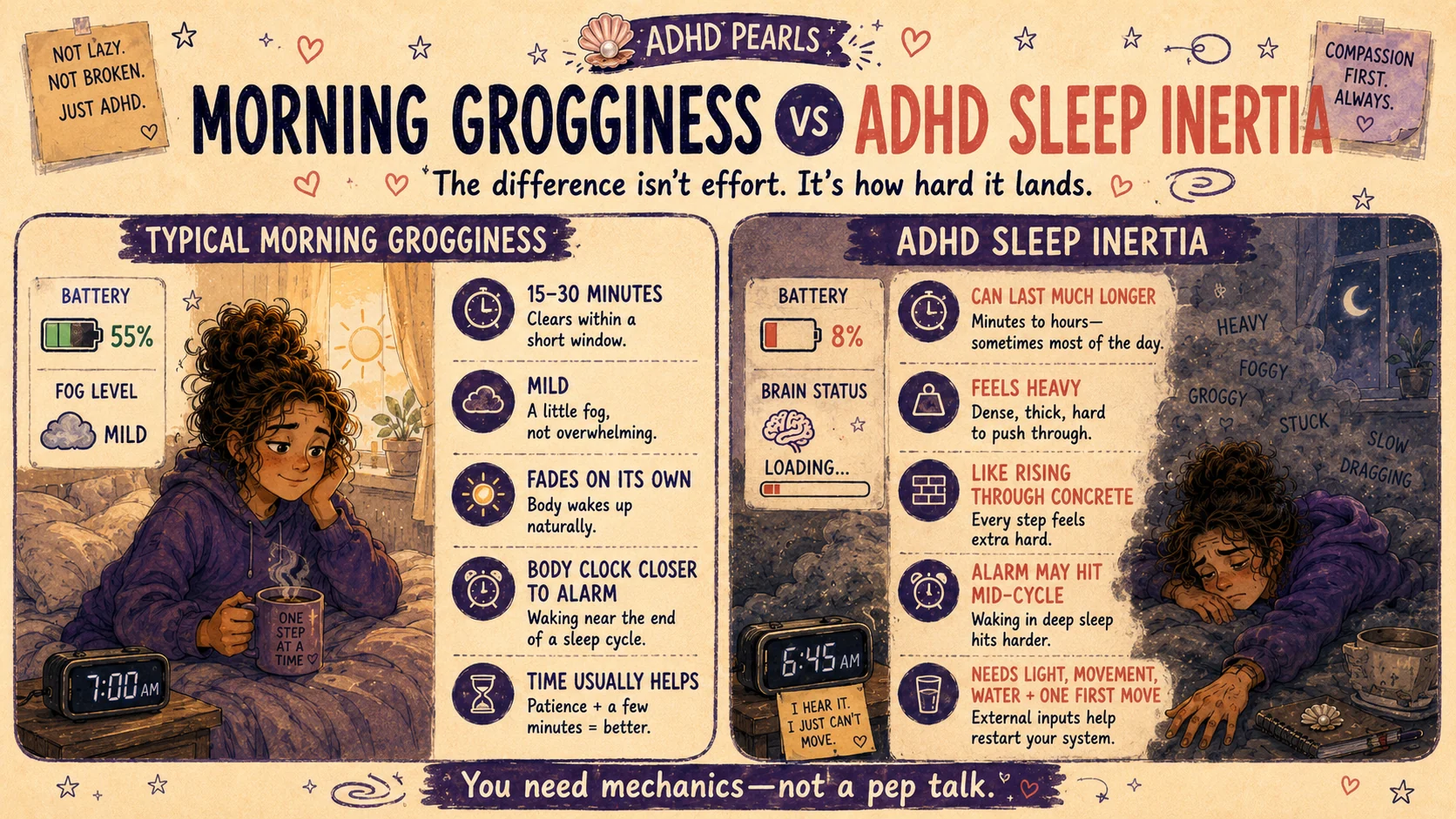
The difference isn’t effort. It’s how long the grogginess lasts and how hard it lands:
A neurotypical brain
An ADHD brain
Grogginess usually clears in 15–30 minutes
Grogginess can last up to 2 hours or more
Mild, fades on its own
Heavy - the “rising through concrete” feeling
Body clock tends to match the alarm
Often runs late, so the alarm pulls you up mid-cycle
Time is enough
Light, movement and water - plus a pre-decided first move
Typical grogginess usually fades on its own; ADHD sleep inertia can land harder and need active wake-up cues.
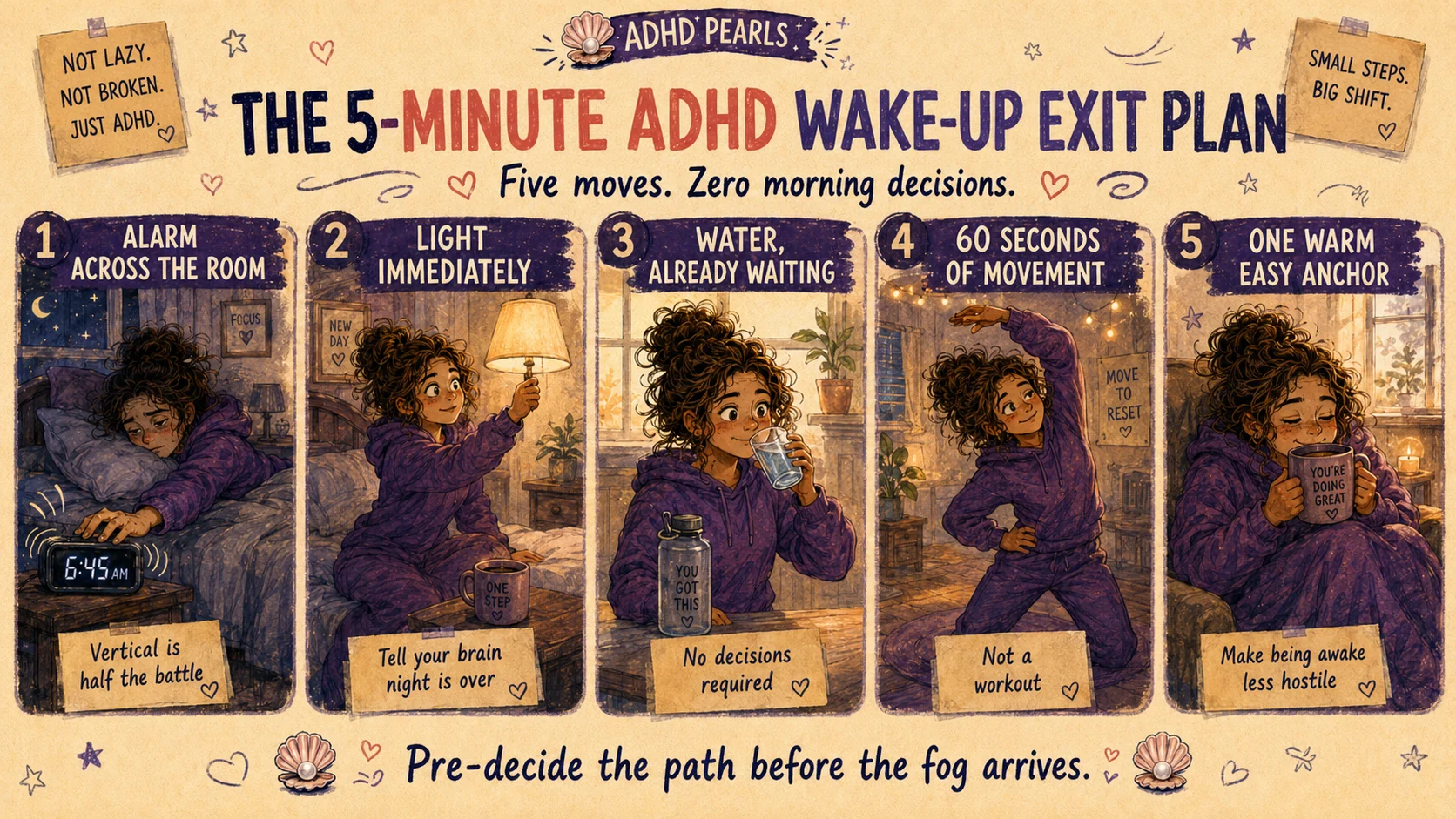
The 5-Minute ADHD Wake-Up Exit Plan
The whole strategy: don't ask foggy-you to decide anything. Pre-load the moves so they happen almost on autopilot. Here's the version that works for me.
Minute 0 - the alarm is across the room. You have to stand up to silence it. Vertical is half the battle, and it's much harder to crawl back into bed once you're up.
Minute 1 - light immediately. Curtains open, or a lamp on, or ideally step toward a window. Light is the single biggest signal that tells your brain the night is over.
Minute 2 - water you don't have to think about. A glass left out the night before. Hydration plus a simple action nudges your system awake.
Minute 3 - sixty seconds of movement. Not a workout - just stretching, walking to another room, rolling your shoulders. Movement physically accelerates the wake-up.
Minute 4 - one warm, easy anchor. Start the coffee, wash your face, step outside for a breath of air. One small good thing that makes being awake slightly less hostile.
Pre-decide five simple moves so foggy-you does not have to build a morning from scratch.
That's it. Five minutes, zero decisions, no willpower required - because every move was decided last night by the version of you who could still think. Setting these up is exactly what a good night routine and morning routine are for.
A few bonus moves, if the basic plan isn't enough:
Medication head start. If you take stimulant medication, some people set an alarm 30 to 60 minutes early, take it, and doze until it kicks in, so it is working by the time they get up. Check with your prescriber first.
Use temperature. Throw off the covers and let cool air hit you, or splash cold water on your face; a drop in skin temperature is a strong wake-up signal.
Try a two-alarm system. One alarm about 90 minutes before you need to be up, then your real one, can ease a delayed body clock into waking instead of yanking it.
This Isn't a Character Flaw
I spent a long time believing that people who bounced out of bed were simply better than me. More disciplined. More serious about their lives.
They mostly just have milder sleep inertia and a body clock that matches the alarm. That's it. It's not a virtue - it's luck of the wiring.
When waking up is brutal, the answer isn't to despise yourself into it. It's to engineer the morning so it asks less of a brain that isn't online yet. And on the days even that feels impossible, the free ADHD Stuck Reset is a gentle place to begin. The shame that piles on top of hard mornings is worth putting down too - more on that in the ADHD shame detox.
FAQ: ADHD and Waking Up
Why is it so hard to wake up with ADHD?
A mix of stronger sleep inertia, a later body clock, frequent late nights, and difficulty switching states. Your alarm often pulls you up mid-cycle while your brain is still foggy. It is a timing and wiring issue, not a lack of effort.
What is ADHD sleep inertia?
Sleep inertia is the grogginess and slowed thinking right after waking, when your brain has not fully come online. Everyone gets it, but many ADHD people report it hitting harder and lasting longer. Light, movement, and hydration help it lift faster.
Is sleep inertia worse with ADHD?
Research suggests it often is, both more intense and longer-lasting. Where neurotypical grogginess tends to clear in 15 to 30 minutes, with ADHD it can stretch to two hours or more, partly because of low prefrontal-cortex activity and a delayed body clock.
How long does sleep inertia last?
For most people it eases within 15 to 60 minutes, but it can feel longer and heavier with ADHD, especially after short or badly-timed sleep. Light, movement, and water help it lift faster than waiting it out in bed.
Can ADHD medication help me wake up?
Some people set an alarm 30 to 60 minutes early, take their stimulant medication, then doze until it takes effect, so it is working by the time they get up. It helps some and not others, and it is not suitable for everyone, so talk to your prescriber before trying it.
How do I get out of bed when my body feels like concrete?
Shrink the first move to something tiny and pre-decided: feet on the floor, a glass of water within reach, the alarm across the room. Then add light, cool air, and a little movement, which physically speed up waking. Do not lie there negotiating.
Is it better to get up right away or snooze?
Getting up tends to work better. Snoozing can restart a sleep cycle you then get pulled out of, which often deepens the grogginess. Making the alarm require standing up, and adding light, usually beats repeated snoozing.
Why do I oversleep with ADHD?
A delayed body clock, poor sleep quality, and heavy sleep inertia can all mean you sleep through alarms or far past them, and late nights make it worse. Consistent sleep and wake times help, and persistent oversleeping is worth raising with a clinician to rule out other causes.
Could waking up exhausted be something other than ADHD?
Yes. Thyroid problems, depression, anemia, sleep apnea, and perimenopause can all cause unrefreshing sleep and hard mornings. If it is persistent or severe, it is genuinely worth getting checked rather than assuming it is willpower.
The Concrete Lifts - You Just Help It Along
I still wake up slowly. I've made peace with that. But I no longer lie there losing a fight with my own body, because the moves are already decided and most of them happen before I've fully formed a thought.
You're not lazy. You're crossing a real threshold every morning. Build the ramp, and the crossing gets a whole lot shorter.
Save this five-minute ADHD wake-up plan for the mornings when your body will not start.
One tap makes ADHD Pearls a preferred source in your Google account, so our articles surface higher when you search. No signup, and it brings you straight back to this page.
Before you go
ADHD Morning + Night Cards
36 printable micro-step cards for hard ADHD mornings and hard ADHD nights — one clear next step, no full routine required.
For the woman who sets up the perfect system on Sunday and abandons it by Tuesday.
One short letter, every week. Real talk about ADHD, task paralysis, and the tiny wins that actually move the needle for a brain like yours. No shame. No hustle culture.