I lost my keys for the fourth time that month, and I cried in my car.
Not because of the keys themselves. Because I’d already tried everything. Color-coded hooks. A keychain with a Tile tracker. Three different "ADHD-friendly" apps that promised to solve this exact problem. None of them worked, because none of them addressed the actual issue: I kept putting my keys wherever I happened to be standing when I walked in the door.
I sat in that car — late, again, for something I’d been excited about — and made a decision that felt almost insulting in its simplicity.
Keys go in the small ceramic bowl by the front door. Every time. Forever.
No system. No app. Just one rule, one bowl, no exceptions.
I haven’t lost my keys in two and a half years.
I want to talk about this because the ADHD productivity industry is built on the opposite of this story. Every week my feed shows me a new "game-changing hack." A planner with seventeen color-coded sections. An app that gamifies habits. A morning routine with eleven steps that supposedly rewires your brain in thirty days.
I tried so many of them. For decades. Here’s what I eventually figured out, after a late diagnosis and a slow year of unlearning everything I’d been told:
The strategies that actually work for ADHD are almost always boring. Not joyless — just unsexy. Repetitive. The same thing every day forever, with no novelty and no dopamine spike. This is the opposite of what most ADHD content sells you. But it’s the truth nobody monetizes, because boring strategies don’t make for good content.
Here are five of them. They saved my 40s. None of them will surprise you.
The boring systems didn't fix everything. They just made my life easier to return to.
Quick answer
Why do boring ADHD strategies work better than new systems?
Because they survive bad days. A new system runs on the enthusiasm of the week you set it up, and that enthusiasm is the first thing to disappear. A boring strategy asks for almost nothing, so there is almost nothing to fall off. The test is not whether it excites you — it is whether it still works when you feel awful.
Key takeaways
📌Boring strategies survive bad days. New systems run on enthusiasm, and enthusiasm goes first.
📌Same bedtime, same place for things, write it down immediately, walk, medication at a fixed time.
📌The test is not whether it excites you. It is whether it still works when you feel awful.
📌Each one removes a decision rather than adding a routine.
📌None of them are impressive, and that is precisely why they lasted.
This is the most cliché advice in any productivity article ever written. You’ve heard it a thousand times. You’re probably already tuning out. But stay with me, because there’s a specific reason this works for ADHD brains that almost nobody explains properly.
ADHD doesn’t just affect executive function during the day. It affects your nervous system’s ability to regulate transitions — and the transition into sleep is one of the hardest ones, because winding down requires the exact thing we’re worst at: gradually decreasing stimulation.
For most of my life I went to bed when I "felt tired" — which for an ADHD brain often means 1am after a hyperfocus spiral on something completely random. Then I’d wake up exhausted, run on cortisol all day, crash by 4pm, repeat. The pattern felt like a personality flaw. It wasn’t.
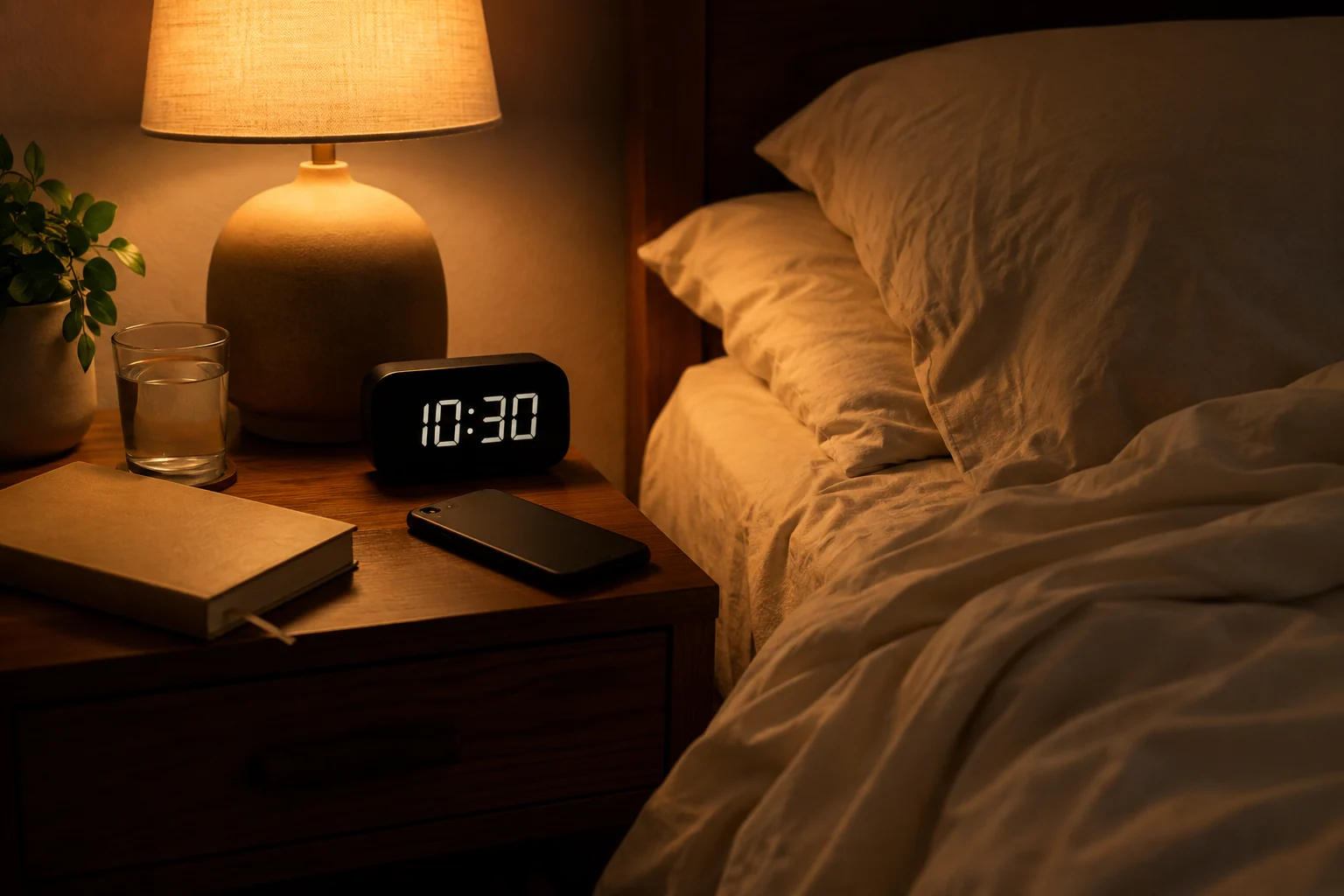
A few years ago I started going to bed at 10:30pm. Every night. Even when I had energy. Even on weekends. The first two weeks were brutal. My brain kept insisting I was wasting perfectly good creative time.
By week four, I could think clearly in the mornings for the first time I could remember.
By month three, my ADHD symptoms had measurably softened — not because anything had been treated, but because my nervous system was finally getting consistent rest instead of being dragged through constant dysregulation.
This is unbearably boring advice. It changed my life more than any app I’ve ever tried.
The most boring sleep rule became one of the biggest changes: same bedtime, every night.
From ADHD Pearls
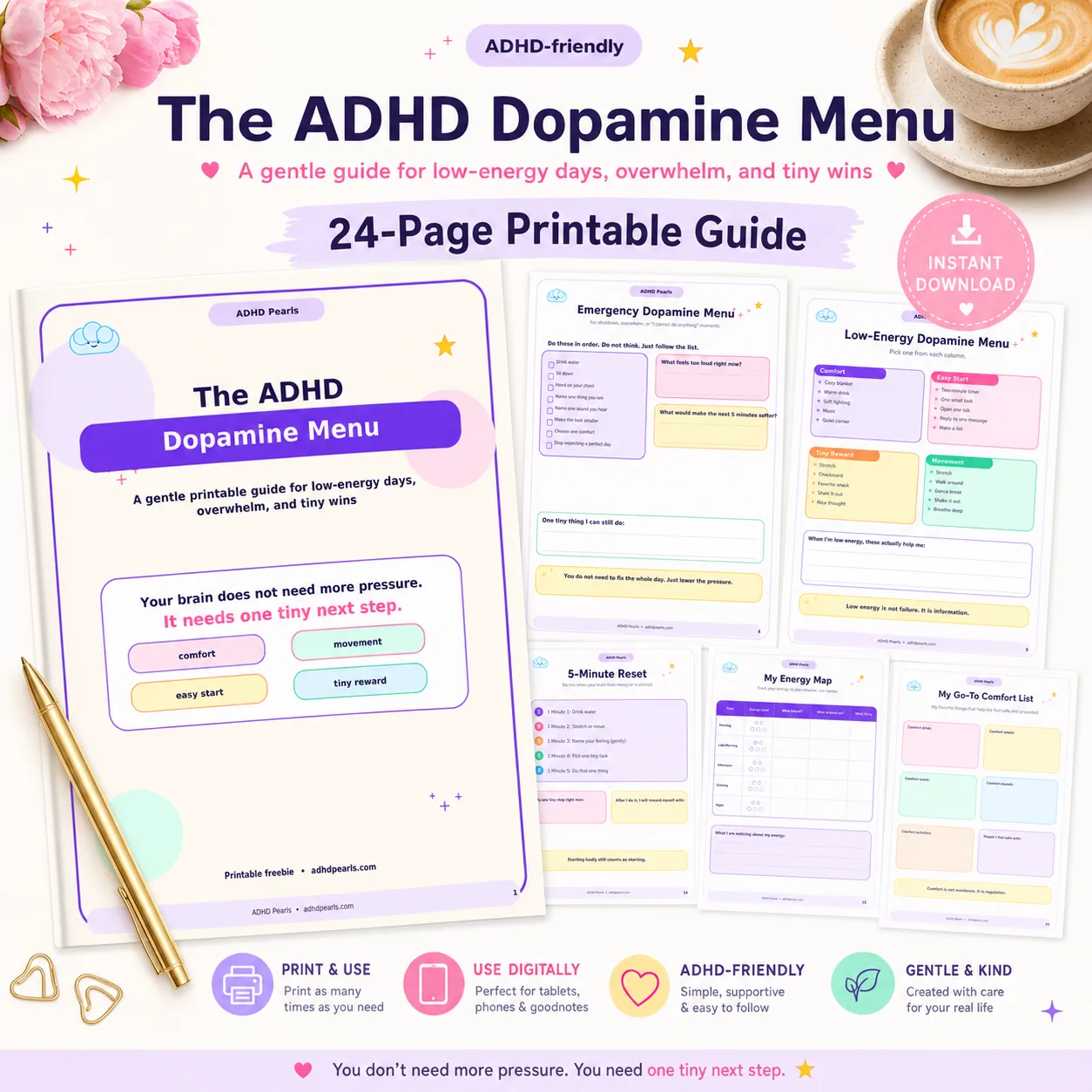
Free Dopamine Menu
24 tiny activities for low-energy, low-capacity days.
2. Putting Things in the Same Place. Every Time. Forever.
Back to the keys.
The reason this works is so simple it’s almost embarrassing: ADHD brains have working memory deficits, which means we can’t reliably remember where we put things even five minutes after putting them down. The traditional solution is to "be more mindful" or "pay more attention." This is about as helpful as telling someone with poor eyesight to try harder to see.
The actual solution is to bypass working memory entirely. If your keys always go in the same bowl, you don’t need to remember where they are. You just need to remember the rule. The rule is fixed. Forever. Your brain doesn’t have to do anything new each time.
Here’s my current list of fixed locations:
Keys → ceramic bowl by the front door
Phone charger → left side of the bed, always plugged in
Wallet → top drawer of the entryway dresser, never anywhere else
Glasses → small dish on the nightstand
Medication → next to the coffee machine
Every single one of these came after losing the item enough times to finally break me into compliance.
The boring discipline of putting things in the same place every time is the closest thing I’ve found to a genuine ADHD superpower. Not because it makes me more productive. Because it removes a hundred tiny moments of panic per week — and those moments add up to an enormous amount of chronic stress I was living with for years without realizing it.
One bowl. One rule. No decisions. That was the whole system.
3. Writing Things Down Immediately or Losing Them Forever
ADHD working memory doesn’t just lose physical objects. It loses ideas, tasks, conversations, agreements, and entire decisions you made yesterday.
For most of my career I tried to "remember" things. I’d nod in a meeting, think I’ll definitely follow up on that, and then have absolutely no memory of the conversation having occurred six days later. This isn’t a moral failing. It’s a documented feature of how ADHD brains process and hold information — particularly when we’re stressed, tired, or in the middle of something else, which is most of the time.
The boring solution: write everything down immediately. Not later. Not in a specific notebook. Not after you find the perfect capture system. Right then, on whatever surface is closest.
My system, in its full unsexy glory:
Phone Notes app open during any conversation that involves a task or decision
Sticky notes on my desk for things that surface while I’m working
Voice memos when I’m walking and something comes up
A small notebook in my bag that goes everywhere
There’s no app I’m recommending. No brand that changed my life. The whole system is just: capture immediately or lose forever.
What changed wasn’t the tools. It was accepting that the best tool is the one that’s open in front of me at the exact moment a thought happens — not the one I’ll set up properly next week.
I spent years looking for the right system. What I needed was one rule: write it down now. The "right" tool is whichever one is closest.
The best capture system is the one open in front of you when the thought happens.
4. Walking. Not Exercising. Walking.
For years I tried to "exercise." Gym memberships I didn’t use. HIIT, yoga, pilates, running, weightlifting. Each one had a two-week honeymoon period followed by the inevitable ADHD interest cliff. Then the guilt. Then another expensive membership. Then the cycle again.
A few years ago, I gave up. Not on movement — on exercise. I decided I would just walk.
Not power walk. Not walk for 30 minutes at 6am. Not anything optimized or tracked or posted about.
Just: walk to the corner shop instead of driving. Walk around the block when I’m thinking something through. Walk for ten minutes after dinner because the light is nice. That’s it.
What surprised me is how much my ADHD symptoms improved. The research on this is actually solid — ADDitude has covered the connection between regular movement and ADHD executive function extensively, and the finding that keeps appearing is that consistent, moderate movement helps more than intense, irregular bursts. Which makes sense when you think about nervous system regulation rather than calorie burn.
For an ADHD brain that runs on novelty, "just walk" sounds like giving up. But for an ADHD nervous system that needs consistent regulation, it’s closer to medicine than any fitness plan I’ve ever followed.
I walk most days now. I don’t track it. I don’t post about it. It is the most boring thing I do, and it is one of the most important.
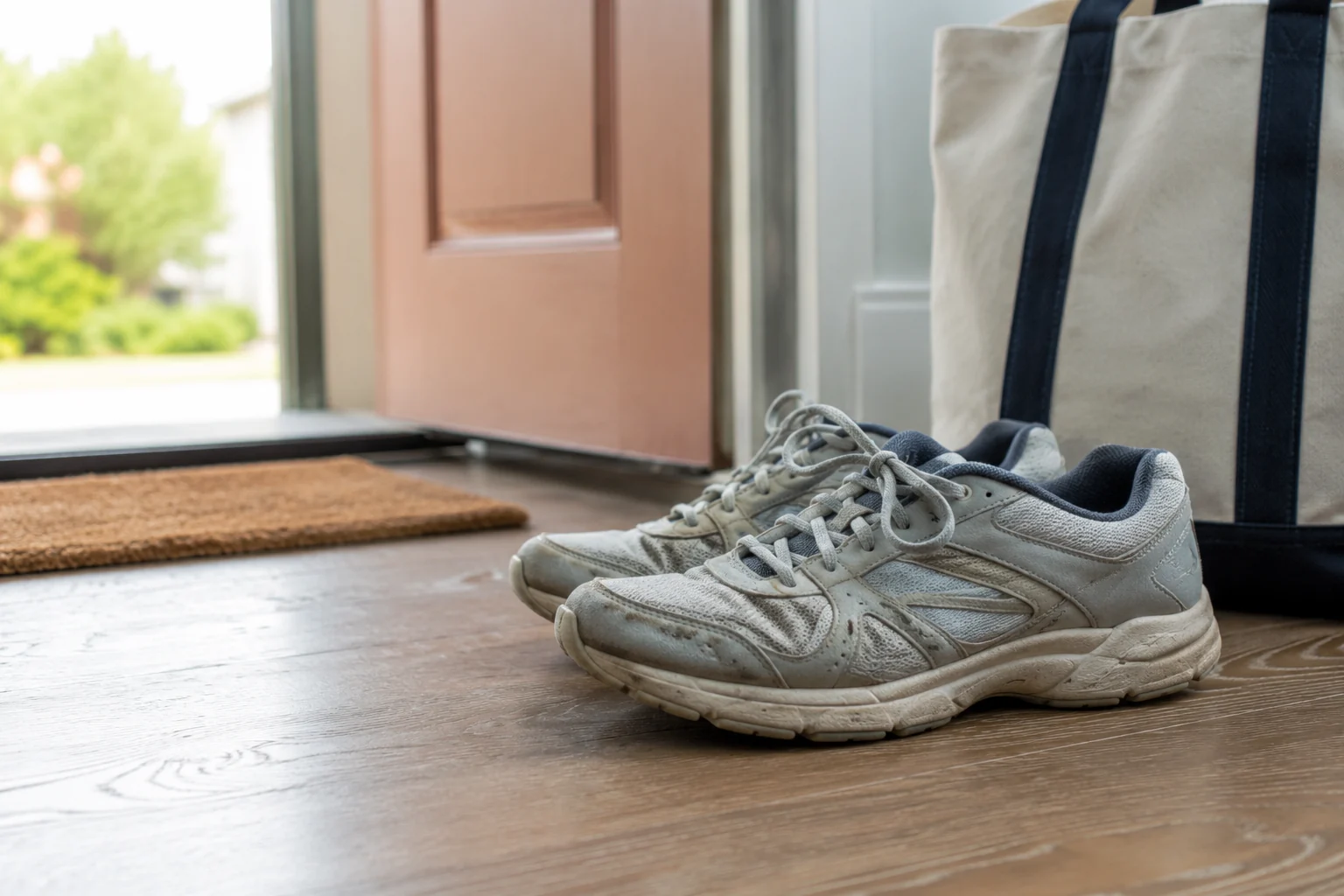
Not a workout. Not a challenge. Just a walk that asks almost nothing from me.
5. Taking Medication at the Same Time Every Day. Even on Weekends.
If you take medication for ADHD, you probably already know this is important. And you probably also break it constantly.
I did, for a long time. I’d skip weekends because I didn’t "need" to focus. I’d take it late on slow days. I’d forget on Saturdays because my whole rhythm was off.
What I didn’t understand is that ADHD medication works best when your system has consistent levels — not when you take it strategically. Skipping creates a kind of withdrawal pattern that makes Mondays feel impossible, not because you missed two days of focus, but because you dysregulated your nervous system for 48 hours and are now recovering.
When I started taking mine at the same time every day, weekends included, something shifted. Not dramatically. Quietly. My baseline got better. My weeks felt less jagged. Mondays stopped being the hardest day.
Here’s what made it stick:
The pill bottle lives next to the coffee machine
I take it the moment I pour my first cup
There is no decision about whether to take it today — the cue is automatic
Notice the pattern? The strategy works because it removes the decision entirely. And decisions are the enemy of ADHD consistency.
Talk to your doctor or prescriber about your specific medication and what consistency means for your situation. This is what worked for me — not a medical recommendation.
The cue mattered more than the willpower: coffee first, medication routine next.
What These Five Strategies Have in Common
If you’re noticing a pattern, you’re paying attention.
Every single one of these works because it does the same thing: it removes the need for in-the-moment decision-making.
ADHD brains aren’t bad at executing tasks. We’re bad at deciding what to execute, when, and how. Decision fatigue is our chronic condition — and every strategy that has genuinely stuck for me comes down to pre-deciding so my brain doesn’t have to.
Same bedtime → no nightly decision about when to wind down
Things in the same place → no hunt-and-find decisions throughout the day
Write down everything → no decision about what’s worth remembering
Walk when you feel like it → no decision about which exercise to commit to
Medication at the same time → no decision about whether today qualifies
The boring strategies work because they eliminate the exact places where my ADHD brain is most likely to fail. And they don’t require willpower — which is good, because I don’t reliably have any.
The productivity industry will sell you a thousand exciting solutions. Most won’t work because they assume you’ll have the energy and consistency to maintain them. Boring works because it doesn’t require either.
If you’ve spent years feeling like you’re missing something — like everyone else has access to a magic ADHD solution that you simply cannot find — consider the opposite: maybe you’ve been trying too many strategies. Maybe the answer was always going to be embarrassingly simple, and you missed it because it didn’t look impressive enough.
It’s not glamorous. It won’t go viral. But it might quietly change the trajectory of your 40s, the way it changed mine.
On the days when even boring feels impossible — when you can’t choose a task, can’t start anything, and the freeze has taken over — the free ADHD Stuck Reset tool is a good first step. It’s one button, one tiny task, no decisions required.
FAQ: Boring ADHD Strategies
Why do boring ADHD strategies work better than new systems?
Because they survive bad days. A novel system runs on the enthusiasm of the week you set it up, and that enthusiasm is exactly what disappears first. A boring strategy asks for very little, so there is very little to fall off.
How long before these start feeling automatic?
Longer than the popular numbers suggest, and it is rarely a straight line. A better test than counting days is whether the habit survives its first disrupted week. If you can restart it after a gap, it is working.
What happens if I miss a day?
Nothing, unless you decide it means something. The strategies are built to be restarted, and a gap only becomes a problem when it gets treated as proof that you cannot keep anything going. Pick it back up at the next natural opportunity.
Do I have to do all five?
No. Most people find one or two do the heavy lifting for their particular life. Starting with all five at once is the fastest way to abandon the lot of them by the second week.
Why does a consistent bedtime help so much with ADHD?
Because it reduces the number of decisions and transitions at the point in the day when you have the least capacity for either. Sleep difficulties are also very common alongside ADHD, so a predictable end to the day removes one variable from something already unreliable.
What does putting things in the same place actually mean in practice?
One designated spot per essential item, chosen for convenience rather than tidiness. The right place is where you naturally drop the thing, not where it ought to live. Fighting your own habit is what breaks the system.
Why walking rather than proper exercise?
Because it requires no kit, no booking, no changing clothes and no decision beyond opening the door. The friction is the point. Exercise that needs planning is exercise that competes with everything else for executive function you may not have.
Why does taking medication at the same time each day matter?
Consistency makes it easier to tell what is actually working, and irregular timing can make effects harder to judge and easier to forget. Anything to do with dosing, timing or side effects is a conversation for the clinician who prescribed it, not something to adjust on your own.
What if none of these are working for me?
That is worth taking seriously rather than trying harder. Persistent difficulty despite low-effort strategies can point to burnout, sleep problems, hormonal change or an untreated co-occurring condition, and those need proper assessment rather than a better habit.
A note: This article shares personal strategies and is not medical advice. It does not replace diagnosis, medication management, therapy, or professional ADHD support. If you’re struggling consistently, please speak with a qualified professional.
Found this helpful? Share it with someone who gets stuck too.
One tap makes ADHD Pearls a preferred source in your Google account, so our articles surface higher when you search. No signup, and it brings you straight back to this page.
Before you go
Free Dopamine Menu
24 tiny activities for low-energy, low-capacity days.
For the woman who sets up the perfect system on Sunday and abandons it by Tuesday.
One short letter, every week. Real talk about ADHD, task paralysis, and the tiny wins that actually move the needle for a brain like yours. No shame. No hustle culture.