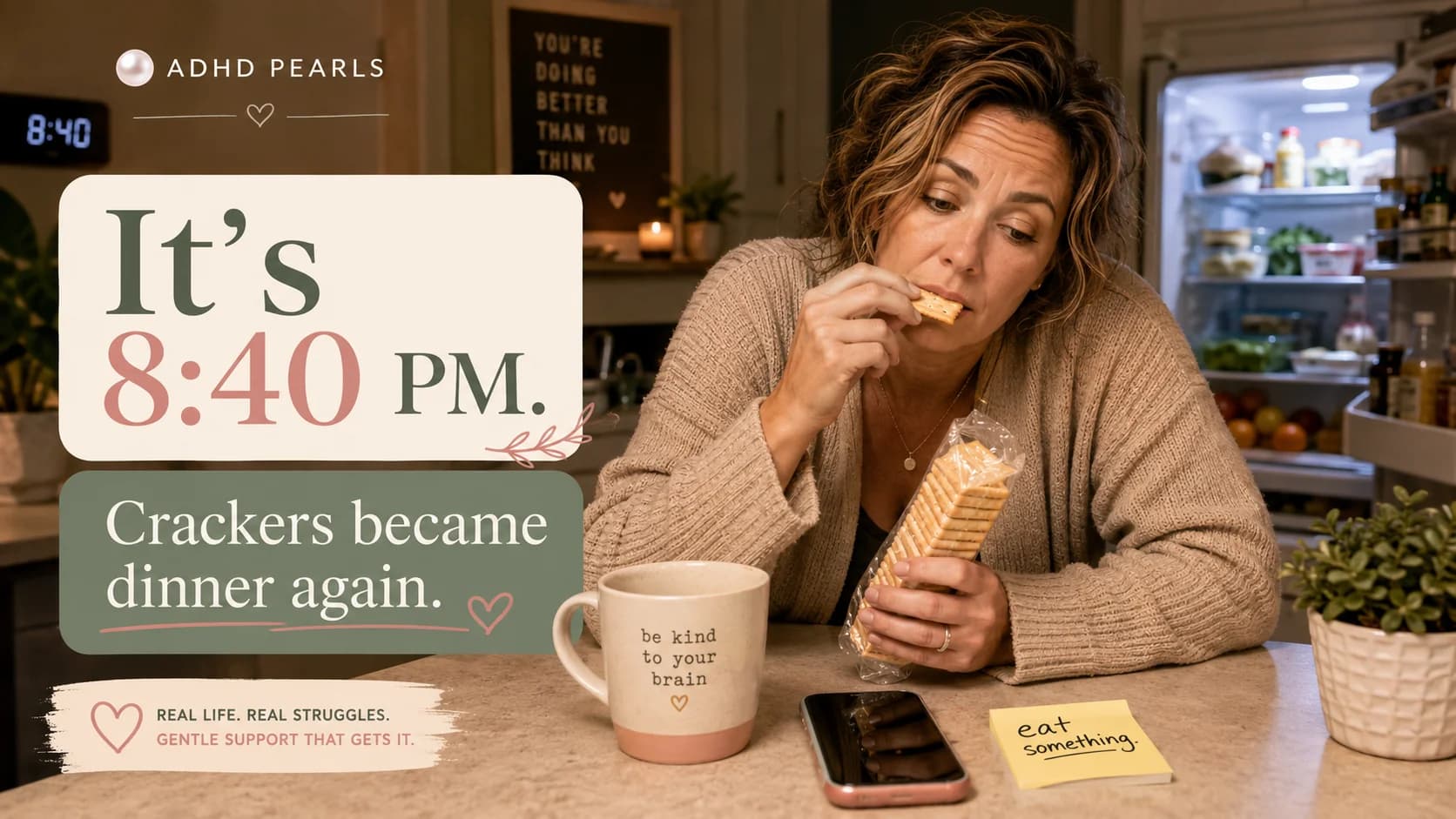
It was 8:40pm and I had eaten a handful of crackers standing at the counter, which I had decided at 5pm was a temporary measure.
I was not out of food. The fridge was full. I had been hungry since about four, in a vague background way, and every time the thought make something arrived, my brain quietly filed it under later, and then later stopped existing.
That is not a discipline problem or a cooking-skills problem. Making dinner is a stack of executive-function tasks wearing a trench coat, and it lands at the exact hour of the day when there is least executive function left. So this is the list I keep for those days: fifteen meals sorted by how much brain you actually have, not by how nice they would look on a plate.
Quick answer
What can I eat when I have no energy to cook?
Something assembled rather than cooked: a snack plate of cheese, crackers and cucumber; yogurt with granola and frozen berries; toast with peanut butter and banana; tinned fish with crackers; or a microwave rice pouch with tinned beans and hot sauce. Aim for one protein plus one carb plus whatever else is easy, keep three of these permanently stocked, and accept that a meal you actually eat beats a meal you meant to cook. On a no-capacity day, cold food from a packet is a completely legitimate dinner.
Key takeaways
📌Assemble rather than cook. A snack plate is a meal.
📌Aim for one protein and one carbohydrate, then stop negotiating with yourself.
📌Stock the fallback ingredients while you have capacity, so the bad day has something to reach for.
📌Eating something imperfect beats eating nothing at four in the afternoon.
📌If you forget to eat entirely, tie food to an existing cue rather than waiting for hunger.
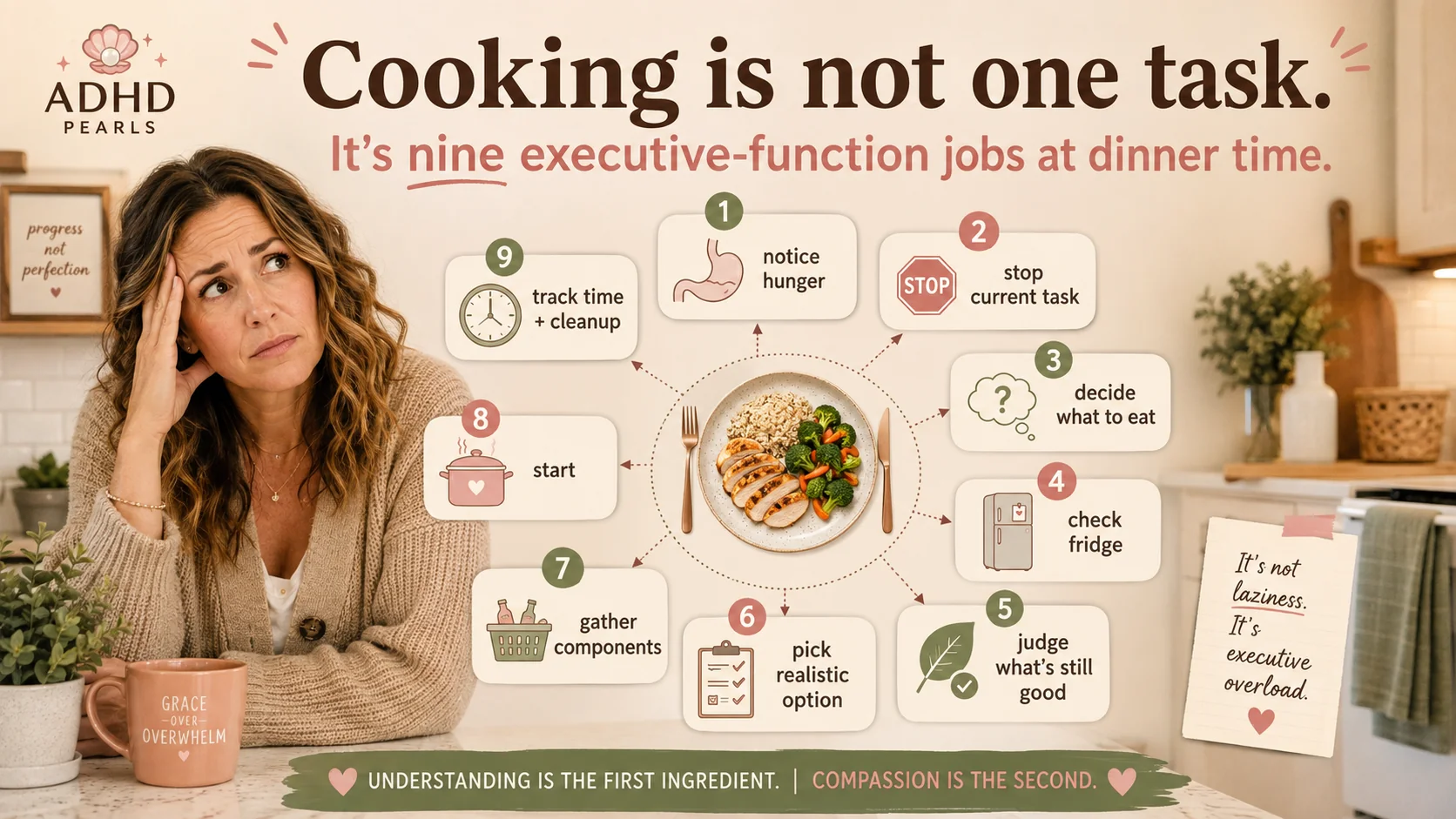
Because cooking is not one task. It is roughly nine, and every single one of them runs on the part of your brain that ADHD affects.
Notice you are hungry. Stop what you are doing. Decide what to eat. Check what exists in the fridge. Judge whether it is still alive. Pick something realistic. Find all the components. Start. Keep track of time while it cooks. Then eat it while it is still appealing, and deal with the wreckage afterwards.
That is task initiation, planning, working memory, time management and flexible thinking, all at once - and dinner happens at the hour when every one of those is at its lowest. If you take stimulant medication, it is often wearing off at exactly the same moment, which is why the person who managed a full workday at 11am cannot manage a saucepan at 7pm.
Cooking is not one simple task. It is a chain of executive-function steps that often shows up when energy is already low.
There is a second thing going on, and it took me years to hear anyone name it. Many ADHD brains do not receive hunger signals clearly or on time. A systematic review of interoception - the sense of what is happening inside your own body - found diminished interoceptive awareness in ADHD, and separate research has linked reliance on internal hunger and fullness cues specifically to inattentive symptoms.
Which means the classic pattern is not greed or chaos. It is nothing, nothing, nothing, and then suddenly ravenous at 9pm with no plan and no patience - the same slippery relationship with the clock that drives ADHD time blindness, applied to your stomach.
From ADHD Pearls
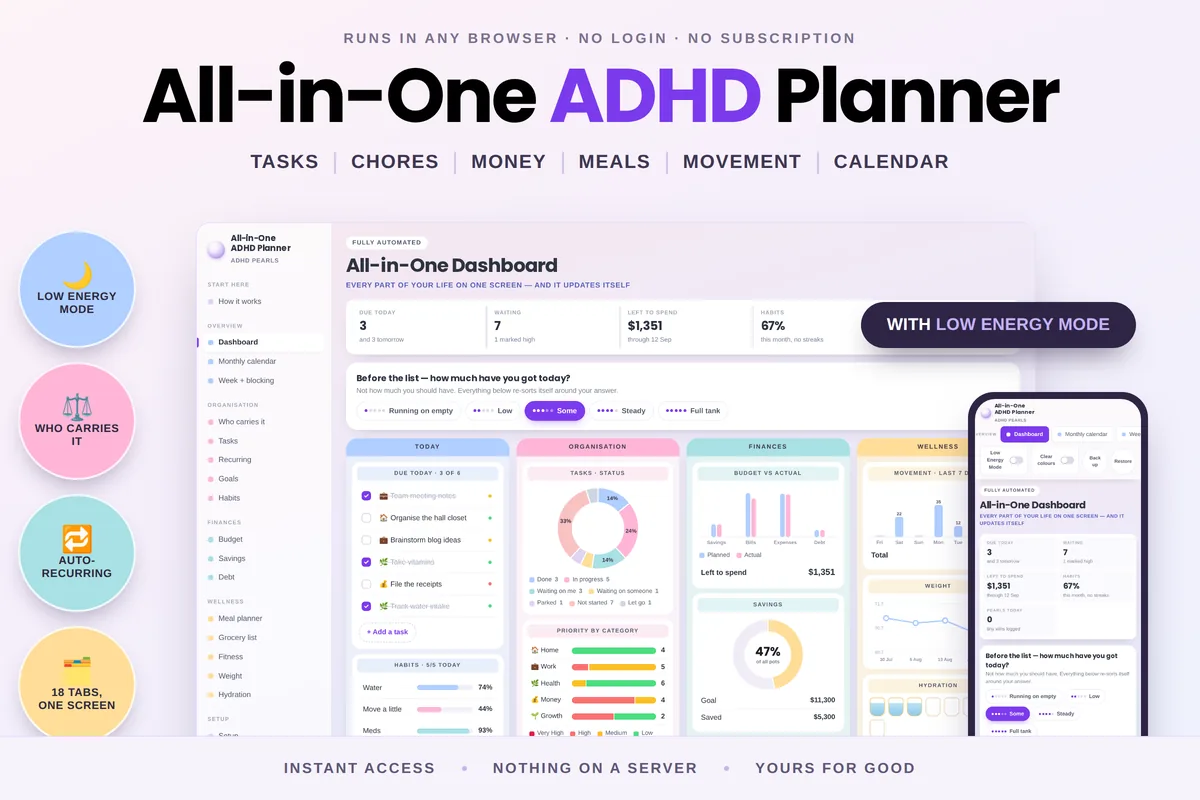
All-in-One ADHD Planner
Eighteen tabs that fill each other in. Say a repeating chore once and the schedule builds itself, and one tab shows who in the house actually carries what.
$27 once — private to your browser, no login, no subscription.
What Counts as a Meal on a Bad Day?
Lower the bar until you can step over it. My working rule is deliberately unambitious:
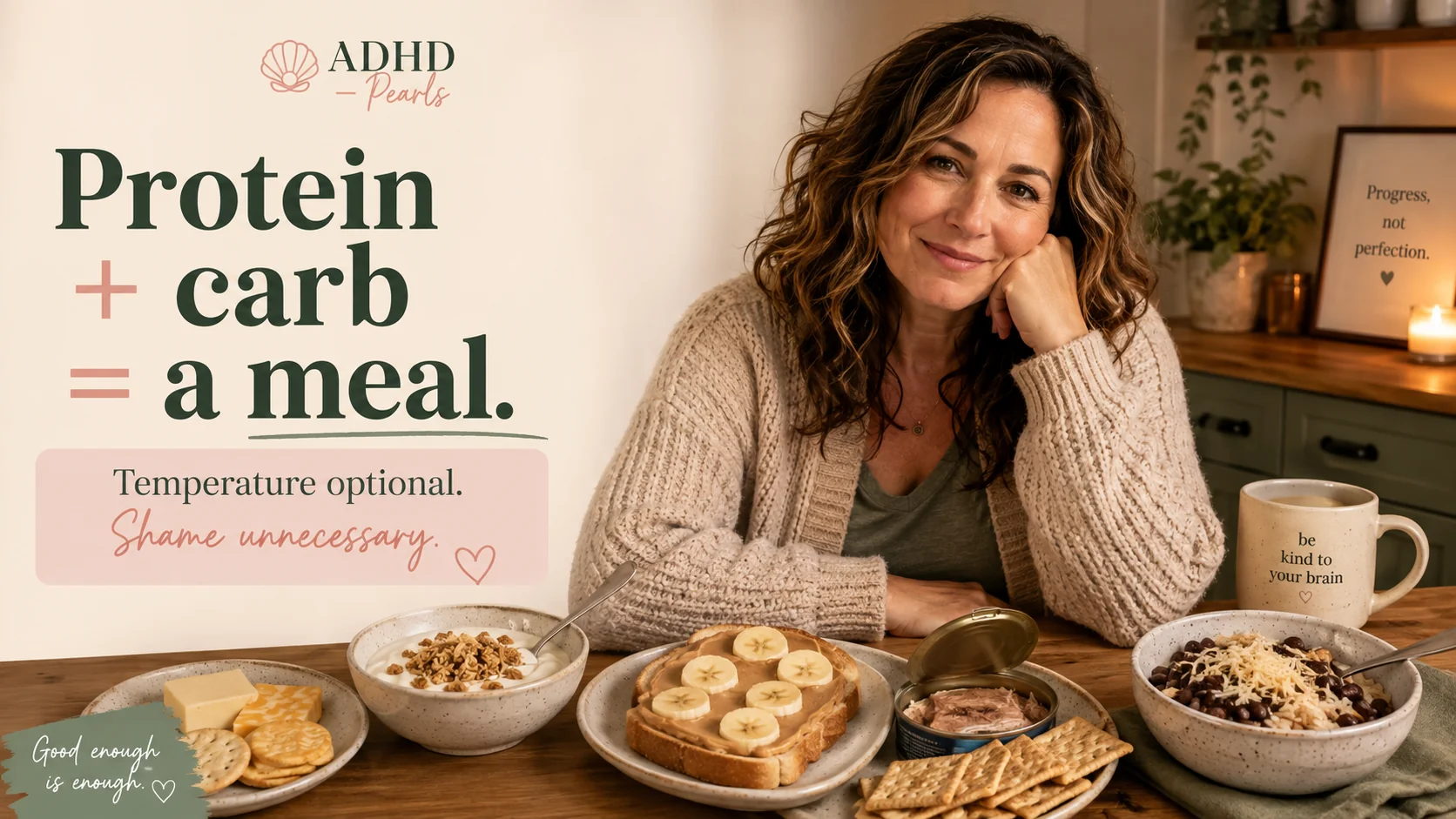
One thing with protein, one thing with carbs, and anything else that requires no decisions. That is a meal. Temperature optional.
The protein part is not moralising, it is practical. Protein supplies the amino acids your brain uses to build dopamine and norepinephrine, the two neurotransmitters most involved in attention and motivation, which is a reasonable thing to hand a tired ADHD brain in the evening.
Protein plus carb counts. Temperature is optional. Shame is unnecessary.
Everything else is negotiable. Cold is fine. Repetitive is fine - most of us have three or four safe foods we cycle through, and research on food selectivity in adults with ADHD and autism confirms this is a real and common pattern, not a personal failing. Eating the same thing four nights running is a coping strategy that works.
And a packet counts. A tin counts. Something the shop already cooked counts. The version of this that ends badly is the one where you hold out for a proper meal until 10pm and end up eating cereal over the sink, mildly furious with yourself.
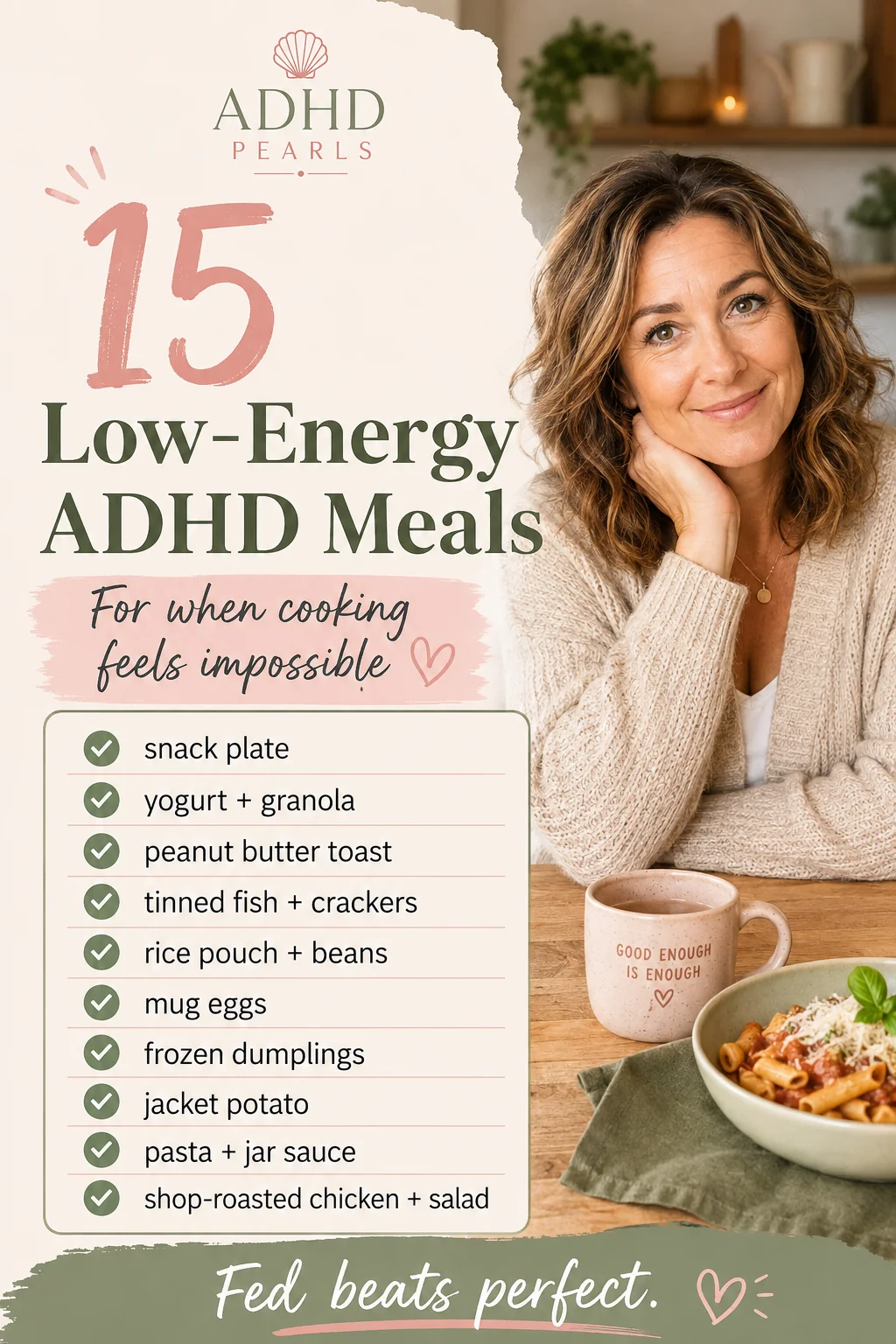
15 Low-Energy ADHD Meals
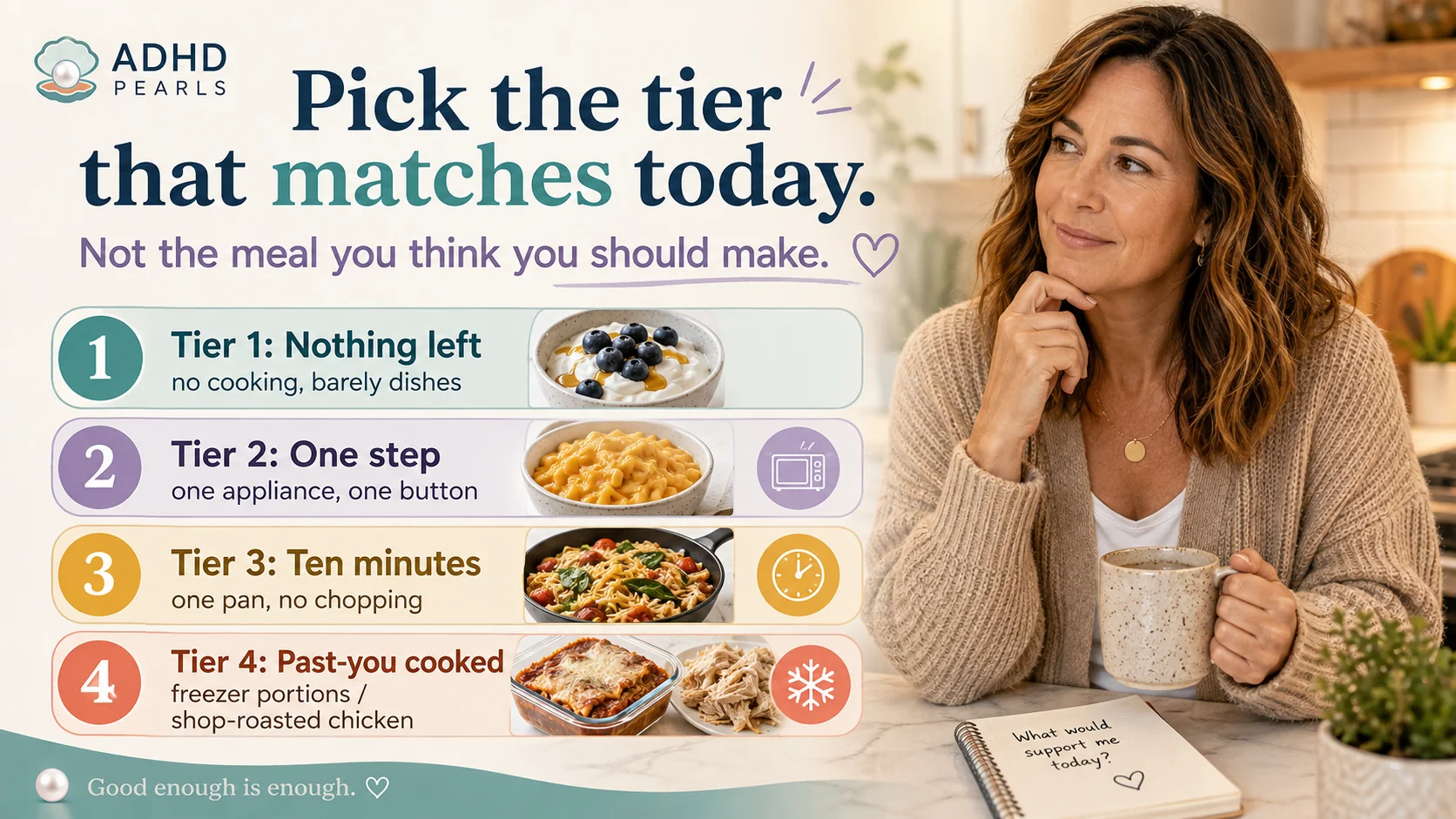
Sorted by capacity. Start at the tier that matches the day you are actually having.
Pick the tier that matches today, not the meal you think you should be able to make.
Tier 1: nothing left (no cooking, barely any dishes)
The snack plate. Cheese, crackers, cucumber, olives, whatever cured meat is in the drawer, a spoon of hummus. Adult lunchable, and genuinely one of the better-balanced things I eat all week.
Greek yogurt, granola, frozen berries. Eaten out of the pot. The berries thaw while you find a spoon.
Peanut butter and banana on toast. Or on a rice cake, if the toaster feels like a step too far.
Tinned fish and crackers. Sardines, mackerel or tuna, a squeeze of lemon, salt. Two minutes, no heat, a genuinely substantial amount of protein.
Cottage cheese with tomatoes. Olive oil, salt, pepper, bread if you have it. Weirdly restorative for something that takes ninety seconds.
Tier 2: one step (one appliance, one button)
Microwave rice pouch with tinned beans. Two minutes for the rice, tip the beans in, hot sauce and grated cheese on top. This is my most-eaten dinner and I refuse to be embarrassed about it.
Mug eggs on toast. Two eggs beaten in a mug, ninety seconds in the microwave in thirty-second bursts, tipped onto buttered toast. One mug to wash.
Frozen dumplings. Steamed, boiled or air-fried straight from the bag, with soy sauce. No thawing, no chopping, no thinking.
Microwave jacket potato. Eight to ten minutes, then butter and cheese, or beans, or tuna and sweetcorn. The topping is the only decision.
Tinned soup with extras. Heat, then add grated cheese, a tin of beans or a slice of bread torn into it. Turns a starter into something that will actually hold you.
Tier 3: ten minutes (one pan, no chopping)
Omelette with whatever is in the fridge. Eggs, cheese, a handful of frozen spinach or peas straight from the freezer. One pan, five minutes.
Pasta with jar sauce and frozen peas. Throw the peas in with the pasta for the last two minutes so there is nothing extra to wash. Parmesan on top.
Sheet-pan sausages and frozen veg. Tip both onto a lined tray, oven at 200C, walk away for twenty-five minutes. Set an alarm, because otherwise the oven becomes a smoke detector.
Tier 4: past-you cooked (the kindest tier there is)
Freezer portions from a good day. Whenever you do cook - and hyperfocus cooking does happen - make double and freeze half in single portions. Future you, standing in the kitchen at 8:40pm, will feel personally rescued.
Shop-roasted chicken and bagged salad. Someone else cooked, someone else washed the leaves, someone else made the dressing. Assembling is not cheating; it is delegating.
One tiny move for tonight
Pick three from this list that you would genuinely eat, and buy the ingredients for those three only. Not a week of meals - three fallbacks that live in the cupboard permanently. That is the whole system.
What to Keep In So This Actually Works
Every meal above collapses if the ingredients are not in the house, which is the real failure point. Not motivation - stock.
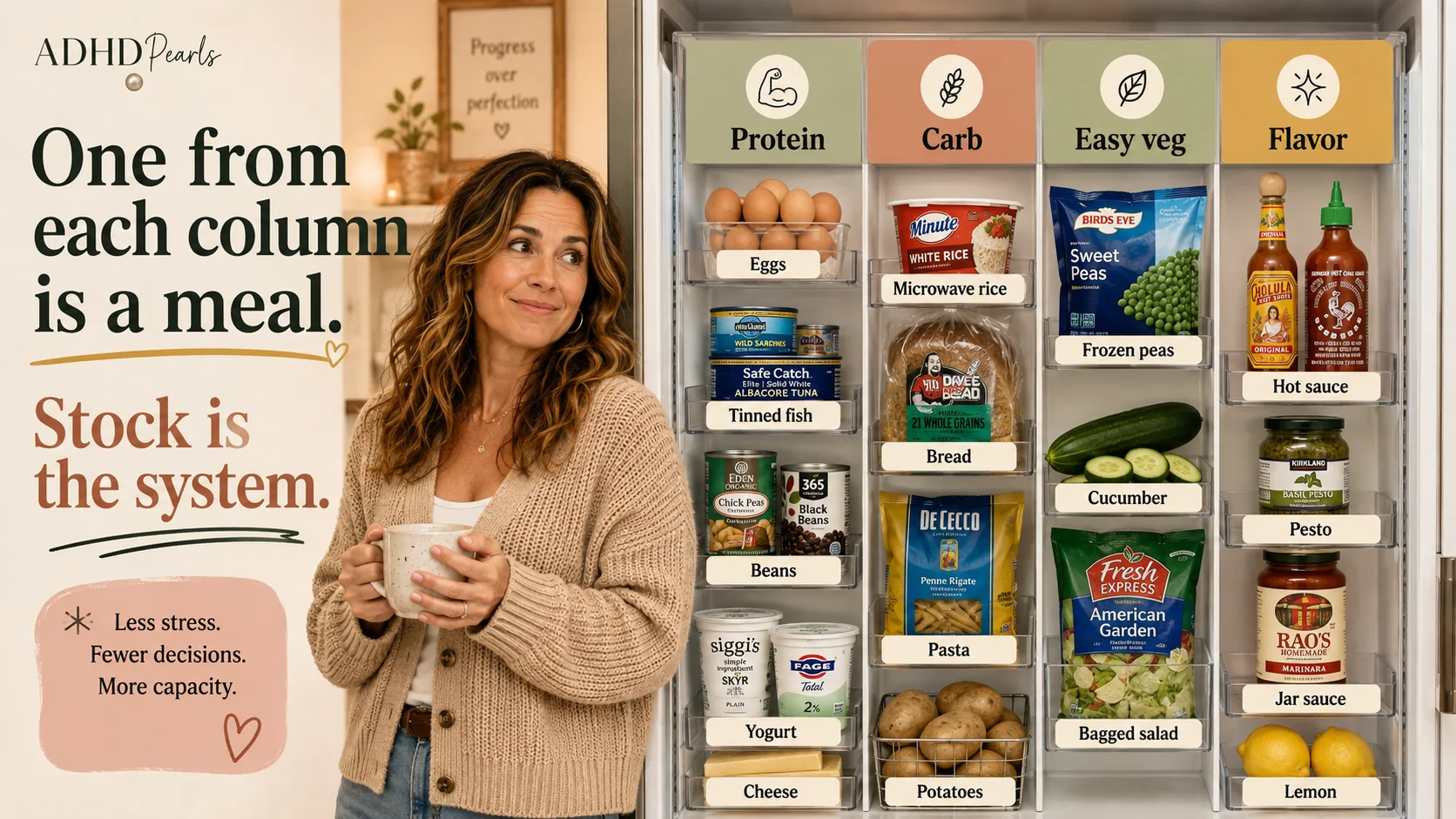
Stock is the system. One protein, one carb, one easy extra, and one flavor can become dinner with fewer decisions.
Two things that make the difference between a nice list and a system that survives contact with a real week:
Buy the fallbacks on repeat, not by inspiration. The same tins, the same pouches, every shop, regardless of what you feel like. These are not meals you choose - they are the meals that exist when choosing is impossible.
Keep them visible. Front of the shelf, eye level, not behind the ambitious lentils. Out of sight really is out of mind, and a fridge drawer counts as out of sight.
If the shopping itself is the part that never happens, the ADHD meal planning system for people who hate meal planning is the companion piece to this one - a tiny rotation plus a chaos fallback list, instead of a colour-coded plan you will abandon by Wednesday. And if half of what you bought has already gone off by the time you look, start with the ADHD fridge reset instead.
How Do I Remember to Eat at All?
If hunger does not announce itself reliably, waiting to feel hungry is not a plan. You need the same thing that works everywhere else in ADHD life: an external cue instead of an internal one.
Put meals on the clock, not on your appetite. Two or three phone alarms labelled with the actual food, not the word lunch. Vague reminders are easy to dismiss.
Attach eating to something that already happens. After the school run. When the laptop closes. With your medication, if you take it - your clinician can tell you what timing suits your prescription.
Leave food where you will physically trip over it. Fruit on the counter, snacks at eye level, something edible in your bag. Effort is the enemy; visibility is the fix.
Expect the evening rebound. If your appetite is flattened during the day, it often comes back hard at night. Having a Tier 1 meal ready is a lot kinder than discovering the problem at 9pm with an empty fridge.
This article is educational and is not nutrition or medical advice. It is not a diet plan and nothing here is about eating less. If food, appetite or eating feels distressing, if you are frequently unable to eat, or if you are worried about your relationship with food, please talk with your doctor - or, in the US, the National Alliance for Eating Disorders helpline can point you toward support.
FAQ: ADHD and Low-Energy Meals
What can I eat when I have no energy to cook?
Something you assemble rather than cook: a snack plate of cheese, crackers and cucumber; yogurt with granola and frozen berries; tinned fish on crackers; peanut butter and banana toast; or a microwave rice pouch with tinned beans. One protein plus one carb is a meal, and it does not need to be hot.
Why is cooking so hard with ADHD?
Because it is a long chain of executive-function tasks - noticing hunger, deciding, checking supplies, initiating, tracking time, then cleaning up - and it lands at the end of the day when those resources are lowest. For people on stimulant medication, dinner often coincides with the medication wearing off, which makes starting even harder.
Why do I forget to eat, then get ravenous at night?
Reduced interoceptive awareness means hunger signals do not always register clearly or on time, particularly during hyperfocus. Appetite suppression from stimulant medication can flatten daytime hunger further, and it often returns strongly in the evening once the medication wears off.
Is it bad to eat the same three meals over and over?
No. Food repetition is extremely common in ADHD and autism, and eating a reliable safe meal is far better than skipping food entirely. A small rotation you actually eat is a working system, not a limitation - variety can be something you add on good days.
Do frozen and packaged foods count as real meals?
Yes. Convenience food is a legitimate part of eating well when executive function is the limiting factor. A frozen meal eaten at 7pm supports you far more than an ambitious plan that ends in crackers at 9pm.
What should I keep in the cupboard for no-capacity days?
Something from four groups: protein such as eggs, tinned fish, tinned beans, yogurt or cheese; a carb such as microwave rice, bread, pasta or potatoes; easy vegetables such as frozen peas or bagged salad; and flavour such as jar sauce, hot sauce or pesto. One from each column makes a meal.
How do I remember to eat when I do not feel hungry?
Use external cues instead of internal ones. Set two or three alarms labelled with the specific food, attach eating to something that already happens in your day, and keep food visible on the counter or at eye level. If hunger cues are unreliable, the clock has to do the job instead.
What if even a snack plate feels like too much?
Then eat the simplest thing within reach - a yogurt, a banana with peanut butter, a handful of nuts and some cheese. Getting something in beats getting nothing in, and low capacity like that is usually a signal about your overall load rather than about food.
Does protein really matter for ADHD?
Protein provides the amino acids the brain uses to make dopamine and norepinephrine, which are involved in attention and motivation, so a protein-containing meal is a sensible default. It is not a treatment for ADHD, and no food replaces medical care - but it is a reasonable thing to aim for when you can.
Save this for the next night when cooking feels impossible but your body still needs food.
Pin this low-energy ADHD meal list for the next I-cannot-cook night.
You are not failing at adulthood because dinner is hard. You are running a brain that finds the boring middle of a task genuinely difficult, at the hour it has the least left. Keep three fallbacks in the cupboard, put one alarm on the clock, and let cold food from a packet be a win.
One tap makes ADHD Pearls a preferred source in your Google account, so our articles surface higher when you search. No signup, and it brings you straight back to this page.
Before you go
All-in-One ADHD Planner
Eighteen tabs that fill each other in. Say a repeating chore once and the schedule builds itself, and one tab shows who in the house actually carries what.
For the woman who sets up the perfect system on Sunday and abandons it by Tuesday.
One short letter, every week. Real talk about ADHD, task paralysis, and the tiny wins that actually move the needle for a brain like yours. No shame. No hustle culture.