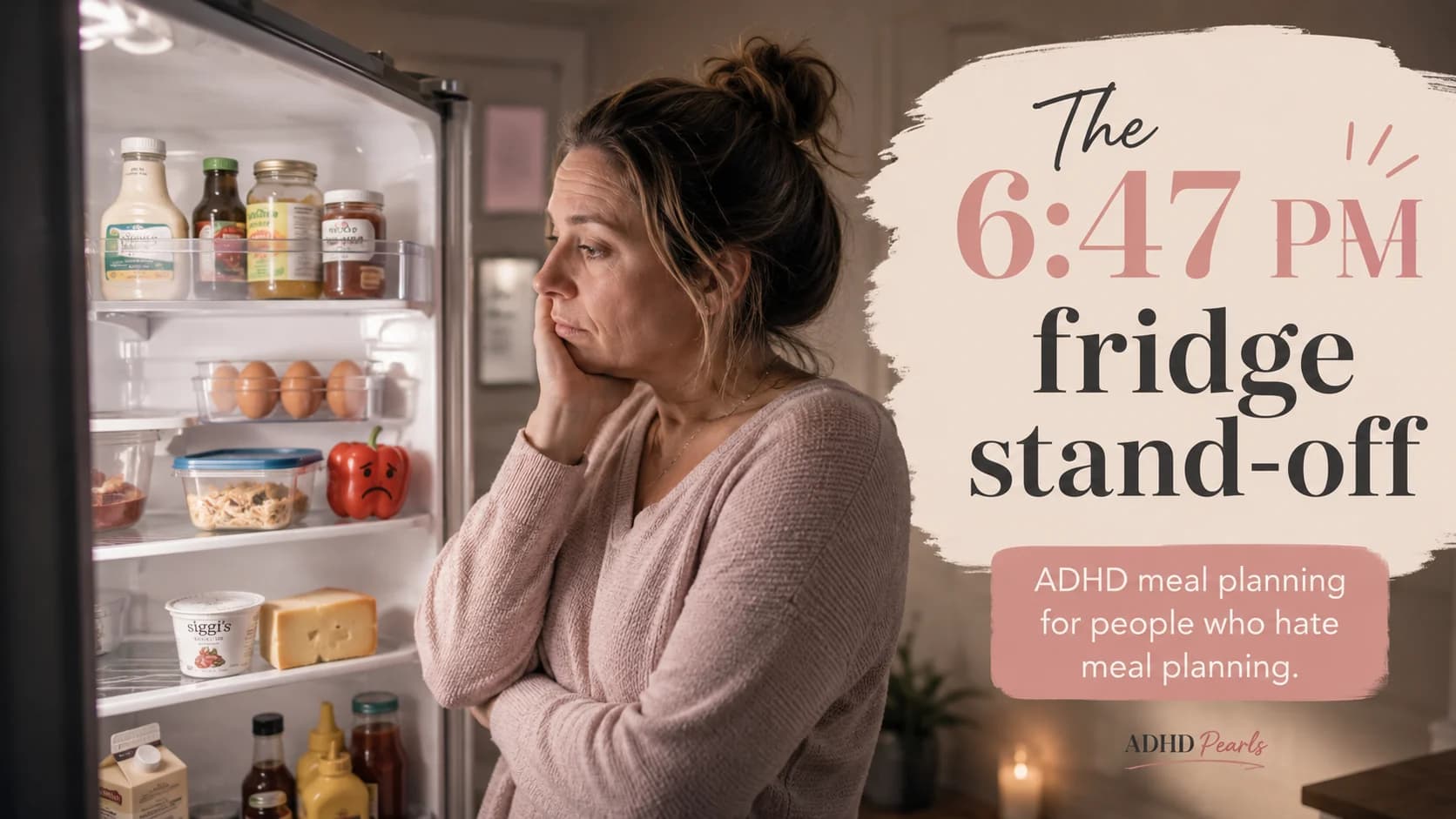
For years my meal planning system was standing in front of the open fridge at 6:47pm, cold air on my face, silently negotiating with three condiments and a wilting pepper. Then ordering takeout out of pure decision-exhaustion.
I bought the planners. The cute magnetic weekly menu board. I would fill it in on a Sunday feeling like a functional adult, and by Tuesday it was fiction - a to-do list from a woman who no longer existed.
What finally worked wasn't better planning. It was giving up on meal planning entirely and building a tiny system that survives a bad brain day. If the phrase "meal planning" makes you want to lie down, this is for you.
Quick answer
How do you meal plan with ADHD when you hate meal planning?
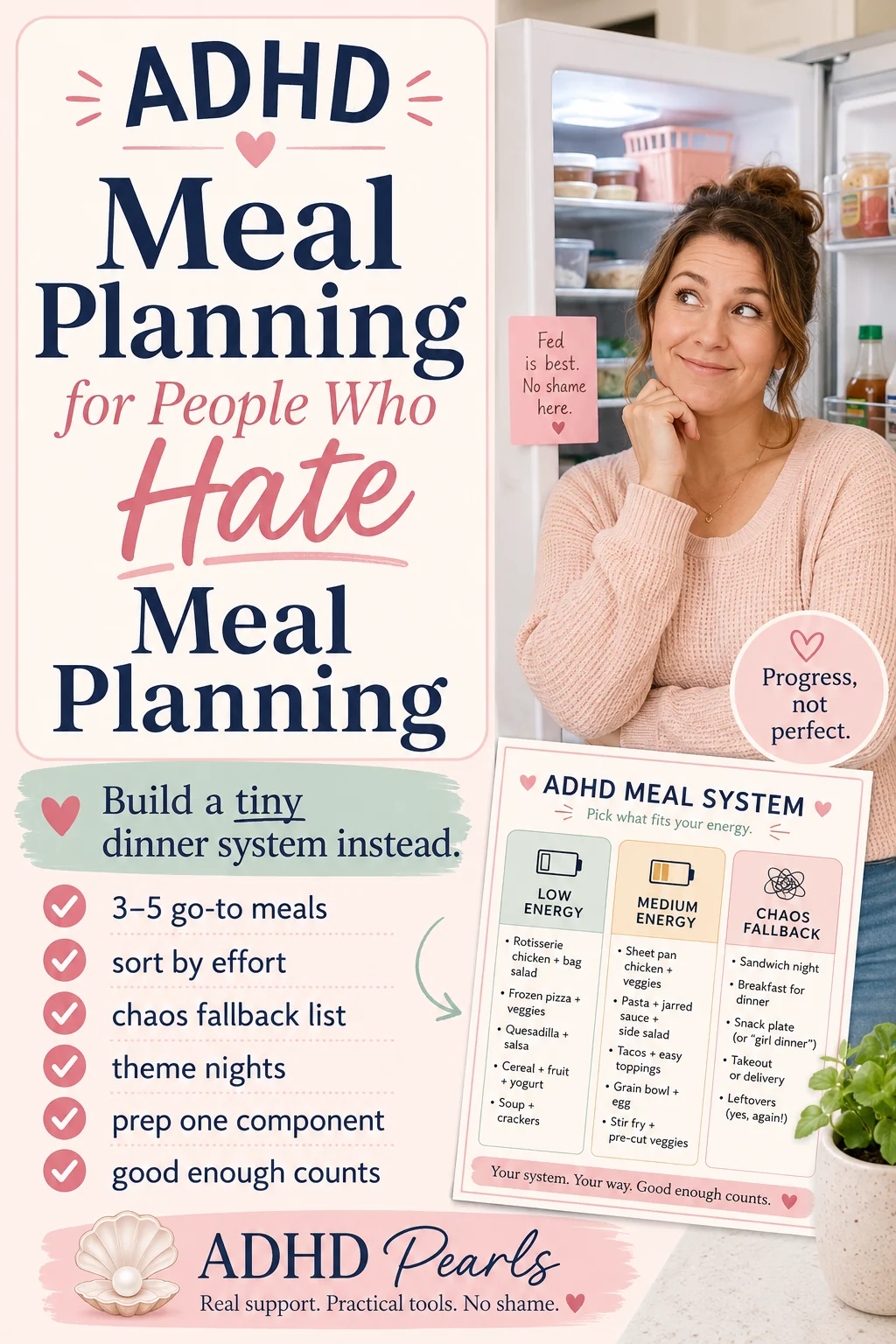
Don't. Instead of assigning a meal to each day, build a short rotation of 3 to 5 meals you can reliably make or assemble, sort them by effort (low / medium / chaos), and pick one based on your energy in the moment. Keep a written "chaos fallback" list for zero-energy days, use theme nights to kill the daily decision, and let "good enough" count. It's a system that removes choices, not a plan you have to obey.
Key takeaways
📌Do not meal plan. Build a rotation of three to five meals and pick by energy in the moment.
📌Sort meals by effort — low, medium, chaos — so the choice fits the day you actually got.
📌Keep a written chaos fallback for zero-capacity nights, decided while you still had capacity.
📌Shopping is easier from a rotation than from a plan, because the list barely changes.
📌Assembled food is food. Good enough is a real meal.
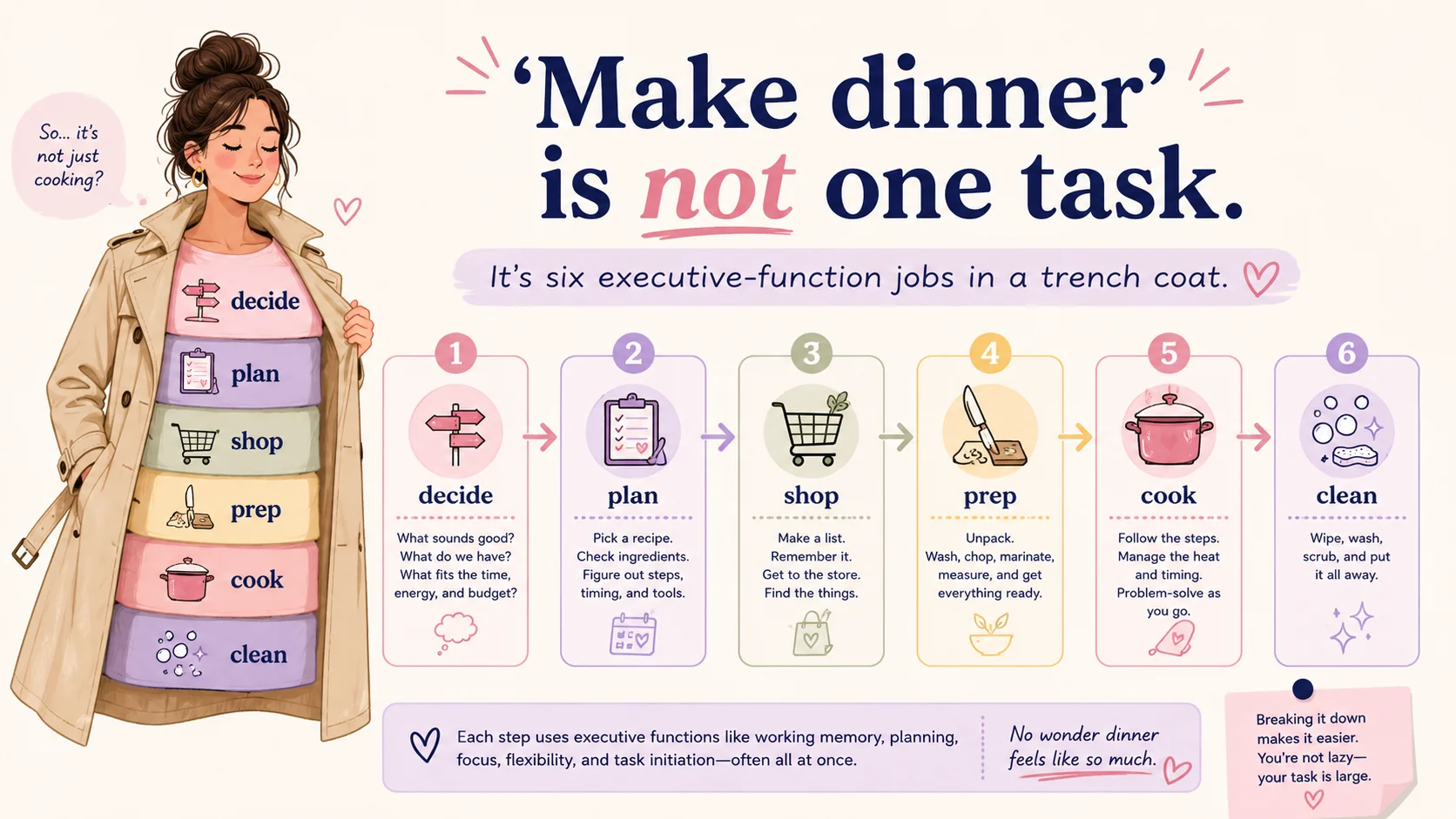
Here's the reframe that took the shame out of it: "make dinner" is not one task. It's a stack of executive-function jobs wearing a trench coat - decide, plan, shop, prep, cook, and clean - and any single link can stall the whole chain.
Worse, the deciding part lands at the exact moment your brain is most depleted. Decision fatigue peaks at the end of the day, so "what's for dinner" hits when you have the least capacity to answer it. Add time blindness, sensory stuff about textures and smells, and the all-or-nothing belief that it has to be a Proper Meal, and shutdown is almost guaranteed.
So no, you're not lazy or bad at adulting. You're being asked to run a six-step project on the empty tank that low-energy ADHD days leave you with. For the nights when even this system is too much, there are 15 low-energy meals that ask almost nothing of you. And if the ingredients keep going bad before you get to them, the problem is upstream of the plan - see the ADHD fridge reset.
I'm not bad at cooking. I'm bad at making twelve small decisions in a row while hungry, tired, and standing up.
No wonder dinner feels like so much. "Make dinner" is really several executive-function jobs at once.
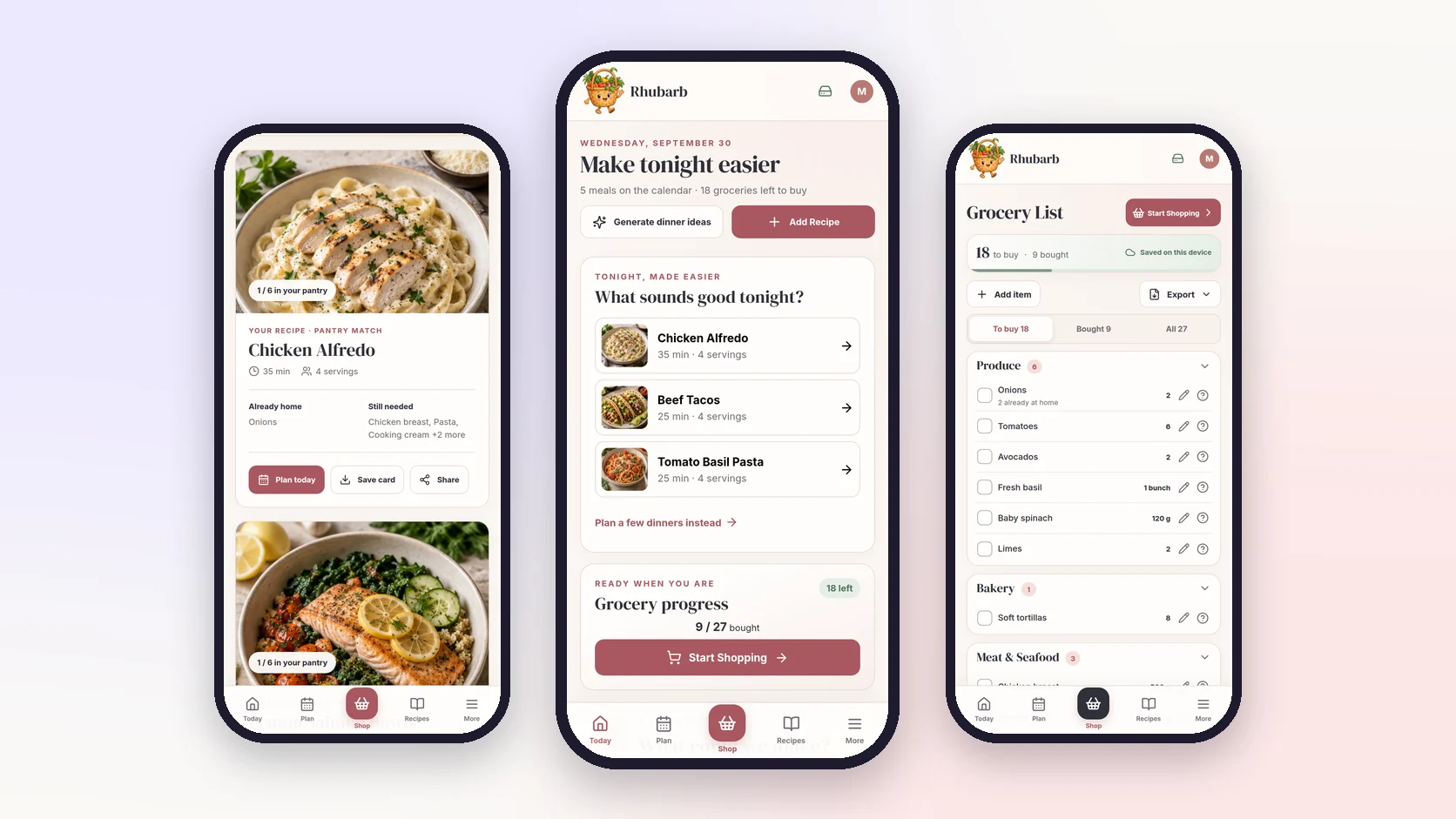
What I needed was not a better plan. It was fewer decisions between me and a grocery list, and everything I tried opened on an empty seven-day grid — twelve decisions before I had bought a single onion. So we built one that asks for three dinners and no days, and writes the list from them. It has not turned me into someone who plans on Sundays. It has made Wednesday's dinner something I already bought the ingredients for.
From ADHD Pearls
Meal Planner App — for people who hate meal planning
Pick a few dinners without choosing the days. The grocery list builds itself, grouped by aisle, minus what is already at home — and your household sees the same list.
$17 once — web app for phone and laptop, shared with your household, no subscription.
Stop "Meal Planning." Build a System Instead
Traditional meal planning asks you to predict, on Sunday, what a future version of you will feel like eating and cooking on Thursday. For an ADHD brain, that's science fiction. Thursday-me is a stranger with different energy and zero interest in Sunday-me's ambitions.
So I stopped planning meals to days. Instead I built a small menu I choose from in the moment, based on how much capacity I actually have. No assigning "salmon" to Wednesday and then betraying myself. Just: here are my options, pick one.
That single shift - from a rigid plan to a short menu sorted by effort - is the whole trick. It turns "what's for dinner" from an open-ended void into a pick-one choice, which is the one kind of decision an ADHD brain can actually make.
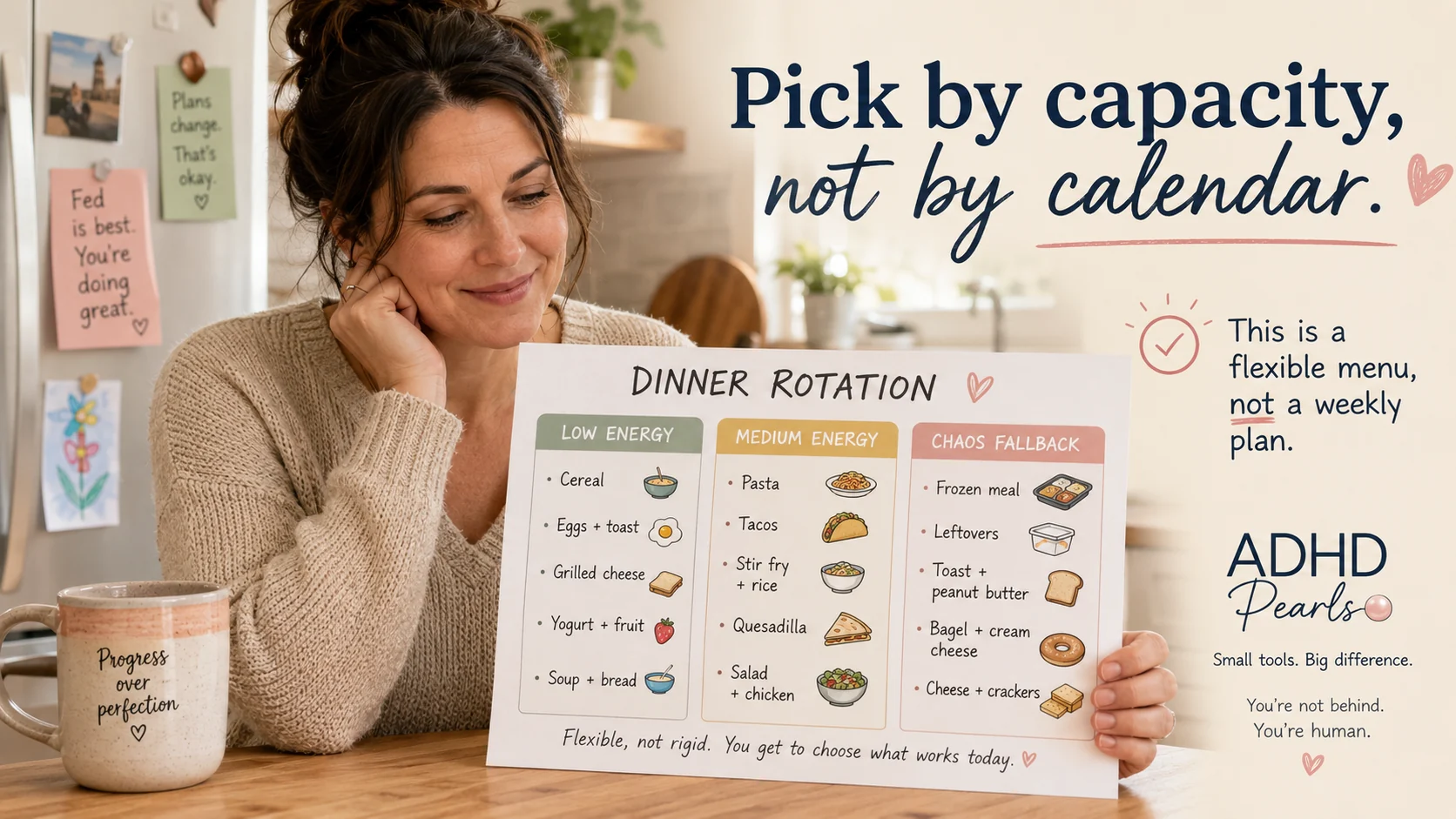
An ADHD meal system works better when you choose by capacity, not by calendar.
The ADHD Meal System (Rotation + Fallback)
Here's the actual system. None of it is impressive, which is exactly why it works on a bad day.
1. Build a rotation of 3 to 5 meals. Not thirty. Pick a handful of things you already know how to make or assemble and genuinely don't hate. Repetition is the feature - eating the same few dinners on rotation is not a failure, it's decision-elimination. Mine is basically five meals in a trench coat, and I've never been happier.
2. Sort them by effort, not by day. I label mine low, medium, and chaos. On a good day I cook a medium one; on a bad day I grab low; on a truly gone day, chaos. You match the meal to your capacity instead of forcing capacity to match a plan.
3. Write a "chaos fallback" list. This one changed everything. It's 3 to 5 no-brainer options for when executive function is at absolute zero - cereal, scrambled eggs, cheese and crackers with fruit, a frozen meal, a protein bar and an apple. They're not "healthy," they're just real food you can produce with no thinking. Having them written down, in advance, means tired-me doesn't have to invent anything.
Write your chaos list before you need it. Fed beats perfect.
4. Use theme nights as anchors. Pasta night, taco night, leftover night. A repeating anchor answers the dinner question before your brain is fried, and there's something soothing about not having to decide. Boring is the point; boring is calm.
5. Prep one component, not a whole Sunday. Big batch-cook Sundays make me feel like a failure by Sunday afternoon. So instead I do component prep - wash the fruit, cook one protein, chop one thing - so future-me has a head start without a cooking marathon. One prepped ingredient counts as a win.
The store is its own executive-function boss fight - a thousand choices under fluorescent lights while a part of your brain quietly leaves your body. So I shop the rotation, not the whole store.
My list is short and mostly the same every week, built around repeatable ingredients that stretch across a few meals. I buy multiples of my staples so I don't run out and derail the whole system, and honestly, pickup or delivery has been a genuine game-cha— sorry, a genuine relief, because it deletes the aisles entirely.
If you live with someone and the list only ever exists in your head, that is a separate problem from the planning itself. I wrote about sharing the dinner mental load and the one rule that fixed most of it in our house.
Fewer choices in the cart also means fewer chances to freeze, overspend, or panic-buy three more sad peppers I'll forget about. If takeout-by-default is quietly draining your money, that overlaps with the ADHD tax - the extra cost of a brain that struggles with follow-through.
Shop the rotation, not the whole store. Less overwhelm, more nourishment.
"Good Enough" Is a Real Meal
The belief that quietly starved me for years: that it doesn't count unless it's a proper, balanced, home-cooked meal. That all-or-nothing rule is exactly what makes an ADHD brain skip eating entirely, because if the only option is "impressive dinner," the answer on a hard day is "nothing."
Fed beats unfed. A frozen meal beats skipping dinner. Cereal at 8pm because that's what you could manage is a win, not a moral failing. Consistency - eating something, regularly - matters far more than any single meal being nutritionally perfect. And the pressure to start is the same freeze I describe in task paralysis that looks like laziness.
This is practical, lived-experience advice, not nutrition or medical guidance. If eating regularly is a real struggle, or you have specific dietary or health needs, a registered dietitian or your doctor can help you build easy, balanced defaults that fit an ADHD brain.
The tiny move: before you close this, write down three "chaos fallback" meals - the absolute-zero-effort things you can eat when your brain is gone. Just three. You don't need a rotation, a planner, or a prepped fridge today. You need tired-you to have a short list instead of a cold fridge and a hard decision.
Save this for the next 6:47pm fridge stand-off.
And if the shop itself is the part that defeats you rather than the deciding, that has its own fixes — why a twenty-minute grocery trip costs an afternoon covers the list, the aisles and the bags still standing in the hall.
FAQ: ADHD and Meal Planning
Why is meal planning so hard with ADHD?
Because it's a whole stack of executive-function tasks in a trench coat: decide, plan, shop, prep, cook, and clean up - each with its own friction. Pile on decision fatigue (which peaks right at dinnertime), time blindness, and sensory stuff, and it's no wonder your brain shuts down. It's not laziness or a lack of discipline; it's a genuinely demanding process for an ADHD brain.
How do I meal plan when I hate meal planning?
Don't do traditional meal planning at all. Instead of assigning a specific meal to each day, build a short rotation of 3 to 5 meals you can reliably make or assemble, and just pick one based on your energy in the moment. Add a "chaos fallback" list for zero-energy days. It's a system that removes decisions, not a plan you have to follow perfectly.
What is an ADHD meal rotation?
A meal rotation is a small, fixed set of go-to meals you already know how to make, so you choose from a short menu instead of the entire universe of food. Many people sort theirs by effort - low, medium, and "chaos" - and pick based on capacity, not the day of the week. Repetition is the feature, not a failure.
What should I eat when I have zero energy?
Keep a written "chaos fallback" list of 3 to 5 no-brainer options for when executive function is gone - things like cereal, scrambled eggs, cheese and crackers with fruit, a frozen meal, or a protein bar plus fruit. They don't need to be impressive or perfectly balanced. Real food with minimal effort beats skipping the meal entirely.
How do I stop decision fatigue at dinner?
Make the decision earlier, or remove it. Theme nights (pasta night, taco night, leftover night) and a short rotation mean "what's for dinner" is answered before your brain is fried at 6pm. The goal is to shrink the choice from thousands of options to three, so tired-you doesn't have to invent anything.
Do I have to meal prep on Sundays?
No. Big Sunday batch-cooking works for some people and completely backfires for others. If it's not sticking, try component prep instead - wash the fruit, cook one protein, chop one thing - so future-you has a head start without a three-hour cooking marathon. One prepped ingredient counts.
Why do I keep eating the same few foods?
Because your brain is conserving decisions, and familiar "safe foods" feel calm and predictable when everything else is loud. This is extremely common with ADHD and autism, and it isn't a problem to fix - it's a coping strategy that works. Lean into it: safe foods on repeat are a valid, low-friction way to stay fed.
How do I grocery shop with ADHD?
Shop your rotation, not the whole store. Keep a short reusable list built around the same repeatable ingredients, buy multiples of your staples so you don't run out, and consider pickup or delivery to skip the aisles of decision-making. Fewer choices in the cart means fewer chances to freeze or overspend.
Is it bad to eat frozen meals or cereal for dinner?
No. Fed beats unfed, and consistency beats a perfect plan you abandon. A frozen meal, scrambled eggs, or cereal on a low-capacity day is a win, not a failure - the all-or-nothing "it has to be a proper home-cooked meal" rule is exactly what makes ADHD brains skip eating. If nutrition is a real concern, a professional can help you build easy, balanced defaults.
The version of this that finally stuck in our house was the smallest one: three dinners, no days, one list. We ended up building it into an app because the list kept living in four places at once — it pulls the ingredients from the dinners you pick, takes off what is already in the cupboard, and sorts the rest by aisle. It will not cook anything for you, and some weeks we still eat eggs on toast twice. That counts.
Found this helpful? Share it with someone who gets stuck too.
One tap makes ADHD Pearls a preferred source in your Google account, so our articles surface higher when you search. No signup, and it brings you straight back to this page.
Before you go
Meal Planner App — for people who hate meal planning
Pick a few dinners without choosing the days. The grocery list builds itself, grouped by aisle, minus what is already at home — and your household sees the same list.
For the woman who sets up the perfect system on Sunday and abandons it by Tuesday.
One short letter, every week. Real talk about ADHD, task paralysis, and the tiny wins that actually move the needle for a brain like yours. No shame. No hustle culture.