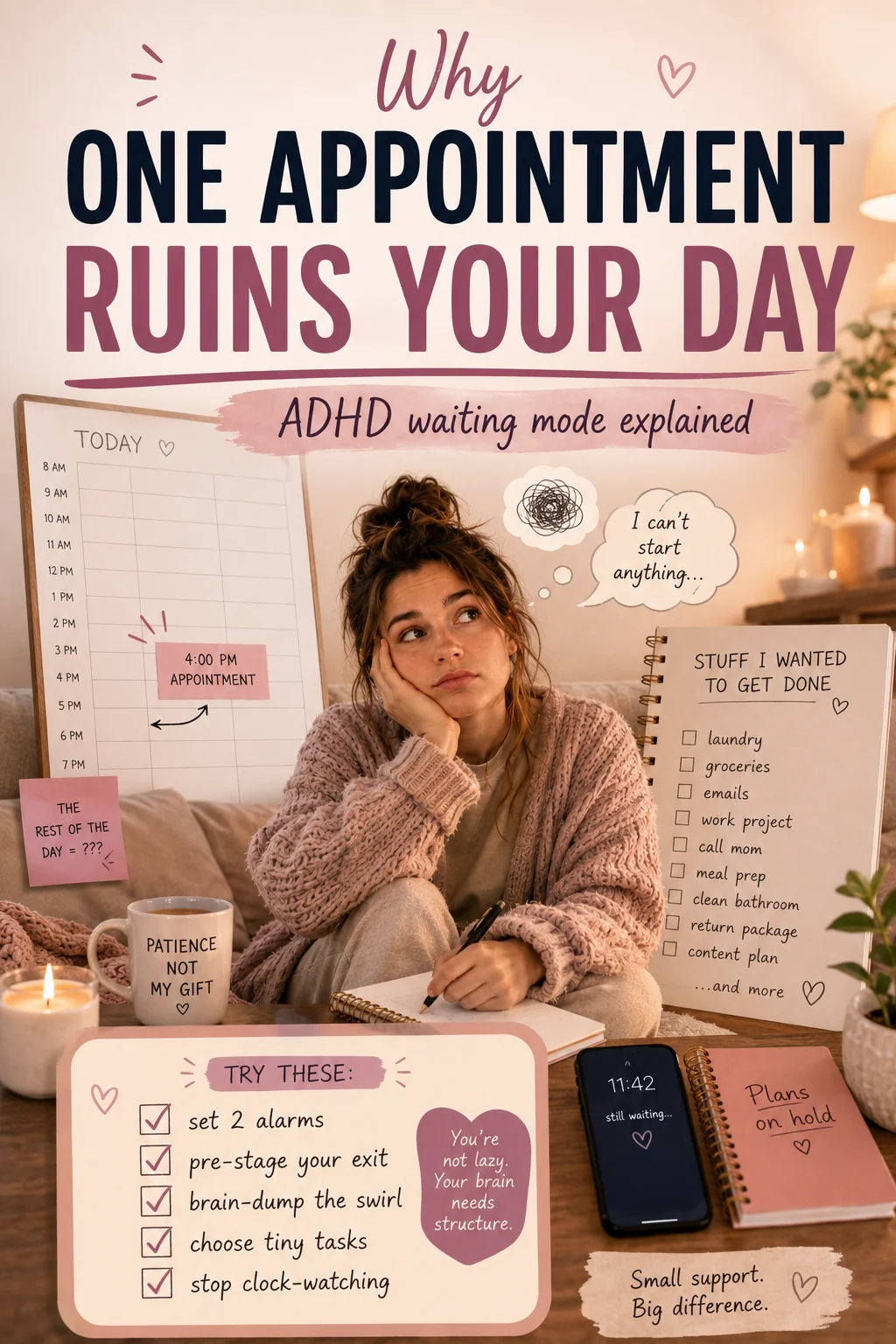
I once lost an entire day to a 4pm dentist appointment. I woke up at 8, knew I had "the whole day," and did essentially nothing with it - just hovered, checked the clock roughly nine hundred times, and arrived at 4pm somehow both exhausted and unaccomplished.
For years I called that laziness. A free morning wasted because of one small thing in the afternoon felt like proof I had no discipline.
It has a name, and it isn't laziness. It's ADHD waiting mode, and once I understood the machinery behind it, I stopped losing the whole day - and started getting some of it back.
Quick answer
What is ADHD waiting mode?
Waiting mode is when one upcoming event puts your brain into standby, so you can't properly start or focus on anything until it's over. It's driven by time blindness, the difficulty of transitions, and anticipation anxiety - not by laziness. You can't fully switch it off, but you can loosen it: hand the clock-watching to alarms, give the wait a hard boundary, pre-stage everything, and pick small, easy-to-drop tasks instead of deep work.
Key takeaways
📌One appointment can put the whole day on standby. That is waiting mode, not procrastination.
📌It runs on time blindness, transition difficulty and anticipation anxiety.
📌You cannot fully switch it off, so plan a reduced day rather than mourning a wasted one.
📌Put low-stakes, interruptible tasks in the waiting window and nothing that needs deep focus.
📌Booking appointments early in the day protects the hours you would otherwise lose.
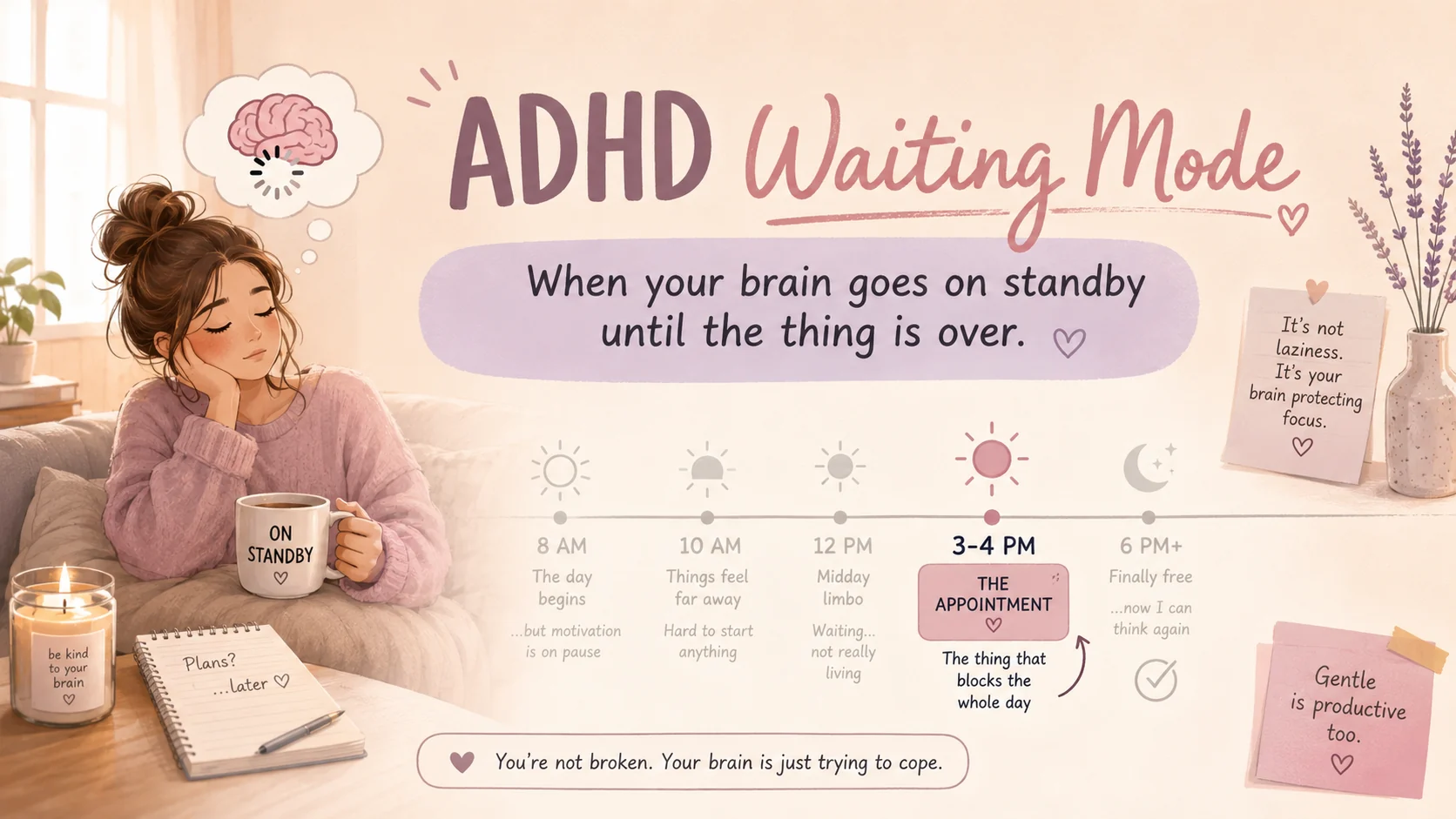
Waiting mode is that state of mental standby before an upcoming event, where focusing on anything else becomes hard to the point of impossible. There's a thing at 3pm, so the hours before it turn into a kind of holding pattern.
It doesn't matter how much free time is technically available. My brain treats "you have plans later" as "you are on call now," and quietly cancels the rest of the day on my behalf.
And it isn't only about scary appointments. A dentist and a dinner with friends can hijack a morning in the exact same way - because the brain is reacting to the transition and the uncountable block of time, not to whether the event is pleasant.
I don't lose the day because I'm dreading the thing. I lose it because my brain doesn't know how to just be here until the thing arrives.
Waiting mode is what happens when your brain puts the rest of the day on pause until the thing is over.
From ADHD Pearls
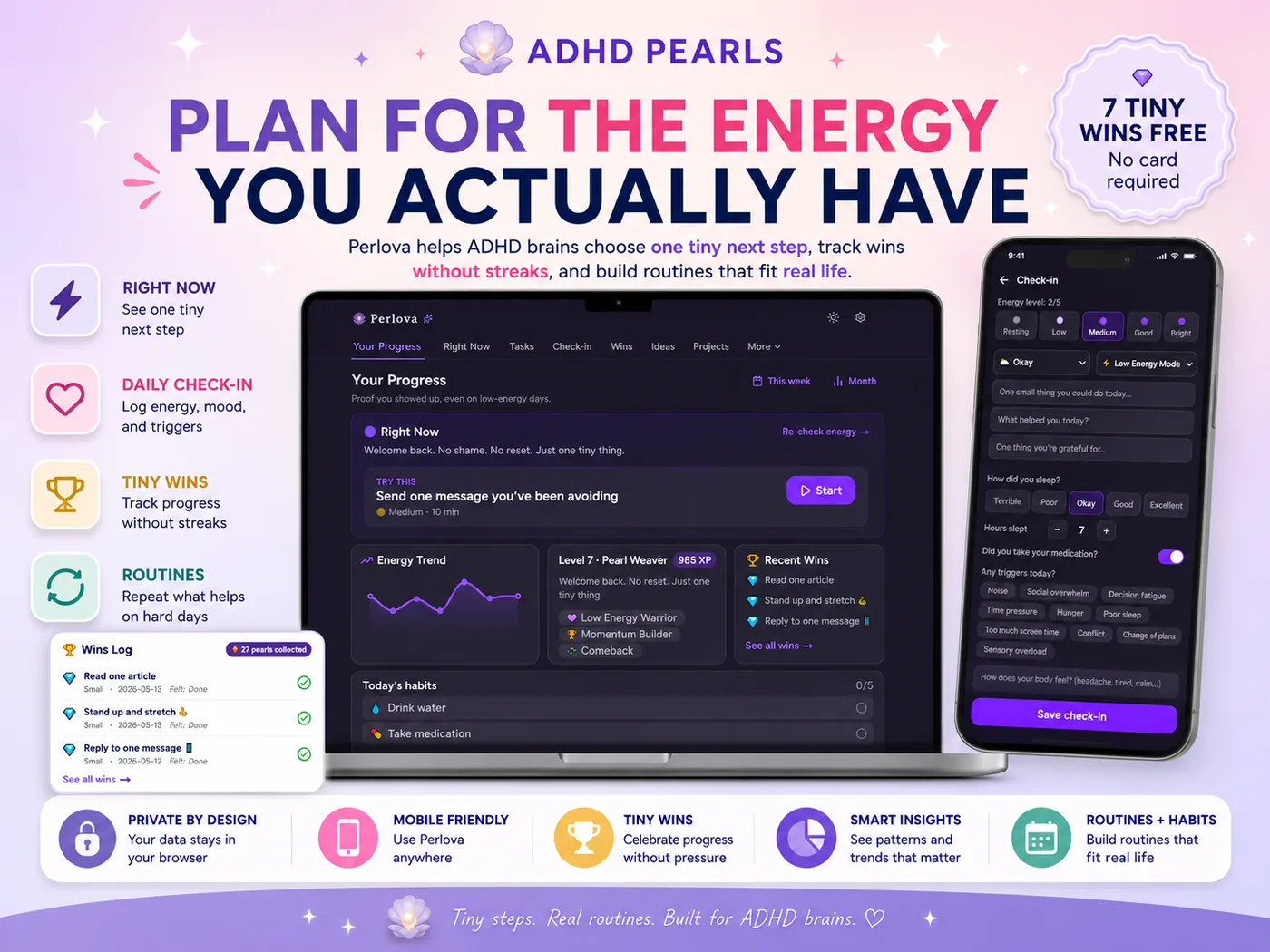
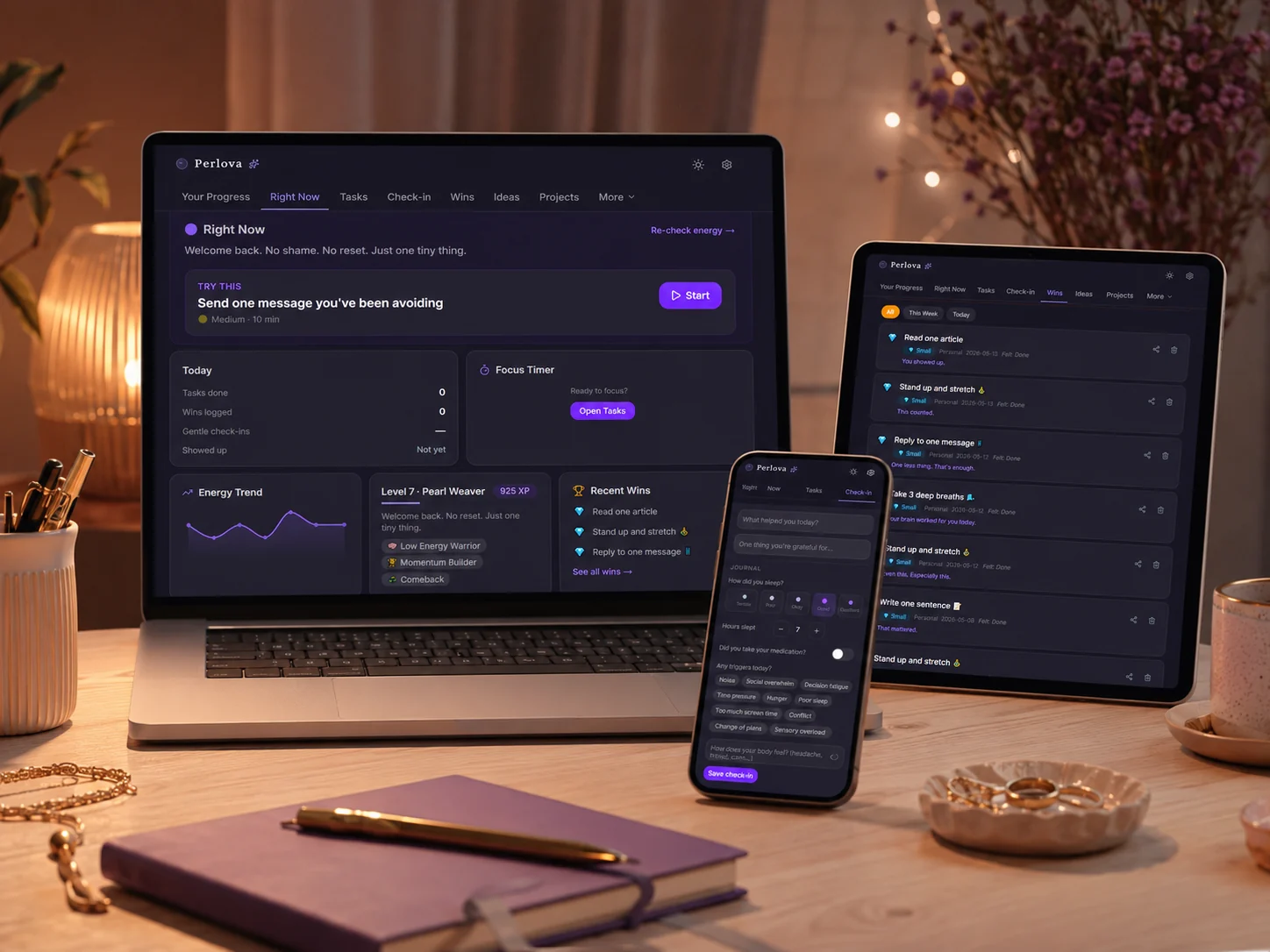
Perlova — plan from the energy you actually have
One doable next step, wins without streaks, and routines that fit real ADHD life. No card, no shame.
A few ADHD wiring quirks stack up here, and together they eat the day:
Time blindness. ADHD brains don't have a strong felt sense of time passing. If you can't trust yourself to notice three hours slipping by, hovering near the event feels safer than risking missing it.
Transitions are hard. Starting a task means you'll later have to stop it and switch to the appointment - and task-switching is one of the most ADHD-hostile moves there is. So the brain decides not to start at all.
Rumination. The upcoming thing keeps yanking your attention back, like a tongue returning to a sore tooth. Every time you settle into something, the appointment taps you on the shoulder.
Vague windows. "Sometime this afternoon" or a delivery "between 8 and 1" is the worst case - with no clear boundary, the waiting expands to fill everything.
When I finally saw these as four separate, nameable things instead of one big personal flaw, I could actually target them. You can't out-discipline time blindness. You can hand it a tool.
It's Not Procrastination - It's Time Anxiety
This is the reframe that mattered most to me. Waiting mode looks identical to procrastination from the outside - a person not doing things - but underneath it's closer to anxiety and rumination than to avoidance.
You're not putting off a task you dislike. You're stuck in a low-grade alert state, keeping one eye on the clock because some part of you believes that if you fully relax into something, you'll blink and miss the appointment entirely.
If that "am I anxious or is this just ADHD" question sounds familiar, the overlap is real and worth understanding - I get into it in is it ADHD or anxiety. And the frozen, can't-start feeling is the same one behind task paralysis that looks like laziness.
From the outside, it can look like procrastination. Inside, it often feels like guarding the clock.
How to Get Through Waiting Mode (7 Things That Help)
You probably can't switch waiting mode off. But every one of these loosens its grip a little, and a little is often enough to reclaim part of the day.
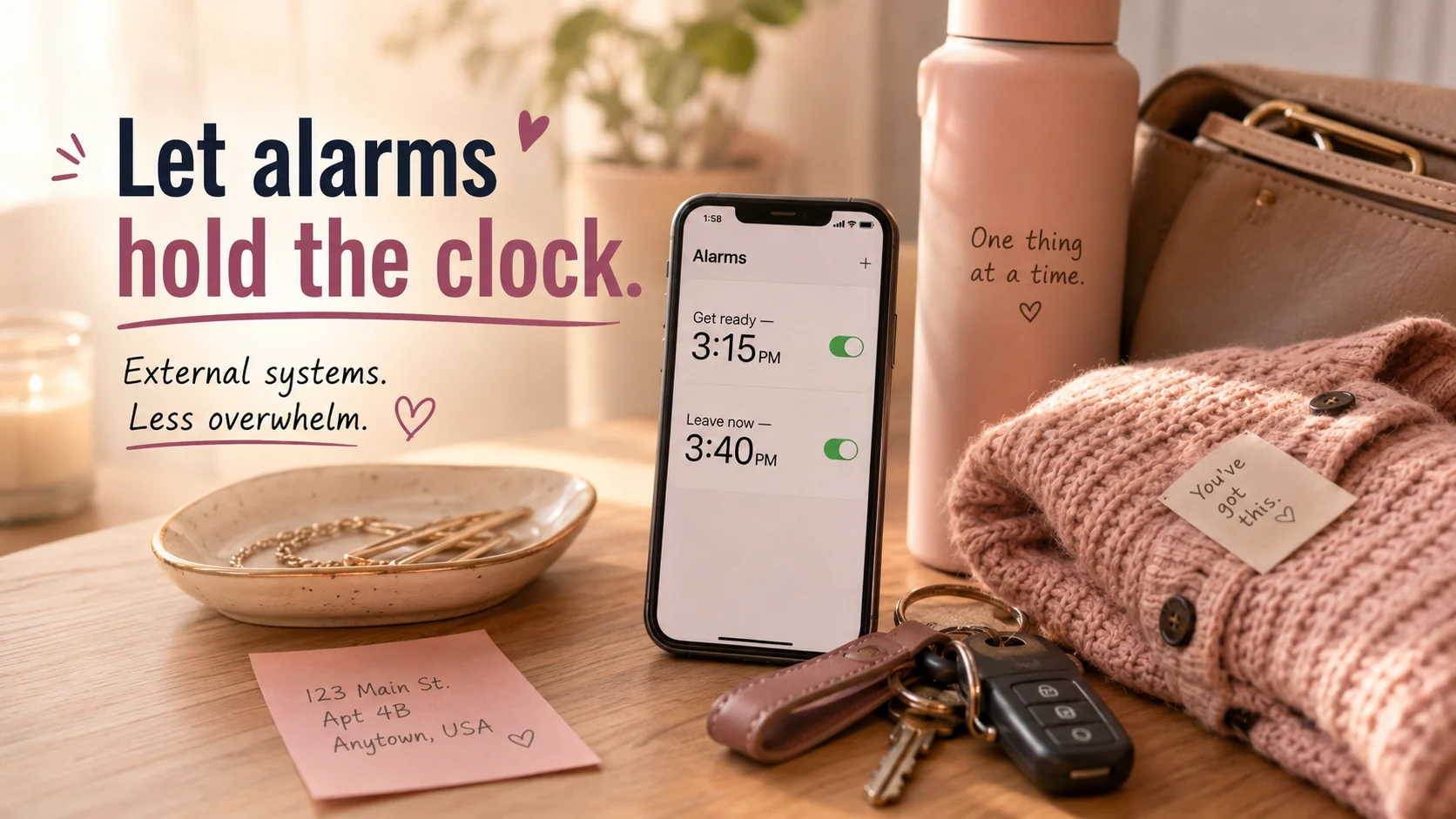
1. Let alarms be the clock. The single biggest one for me. I set an alarm for "start getting ready" and another for "leave now," so my brain no longer has to keep manually checking that it hasn't lost track of time. Once the phone is in charge of the clock, my attention is free.
2. Give the vague window a hard edge. "Sometime this afternoon" is a trap. I turn it into a specific "I leave at 1:40," which gives the waiting a boundary instead of letting it bleed across the whole day.
3. Pre-stage everything first. Before I try to do anything else, I get appointment-ready: bag packed, keys out, clothes on, address in the phone. Once the future transition is mostly handled, it stops looming, and my brain relaxes enough to do something with the gap.
4. Brain-dump the swirl. When my mind keeps circling "don't forget, what if, did I, should I," I put all of it on one page. Getting the rumination out of my head and onto paper is the closest thing I have to a mute button.
5. Book it early when you can. If a 2pm appointment reliably eats my day, I try to schedule things for the morning, as early as possible, so waiting mode has less day to consume. It won't always be an option - but when it is, it's a cheat code.
6. Lower the bar for the whole day. On an appointment day, I stop expecting a normal output. If I get one or two small things done around the wait, that's a win, not a failure. Fighting waiting mode with a huge to-do list just adds shame on top.
7. Body-double the gap. Sometimes the only thing that gets me moving in the wait is someone else being there - a friend on the phone, a co-working video, even a busy cafe. Borrowed momentum works when my own is on standby.
Let alarms hold the clock so your brain does not have to keep checking it all day.
What You Can Actually Do in Waiting Mode
Here's where I used to go wrong: I'd try to use a waiting-mode morning for deep, important work - the exact thing that needs uninterrupted focus and a clean transition. It never worked, and I'd end the wait feeling worse.
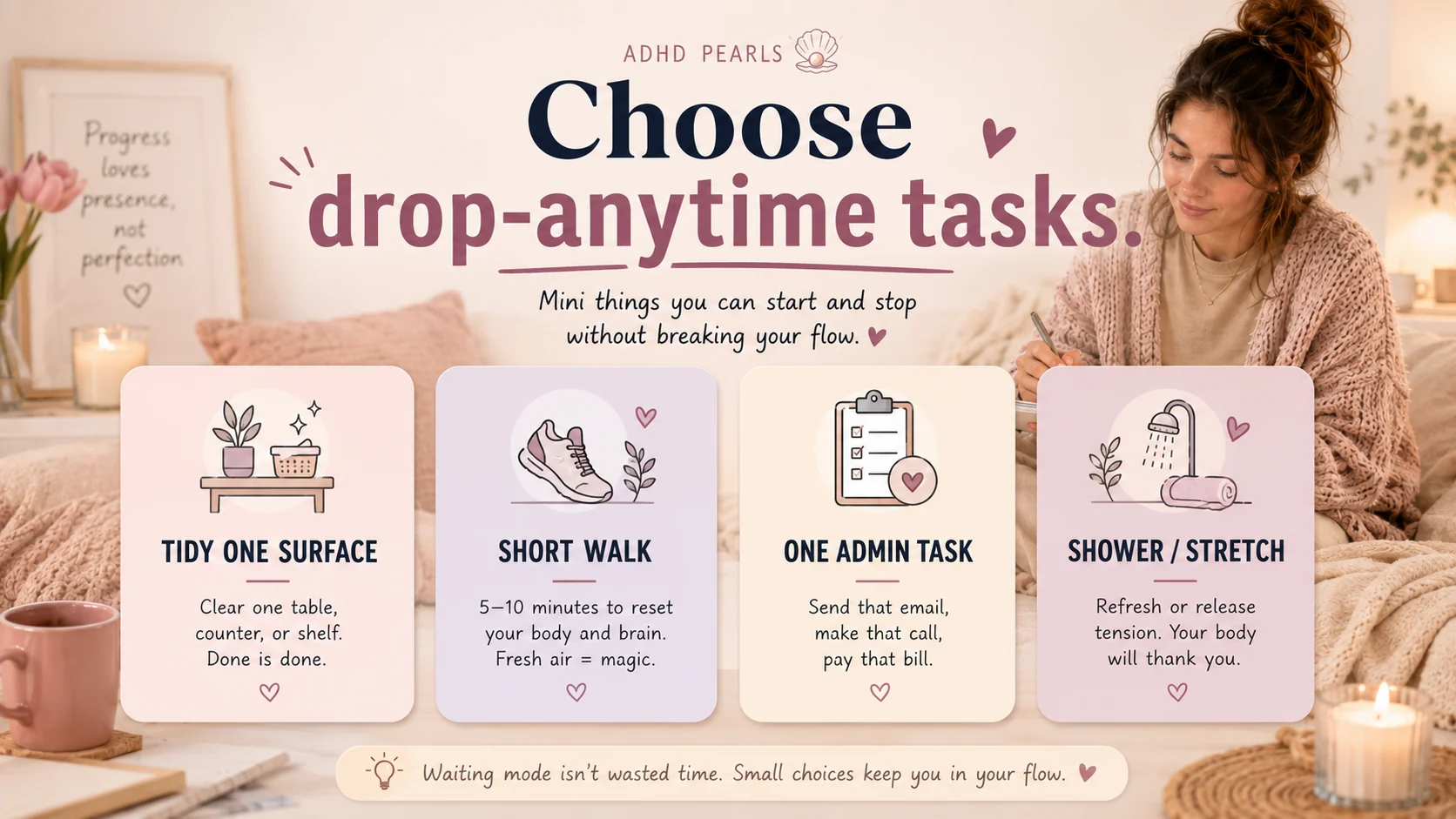
The tasks that actually fit a waiting-mode brain are the opposite: short, low-stakes, and easy to abandon the second the alarm goes.
Tidy one surface, not the whole house.
A shower, a walk, a stretch - motion without commitment.
One piece of easy admin: pay a bill, reply to a single message. This is friendlier ground than the frozen, high-stakes kind in life-admin paralysis.
Something novel or fun - waiting-mode brains respond to interesting, not important.
Waiting mode is not the time for deep work. Choose tiny tasks you can stop at any moment.
This is practical, lived-experience advice, not medical guidance. If time anxiety or being unable to function around appointments is seriously affecting your life, it's worth talking to a qualified professional - this can overlap with ADHD, anxiety and other conditions. If you're still wondering whether ADHD is the picture at all, start with how to know if you have ADHD.
The tiny move: next time one thing is looming over your day, set two alarms - "get ready" and "leave now" - and then let yourself stop watching the clock. You're not lazy and you didn't waste the morning on purpose. Your brain was just standing guard over a block of time it couldn't feel, and now you can give it something better to hold the watch.
Pin this ADHD waiting mode reset for later.
FAQ: ADHD and Waiting Mode
What is ADHD waiting mode?
Waiting mode is when you have something coming up later - an appointment, a call, a delivery - and your brain goes into standby, unable to properly start or focus on anything else until it's done. It's a common ADHD experience that blends time blindness, transition difficulty and anticipation anxiety. It isn't laziness; it's your brain struggling to hold a future event and the present at the same time.
Why does one appointment ruin my whole day with ADHD?
Because an ADHD brain has a weak felt sense of time, so it can't trust itself to notice the hours passing - and it copes by hovering near the event instead of risking missing it. Add the difficulty of switching tasks (starting something means facing a transition later) and a mind that keeps getting dragged back to the appointment, and the wait quietly expands to fill the entire day.
Is waiting mode a real ADHD thing?
Yes. It's not an official diagnosis, but it's a widely recognized ADHD experience and researchers link it to time perception, executive function and anxiety. Naming it often brings relief on its own, because it reframes a "wasted" day as a real neurological response rather than a personal failing.
How do I stop waiting mode?
You usually can't switch it off, but you can loosen its grip. Hand the time-keeping to alarms so your brain can stop clock-watching, give a vague window a hard boundary ("I leave at 1:40"), pre-stage everything for the appointment, and do a brain dump to quiet the rumination. Then pick small, low-stakes tasks instead of deep work.
Why can't I start anything before an appointment?
Because starting a task means you'll later have to stop it and transition to the appointment - and transitions are one of the hardest things for an ADHD brain. Your brain often decides it's safer not to start at all than to get pulled out of something mid-flow. Choosing tasks that are easy to drop makes starting feel possible again.
Does waiting mode happen with fun events too?
Absolutely. It isn't about dread - a concert, a holiday or a friend visiting can trigger the exact same standby state. The brain is reacting to an upcoming transition and a block of hard-to-measure time, not to whether the event is good or bad.
How do I stop checking the clock constantly?
Set the alarms your brain is trying to be. If a phone alarm (or two) will reliably tell you when to get ready and when to leave, you no longer have to keep manually checking that you haven't lost track of time. Outsourcing the time-keeping is what frees your attention for anything else.
What tasks can I actually do in waiting mode?
Short, low-stakes, easy-to-drop things: tidying a surface, a walk, admin, a shower, replying to one message, or body-doubling with someone. Avoid deep-focus or long projects, because those need the very task-switching your brain is protecting against. The goal is gentle motion, not productivity.
Can ADHD medication help with waiting mode?
For some people medication eases the anxiety and improves task initiation, which can soften waiting mode. It doesn't remove time blindness, so most people still lean on alarms and structure alongside any treatment. Medication decisions should always be made with a qualified clinician.
One tap makes ADHD Pearls a preferred source in your Google account, so our articles surface higher when you search. No signup, and it brings you straight back to this page.
Here's why other planners didn't stick
They assume you'll show up the same every day. Perlova starts with how you feel right now.
Other ADHD planners
×Ask you to plan ahead, when your brain isn't there yet
×Assume you have consistent energy every day
×Show you everything you're already behind on
×Fall apart the first time you miss a day
×Require willpower just to open them
Perlova
✓Starts with your energy right now — not a perfect plan
For the woman who sets up the perfect system on Sunday and abandons it by Tuesday.
One short letter, every week. Real talk about ADHD, task paralysis, and the tiny wins that actually move the needle for a brain like yours. No shame. No hustle culture.