There is a chair in my bedroom. It has never once been sat in. It exists to hold The Pile: clean laundry that never got folded, three tote bags, a phone charger, a birthday card I still haven't sent, and at least one thing I have been actively looking for.
When the pile is mostly clean laundry, the ADHD laundry system cards have a Chair Reset card for exactly that — clean, dirty and half-worn clothes sharing one seat.
Everyone in my life calls it "the chair." I call it what it is now: a doom pile. And if you have one too, in a chair or a drawer or a tote bag or the entire back seat of your car, you are not messy and you are not lazy. Your brain just hit a wall mid-decision, and the pile is where the decision got parked.
This is educational, not medical advice. Persistent clutter that feels distressing or unsafe, or serious difficulty discarding things, is worth talking through with a qualified professional, since ADHD, anxiety, depression and hoarding disorder can overlap.
Quick answer
What is an ADHD doom pile?
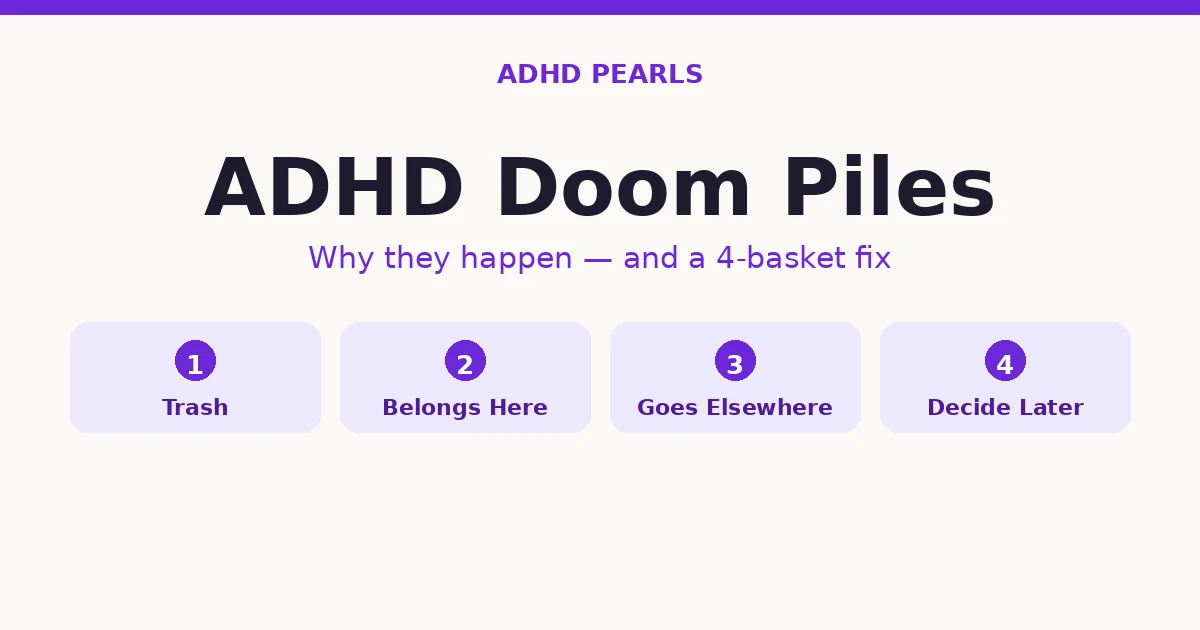
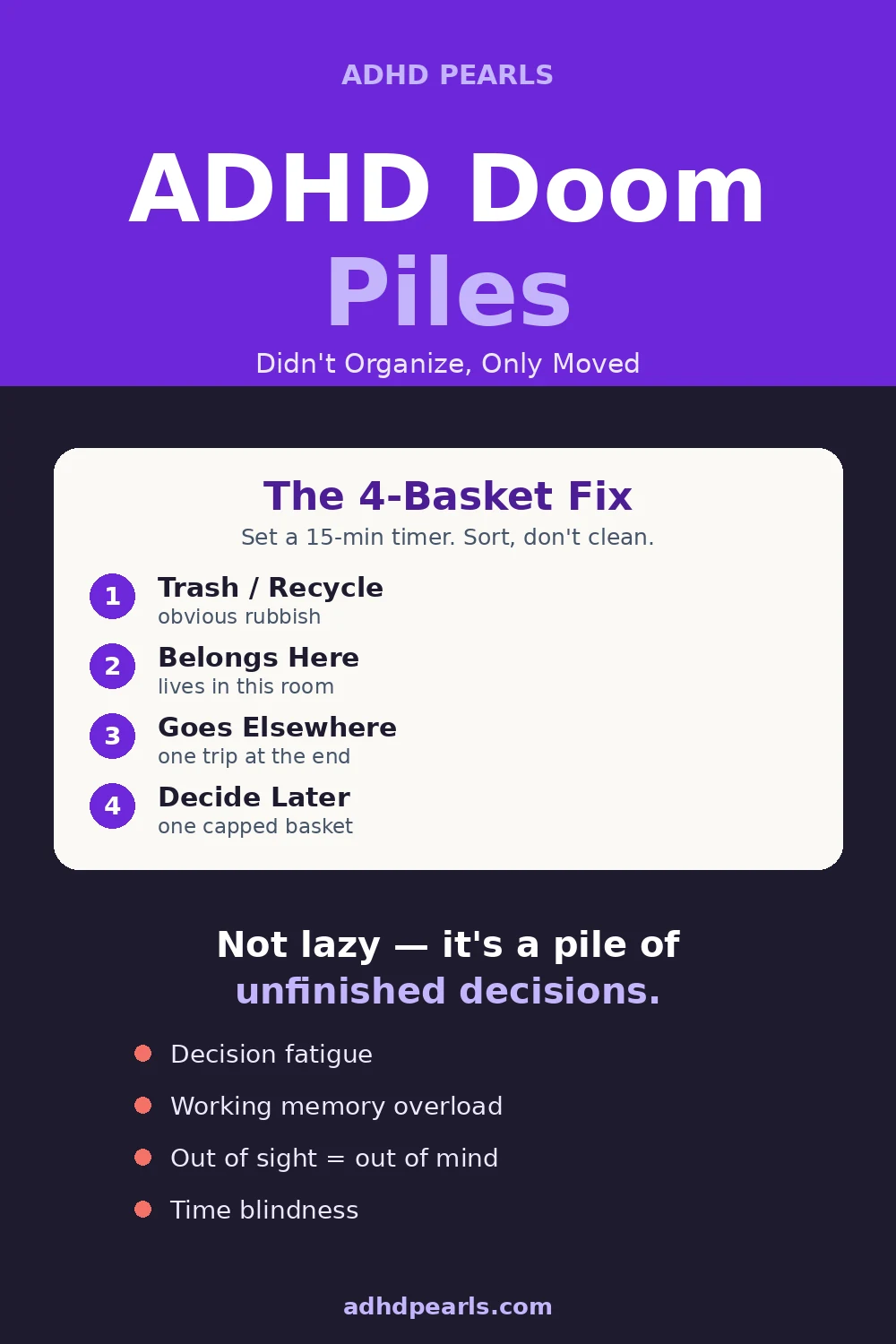
A doom pile is a heap of unsorted stuff you moved together to clear a surface - DOOM stands for "Didn't Organize, Only Moved." It's the physical leftover of a sorting decision your brain couldn't finish, driven by executive dysfunction and decision fatigue, not laziness. The fastest way to clear one is a 15-minute timer plus four baskets: Trash, Belongs Here, Goes Elsewhere, and Decide Later.
Key takeaways
📌DOOM stands for Didn’t Organize, Only Moved — the leftover of a decision your brain could not finish.
📌A doom pile is decision debt, not laziness. Every item in it is an unmade choice.
📌The four-basket method removes the deciding: keep, elsewhere, bin, undecided.
📌Give the undecided basket a deadline, or it quietly becomes a new doom pile.
📌They come back when things have no default home. Fix the home, not the pile.
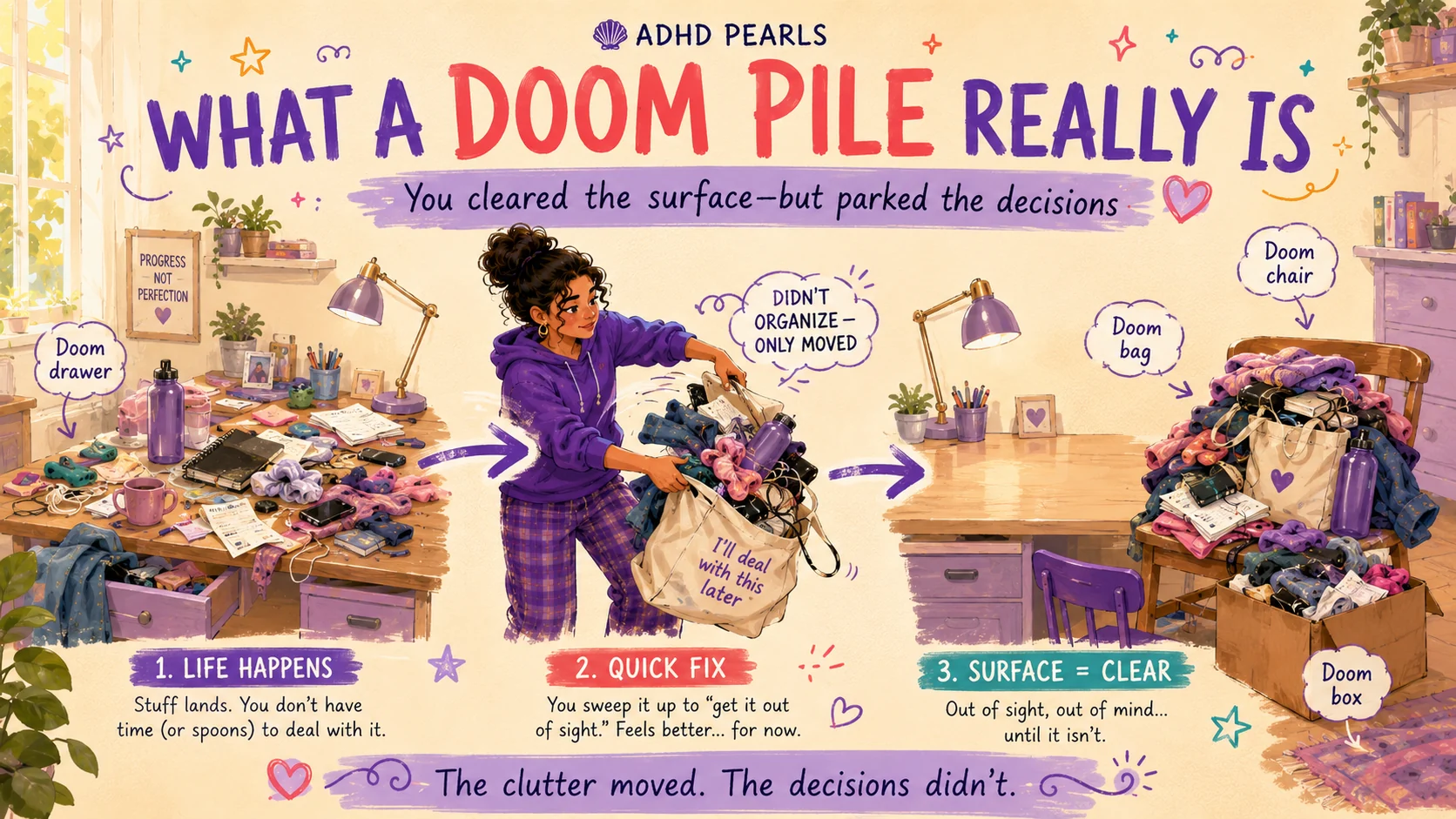
DOOM stands for "Didn't Organize, Only Moved." You cleared a surface by scooping everything into a bag, a basket, a drawer or a corner - but you never actually decided where any of it goes. The pile is a holding pattern.
They show up everywhere: the doom chair, the doom drawer, the doom bags in the closet, the passenger seat, the shelf by the door. Some people also live with the cousin of the doom pile, the "doom box" - a container of random stuff you keep meaning to sort. Same brain, same stuck decision.
My doom pile was never a cleaning problem. It was a pile of tiny decisions I hadn't been able to make yet, stacked into a physical shape.
A doom pile clears the surface temporarily, but the sorting decisions remain unfinished.
From ADHD Pearls
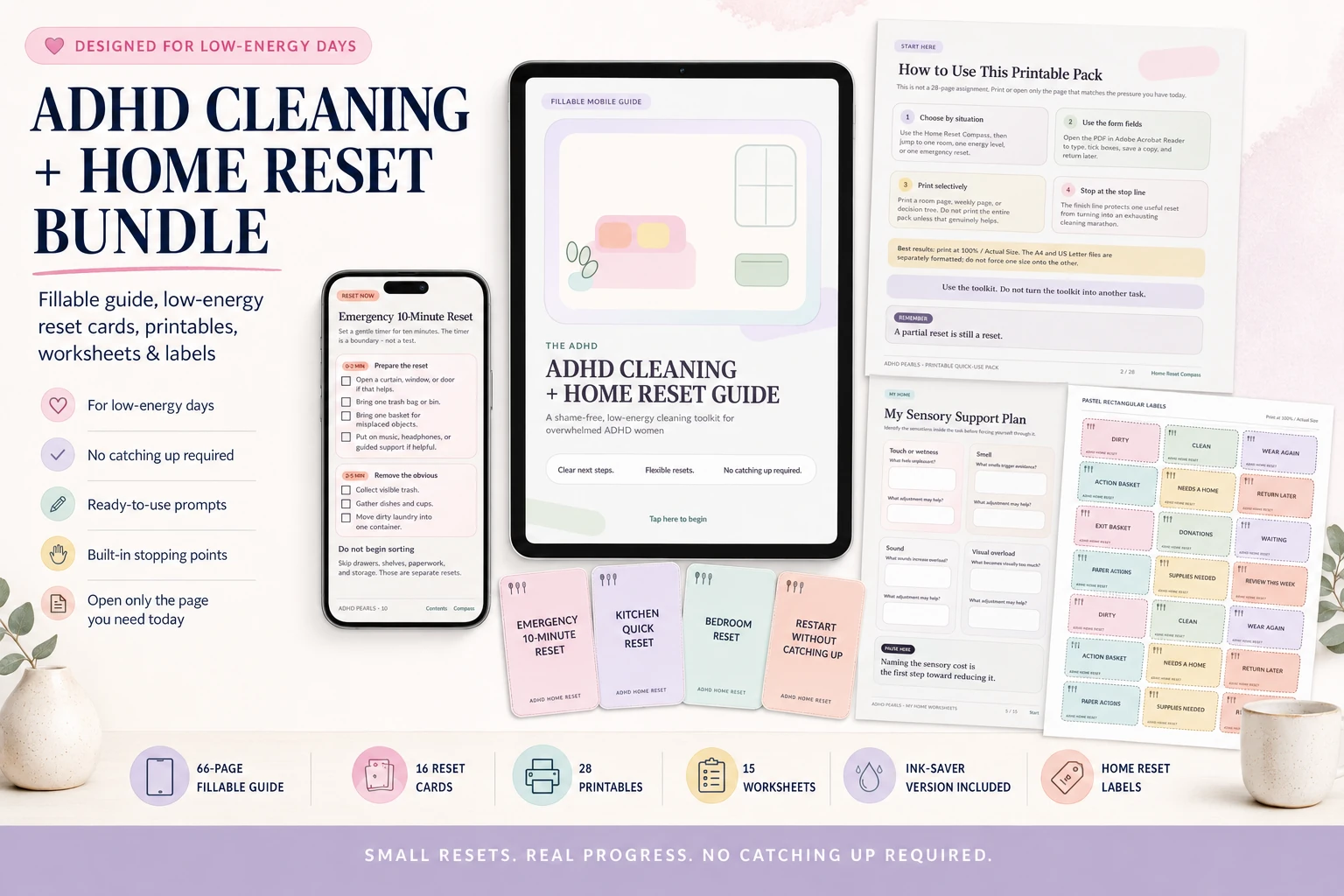
ADHD Cleaning + Home Reset Bundle
Pre-written resets, printables and labels for the days your room is winning.
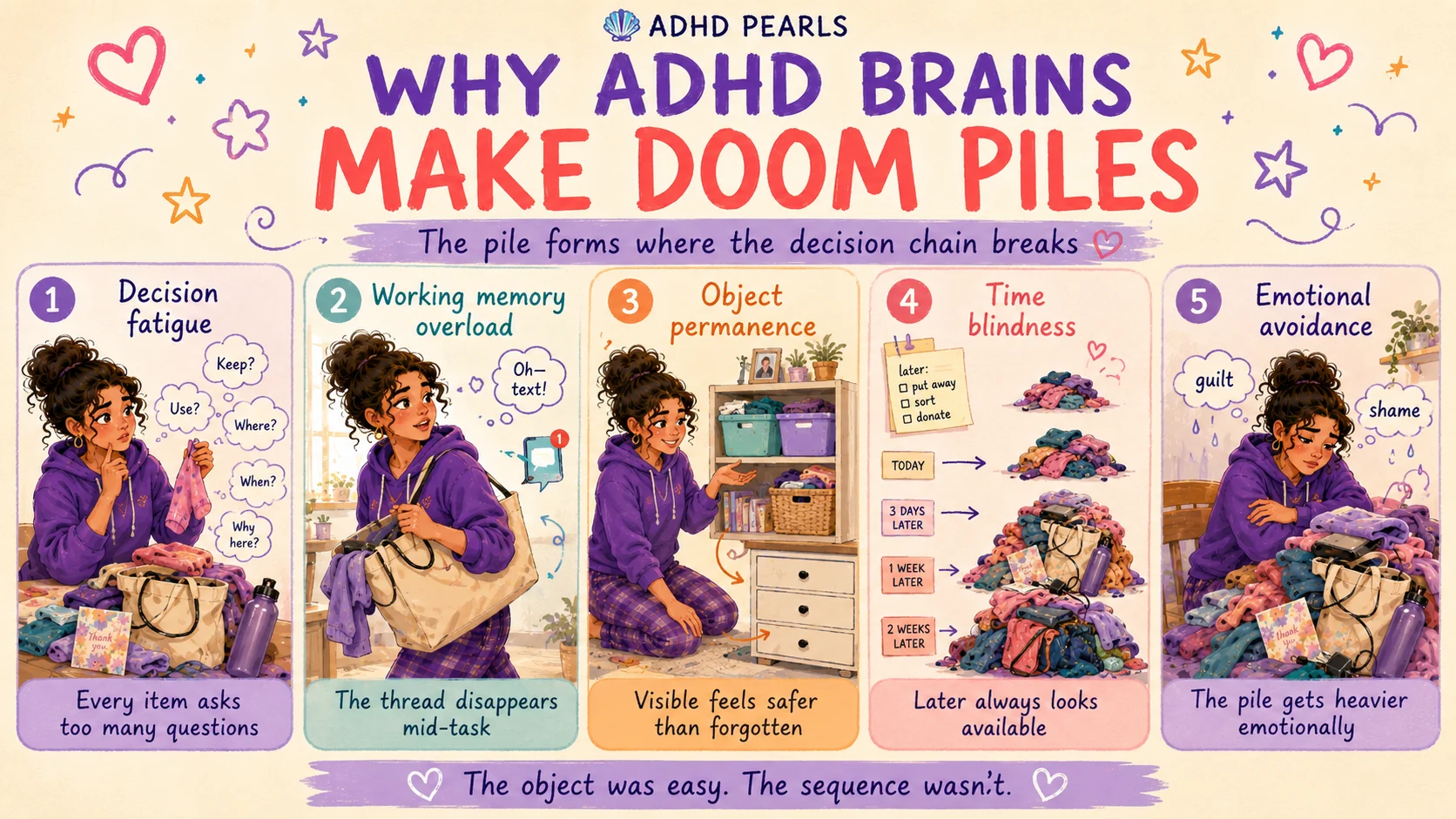
Because putting something "away" is not one action - it's a chain of small decisions, and ADHD makes that chain expensive. To put a single object away you have to decide if you're keeping it, where it lives, whether that spot is full, and what to do first. For an ADHD brain running low on working memory, that's enough friction to stall the whole thing. So the object goes on the pile "for now."
A few mechanisms stack up:
Decision fatigue. Every item is a decision. Faced with a hundred of them, the brain quietly opts out: "I can't decide, so I'll do nothing."
Working memory overload. You start to put something away, get interrupted by the three other things you noticed on the way, and drop everything. The pile is what's left.
Object permanence. Out of sight really is out of mind, so you leave things visible on purpose - and visible things become piles.
Time blindness. "I'll deal with it later" feels true, because later always feels like it has room.
Emotional avoidance. The pile starts to carry guilt, so you stop looking at it, which makes it grow.
Doom piles form where a multi-step decision chain becomes too expensive for the brain to finish.
This is a real, documented pattern, not a character flaw. One study found almost 1 in 5 adults with ADHD had clinically significant hoarding-level difficulty with clutter and discarding, compared with about 2% of people without ADHD. Difficulty with stuff is wired into how ADHD executive function works under load - the same reason a task can feel impossible to start even when you want to do it.
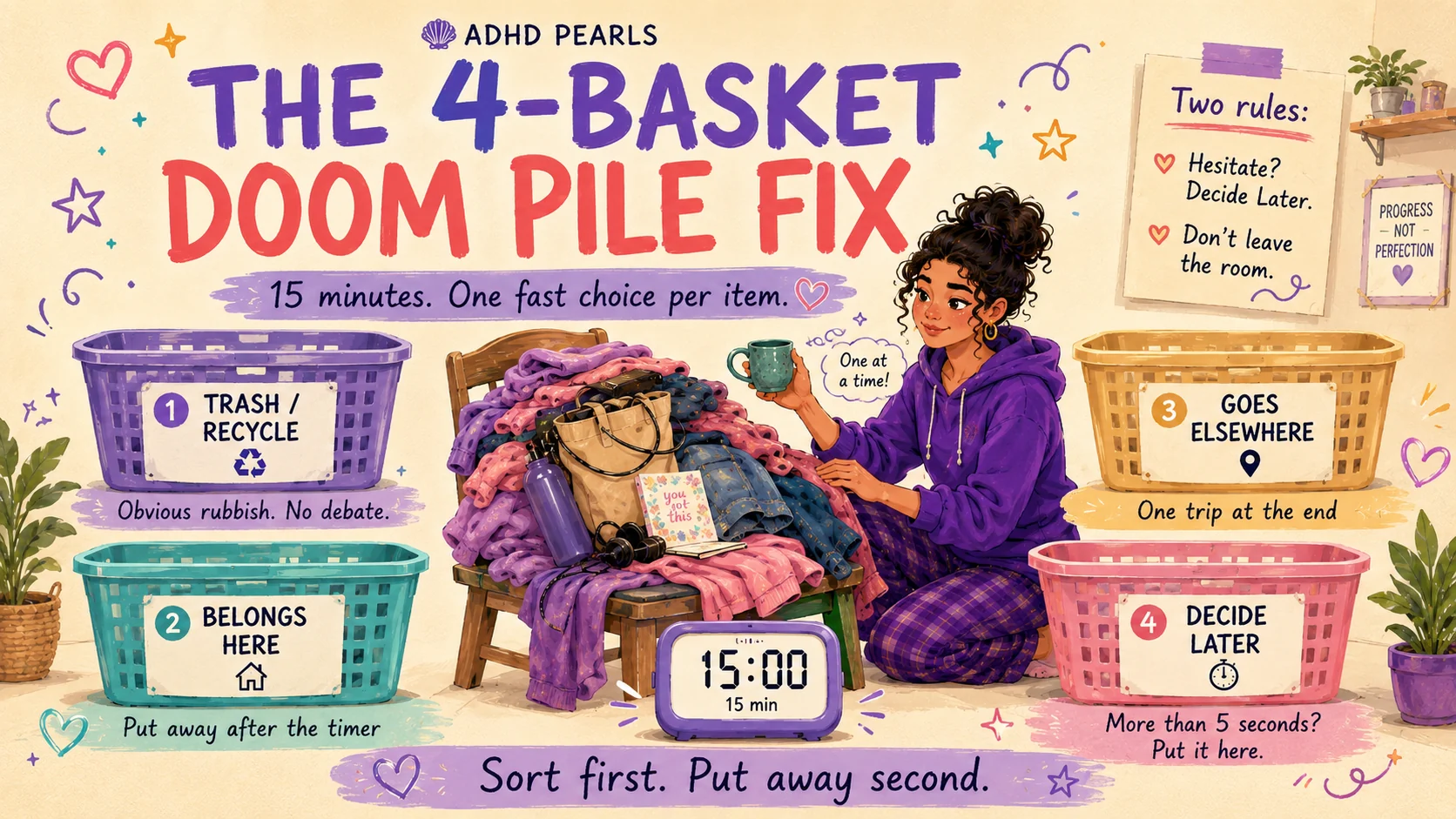
The 4-Basket Doom Pile Fix
The trick is to remove the decisions, not push through them. Instead of deciding where each item lives (slow, draining), you make one fast, low-stakes choice per item: which of four baskets. Grab four baskets, bins or bags, set a 15-minute timer, and sort - don't clean, don't put away yet, just sort.
One trip at the end - don't leave the room mid-sort
4. Decide Later
Anything that makes you hesitate more than 5 seconds
One basket only, with a cap - this is your safety valve
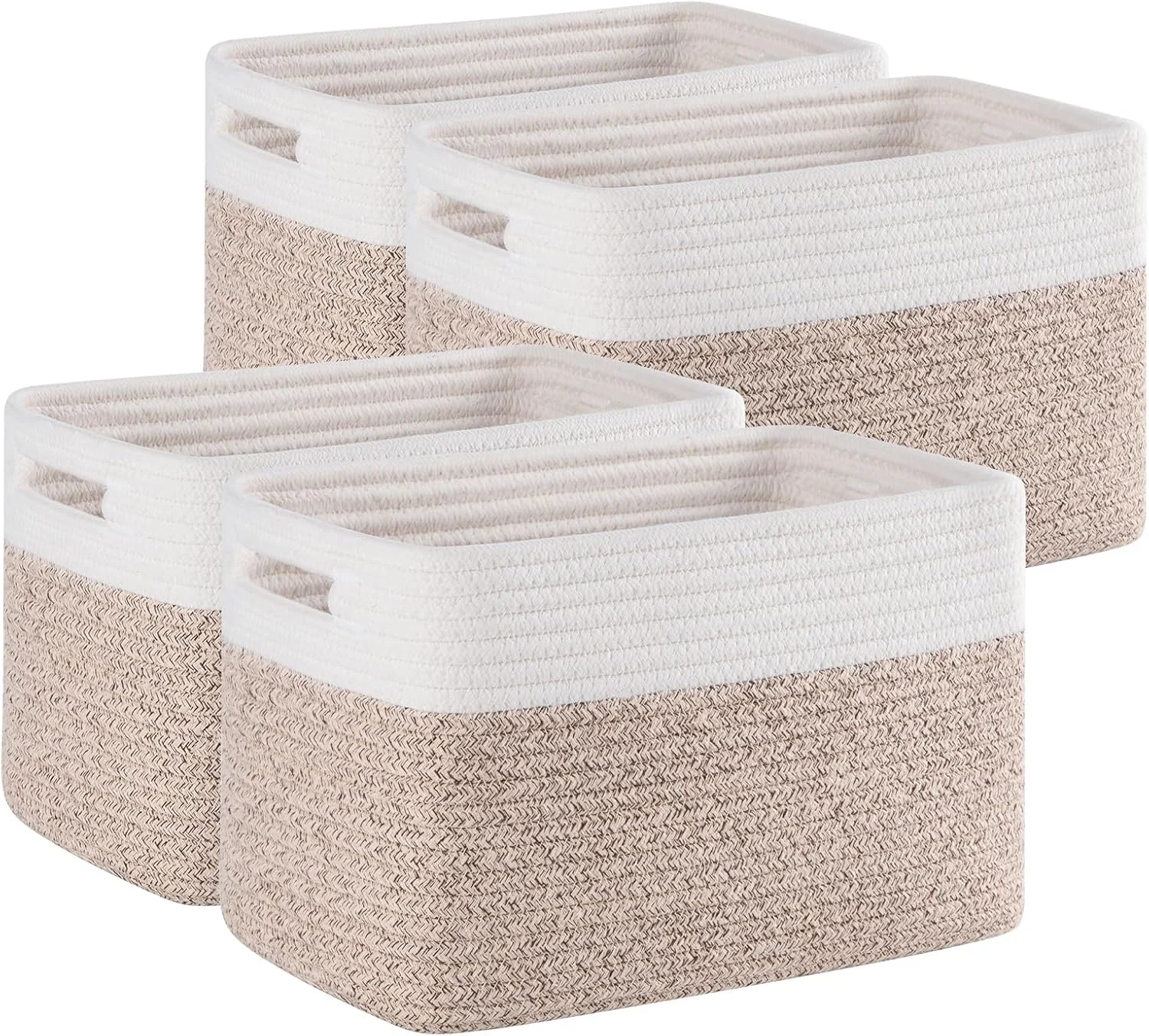
Sort first and put items away second, using one fast, low-stakes choice for each object.The 4-basket set I use →Affiliate link — as an Amazon Associate we may earn from qualifying purchases.
Two rules make or break it. First: if an item makes you hesitate, it goes straight into Decide Later - no standing there holding a single sock having a whole feeling. Second: you don't leave the room to put things away until the timer is done, or you'll get sucked into a doom pile in the next room and never come back.
When the 15 minutes are up: bin the Trash, put away Belongs Here, do one lap with Goes Elsewhere, and shove Decide Later out of sight with a promise to revisit it (more on that below). If the pile is big, that's not a failure - just set the timer again tomorrow. Progress, not a perfect room. If even starting feels impossible, our free ADHD stuck reset walks you into the first tiny move.
How to Stop Doom Piles Coming Back
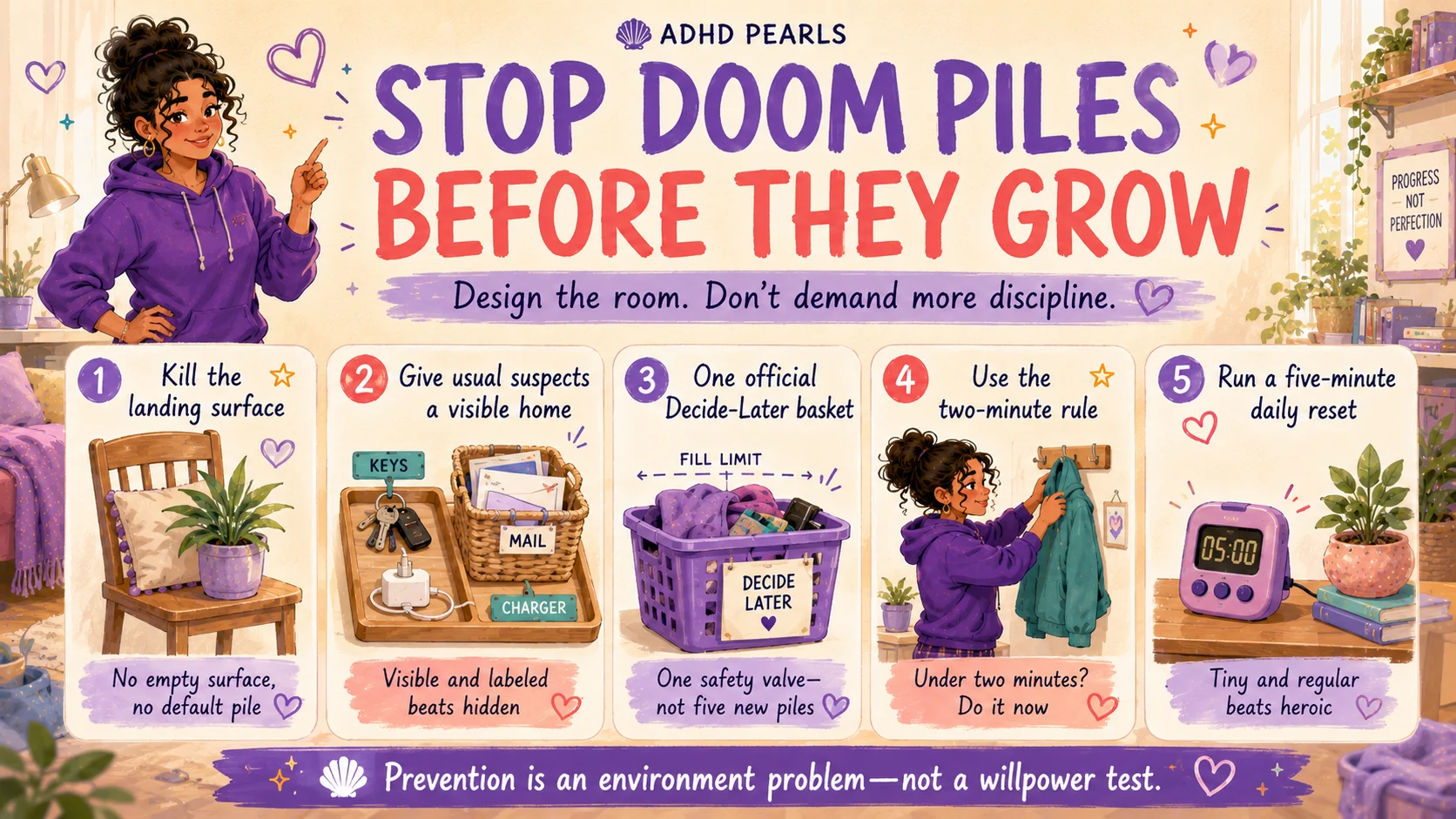
Clearing a doom pile is a moment; keeping it gone is a design problem. You will not out-discipline an ADHD brain, so change the environment instead of blaming yourself.
Kill the landing surfaces. Piles need a flat spot. Remove the chair, put a lamp or plant where the pile forms, or angle a basket there so "dumping" becomes "sorting" by default.
Give the usual suspects a visible home. The things that always pile - keys, mail, chargers, that one tote - need a labeled, in-sight spot. Out of sight is out of mind, so lean into visible storage, not hidden drawers.
Keep one official Decide-Later basket, with a cap. One basket is a safety valve; five is a new problem. When it's full, it gets sorted before anything else - that's the whole deal.
Use the two-minute rule. If putting something away takes under two minutes, do it now. Most pile items are two-minute items you deferred.
Run a five-minute daily reset. Same time each day, one timer, one surface. Tiny and boring beats a heroic Saturday deep-clean that never comes.
Preventing doom piles works better when the environment catches items automatically instead of demanding more willpower.
Save this four-basket ADHD doom-pile fix for the next time the chair wins.
Your doom pile is not evidence that you're a slob. It's a snapshot of a brain that ran out of decision fuel and made the reasonable call to deal with it later. You can clear it four baskets at a time - and you can build a home that quietly stops making them.
FAQ: ADHD Doom Piles
What is an ADHD doom pile?
It's a heap of unsorted items you moved together to clear a surface, without deciding where anything actually goes. In ADHD it's extremely common because "putting things away" is a chain of small decisions, and the pile is where that chain stalled. It's executive dysfunction, not laziness.
What does DOOM stand for in doom pile?
DOOM stands for "Didn't Organize, Only Moved." It captures the whole thing: you relocated the clutter to clear space, but never organized it, so it's waiting for the decisions you couldn't make in the moment.
Why do people with ADHD make doom piles?
Decision fatigue, working memory overload, time blindness, object permanence (keeping things visible so you don't forget them) and emotional avoidance all combine. Each item is a decision, and when the decisions pile up faster than your brain can process them, the physical pile is the result.
Are doom piles a sign of ADHD?
They're common with ADHD but not proof of it - lots of people have doom piles. That said, chronic clutter, trouble discarding and feeling overwhelmed by organizing are well-documented ADHD patterns, so if piles are a lifelong struggle it can be one piece worth mentioning to a professional.
How do I clear an ADHD doom pile fast?
Set a 15-minute timer and sort into four baskets - Trash, Belongs Here, Goes Elsewhere, Decide Later - without putting anything away until the timer ends. Sorting is faster than deciding a permanent home for each item, and the timer keeps it from becoming an all-day spiral.
What are the 4 baskets for sorting?
Trash or Recycle (obvious rubbish), Belongs Here (lives in this room), Goes Elsewhere (belongs in another room, moved in one trip at the end), and Decide Later (anything you hesitate on for more than five seconds, capped at one basket). The four-basket split removes the hard "where does this live" decision during sorting.
How do I stop doom piles from coming back?
Design beats willpower: remove the flat surface the pile forms on, give frequent offenders a labeled visible home, keep one capped Decide-Later basket, use the two-minute rule, and run a short daily reset at the same time each day. Small and consistent prevents piles far better than occasional big cleans.
Is a doom pile the same as hoarding?
No. A doom pile is usually deferred sorting, not an attachment to the items themselves, and it clears once you sort it. Hoarding disorder involves persistent difficulty discarding and distress at letting go, and it can co-occur with ADHD. If discarding things feels genuinely distressing or the clutter affects your safety, that's worth discussing with a qualified professional.
One tap makes ADHD Pearls a preferred source in your Google account, so our articles surface higher when you search. No signup, and it brings you straight back to this page.
Before you go
ADHD Cleaning + Home Reset Bundle
Pre-written resets, printables and labels for the days your room is winning.
For the woman who sets up the perfect system on Sunday and abandons it by Tuesday.
One short letter, every week. Real talk about ADHD, task paralysis, and the tiny wins that actually move the needle for a brain like yours. No shame. No hustle culture.